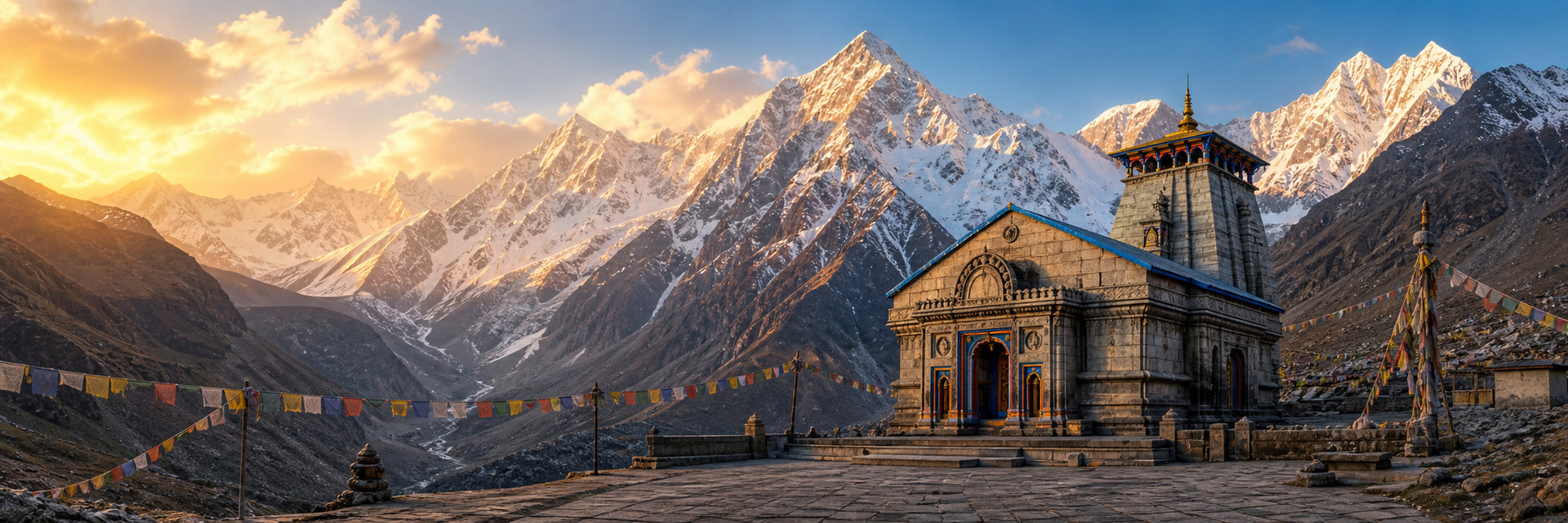
Destination - Uttarakhand - High-Himalaya pilgrimage
Setting Up a Luxury Resort in Kedarnath & the Char Dham
The Char Dham has record yatra demand, but the temples close for winter; the entire business has to earn inside a short, fragile high-Himalaya window.
Kedarnath, Badrinath, Gangotri and Yamunotri are being reshaped by the Char Dham all-weather road, the Rishikesh-Karnaprayag rail project and a growing heli-darshan economy. Yet this is also a disaster-sensitive, landslide-prone, seismic, forested mountain region where the 2013 Kedarnath tragedy still defines regulatory caution. We help owners decide what is buildable, where it should sit, and whether the business can survive the April/May to October/November operating season before design begins.
5-7 months
A short temple season carries the year
Heli-pilgrim
Premium demand needs safe logistics
Eco-caution
Forest, ESZ, NGT and valley risk lead approvals
Resilient
Seismic, landslide and flood-aware design is non-negotiable
At a glance
Best-fit micro-markets
Lower-altitude gateway sites near Rishikesh, Guptkashi, Phata/Sersi heli bases, Joshimath/Badrinath axis and carefully selected valley-edge parcels.
Operating season
Temples generally open around April/May and close around October/November; winter closure defines the revenue model.
Positioning
Premium heli-pilgrim, spiritual-adventure and low-impact Himalayan retreat, with medical, safety and weather protocols built in.
Critical approval
Hill land rules, land-use, forest clearance where applicable, ESZ sensitivity, local building sanction, fire, pollution-control and disaster-resilience compliance.
Access
Char Dham road improvements, Rishikesh and Dehradun gateways, heli bases around Phata/Sersi/Guptkashi and the future rail influence to Karnaprayag.
Build watch-out
Altitude, landslides, seismic Zone IV/V exposure, short construction window, helicopter/mule logistics, water, waste and winter shutdown.
The hardest pilgrimage resort thesis
The Char Dham yatra has extraordinary demand and a growing premium layer: older families who want safety and comfort, HNI pilgrims using helicopters, spiritual-adventure guests and travellers who want the Himalaya without rough accommodation. Infrastructure is improving through the all-weather road and rail projects, and heli-darshan has changed what the top end expects.
The constraint is brutal. Kedarnath and the wider high-Himalaya circuit do not offer a normal twelve-month hospitality year. The temples close in winter, roads and weather can shut movement, and construction itself is governed by altitude, snow, monsoon, landslides and labour availability. A project that does not earn its year inside the open season is not a resort; it is a stranded asset.
In the Char Dham, feasibility starts with the calendar. If the asset cannot earn within the temple season and shut down safely in winter, the design is irrelevant.
Guests who pay for certainty
The premium guest is not buying indulgence first; they are buying certainty. They want darshan, helicopter or road logistics, oxygen and medical readiness, warm rooms, vegetarian food, weather communication, elderly access and staff who can manage anxiety when the mountain changes its mind. That makes safety, SOPs and itinerary control part of the luxury product.
The demand mix differs by altitude. Gateway sites near Rishikesh can trade longer and include wellness and spiritual retreats; Guptkashi, Phata and Sersi are heli-pilgrim and Kedarnath access plays; Badrinath and Joshimath-axis sites carry a different mix of pilgrimage, mountain scenery and strategic road constraints. Each needs its own model.
- Premium heli-pilgrims and elderly family travel as the high-yield core
- Spiritual-adventure guests and retreat demand at lower-altitude gateways
- Weather, medical and transport certainty as the luxury promise
- Winter closure and monsoon disruption as first-order revenue assumptions
Siting below the risk line
The instinct to build as close as possible to the shrine can be dangerous and commercially wrong. Higher altitude raises construction cost, medical risk, shutdown complexity and regulatory scrutiny. Lower-altitude gateway or heli-base sites can often deliver a better premium product: safer access, more buildable land, longer operating shoulder, easier staffing and controlled movement to the shrine.
Every site must be read for slope, landslide history, river proximity, flood line, forest status, road width, helicopter logistics, evacuation routes, snow, water and waste. The 2013 Kedarnath disaster made clear that riverside and valley-floor optimism can be fatal. Resilience is not an engineering upgrade here; it is the permission to exist.
| Filter | What it decides |
|---|---|
| Altitude and season | Operating window, medical risk, staffing and construction duration |
| Slope, river and landslide history | Whether the site can be made safe and insurable |
| Forest / ESZ status | Whether clearance is possible and how long it may take |
| Heli and road access | Guest movement, evacuation and material logistics |
| Water, sewage and waste | Whether the resort can operate without damaging a fragile valley |
High-Himalaya siting filters before any concept design.
Approvals in an eco-sensitive mountain state
The approvals path can include hill land compliance, land-use and building sanction, forest clearance where forest land or tree felling is involved, eco-sensitive-zone restrictions such as Bhagirathi ESZ considerations where applicable, environmental clearance thresholds, fire NOC, pollution-control consent, water and sewage permissions, tourism registration and disaster-management compliance.
The practical approach is to test the fatal constraints first: forest, ESZ, river setback, slope stability, road access, seismic design and waste. The technical filings belong to appointed architects, structural engineers, geotechnical experts, environmental consultants and lawyers; our role is to sequence and govern them so the owner does not discover a non-buildable mountain after buying it.
- Hill land rules and local land-use / building sanction
- Forest clearance, tree permissions and ESZ constraints where applicable
- Slope-stability, landslide, flood and seismic design evidence
- Pollution-control, water, sewage, solid-waste and tourism approvals
The resort must be low-impact and operationally tough
The design language should be Himalayan without overbuilding: low-rise, slope-following, warm, insulated, seismically detailed, easy to shut down, easy to restart, and modest in its footprint. Materials, heating, hot water, staff housing, storage and emergency power matter more than decorative gestures. The guest should feel protected rather than impressed by fragility.
Food and service should follow the yatra: vegetarian, warm, fast when needed, calm when delays happen, and able to support elderly guests. Medical support, oxygen, weather updates, layered transport, luggage handling, prayer spaces and contingency rooms are all part of the product brief.
Building through a short window
Construction has to be planned like an expedition. The workable season is short, monsoon can cut roads, winter shuts high sites, and materials may move by narrow roads, small vehicles, helicopter or mule depending on location. Procurement must be front-loaded, storage planned, and specifications chosen for cold, damp, seismic movement and difficult maintenance.
Staffing is seasonal and altitude-sensitive. The resort needs leaders who can run a compressed season, associates who can acclimatise, emergency protocols that are drilled, and a winter shutdown plan that protects the asset. We plan hiring, staff accommodation, rotations and training around the mountain calendar, not around a metro hotel pre-opening checklist.
Gladwin's edge in Kedarnath and the Char Dham
We begin with hard feasibility: season length, site safety, forest and ESZ status, slope and river risk, access, evacuation, utilities and whether the P&L works when the temples close. Only then do we move to concept, approvals, procurement and hiring as one accountable Owner's Representative programme.
The team we build is trained for high-Himalaya hospitality: heli-pilgrim logistics, elderly guests, vegetarian service, weather disruption, altitude protocols, emergency coordination, seasonal staffing and winter shutdown. The goal is a property that is premium because it is calm, safe and reliable in a place that is none of those by default.
Planning a resort in Kedarnath & the Char Dham?
We take single accountability from raw land to a stabilised opening — siting and approvals, market and pricing, design, procurement, and the full team — from General Manager to line level — recruited through our executive search practice and trained for opening.
Speak with a partnerSetting up a resort in Kedarnath & the Char Dham — FAQs
High-altitude Char Dham assets generally cannot rely on year-round temple demand because the shrines close in winter and access can be cut. Lower-altitude gateway properties may trade longer, but the core yatra business must be modelled around the April/May to October/November window.
Not automatically. Higher altitude increases construction, medical, staffing, weather and regulatory risk. Many premium concepts work better at safer gateway or heli-base locations with controlled movement to the shrine.
Forest status, eco-sensitive-zone constraints, river and flood setbacks, slope stability, landslide history, seismic design, local land rules and waste/water permissions. These should be tested before acquisition, not after design.
It has made valley, riverside, slope and flood risk central to scrutiny. Any credible project must show disaster resilience, safe siting, evacuation logic, water and waste discipline, and a build form that respects the mountain rather than fighting it.
Yes, but it buys certainty more than indulgence: safe transfers, weather handling, warm rooms, vegetarian food, oxygen and medical readiness, and staff who can manage disruption calmly. The resort has to be designed around that promise.
Leadership may come from Uttarakhand, Rishikesh-Dehradun and established resort markets, while seasonal associates need altitude readiness and specific yatra training. Staff housing, rotations and winter shutdown are part of the operating model.
Explore the cluster
Luxury resorts across India’s destinations
North · Himalayan foothills & Ganga
Rishikesh & Uttarakhand
The world knows Rishikesh for the Ganga and for yoga — but the town itself is dry, vegetarian and tightly built. The premium product lives in the hills above it, and getting there is a siting and licensing decision before it is a design one.
North - Spiti high-desert
Spiti Valley
Spiti has almost no luxury supply, but Section 118 land limits, border permits and a four-to-five-month road season make it a true frontier business.
North - Trans-Himalayan Ladakh
Ladakh
Ladakh sells vastness, but water scarcity and a five-month operating window make restraint the core luxury discipline.
Also explore our executive search practice for the General Manager and leadership team, and the wider end-to-end hospitality practice — hotels, residences, clubs and heritage properties.