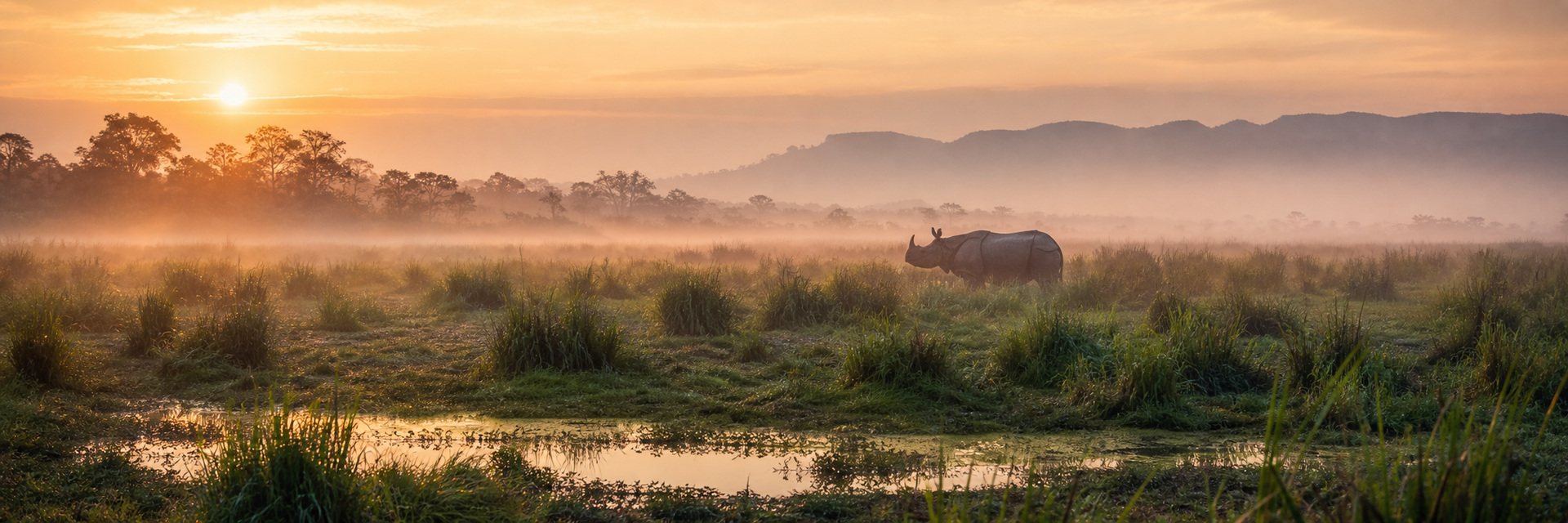
Destination - Assam - Northeast wildlife
Setting Up a Luxury Safari Resort in Kaziranga
Kaziranga's rhino draw is world-class, but the Brahmaputra floods the park every year; lodges must be elevated, flood-aware and corridor-sensitive.
Kaziranga National Park is a UNESCO landscape and one of the world's great wildlife destinations, known for one-horned rhinos, elephants, birds and the Brahmaputra floodplain. It pairs naturally with Assam tea-estate bungalow luxury and gateways at Jorhat and Guwahati. But the annual floods, May-October closure, NH-37 animal-crossing sensitivity and Northeast logistics make site selection and engineering the heart of the business. We build Kaziranga projects around water first.
Floodplain
Annual Brahmaputra flooding is the defining constraint
UNESCO
A globally recognised rhino landscape
Tea + safari
Assam bungalow hospitality extends the stay
Corridor-aware
Wildlife movement and NH-37 sensitivity shape operations
At a glance
Best-fit micro-markets
Kohora, Bagori, Agoratoli and Burapahar access zones, plus Assam tea-estate extensions outside flood and corridor risk.
Operating season
Park access generally runs from late autumn to spring; monsoon and annual flooding close or disrupt operations around May-October.
Positioning
Rhino safari lodge, elevated tea-bungalow luxury, birding, conservation, Assam cuisine and Northeast circuit travel.
Critical approval
Forest and eco-sensitive checks, flood and drainage design, local building sanction, Assam tourism registration, pollution-control and fire permissions.
Access
Jorhat and Guwahati airports, road links along the Brahmaputra valley and tea-estate circuits in Upper Assam.
Build watch-out
Flood level, raised plinths/stilts, wildlife corridors, monsoon logistics, erosion, water/waste and trained naturalists.
A floodplain, not a fixed park
Kaziranga's power comes from the Brahmaputra floodplain, and so does its risk. The annual floods renew the landscape and move wildlife, but they also close the park, cut access, damage infrastructure and make low-lying lodge design irresponsible. A Kaziranga resort must be imagined as part of a moving water system.
That does not weaken the luxury case. It sharpens it. The best properties can offer rhinos, birds, elephants, tea estates, Assamese food and a sense of wild Northeast India, but only if the site and engineering respect the flood cycle rather than fighting it.
In Kaziranga the first drawing is not a floor plan. It is a flood map, a wildlife-movement map and a road-access map.
Rhino demand and tea-estate luxury
Kaziranga has a clear wildlife proposition: one-horned rhinos at global scale, plus elephants, swamp deer, birds and the drama of a grassland-floodplain safari. It attracts domestic wildlife travellers, international natural-history guests, photographers and Northeast circuit travellers.
Assam's tea-estate bungalow tradition is the natural luxury extension. A resort can package Kaziranga with tea gardens, Jorhat, heritage bungalows, Assamese cuisine and slow river-valley travel, increasing stay length and giving the product a softer layer beyond jeep drives.
- Rhino safari as the global anchor
- Birding and natural-history travel as premium extensions
- Assam tea-estate stays and cuisine as stay-length drivers
- Guwahati and Jorhat gateways as the access base
Elevated land around annual water
Siting must establish flood history, high-water marks, drainage, erosion, road access during rain, wildlife corridors and distance from sensitive animal-crossing areas. Kohora, Bagori, Agoratoli and Burapahar each create different safari access and flood exposure patterns. Tea-estate-adjacent sites can be powerful if they avoid corridor conflict.
Low-lying land that looks affordable in the dry season can become uninsurable or inoperable in the monsoon. Raised plinths, stilts, sacrificial landscape zones, resilient MEP, evacuation routes and storage above flood levels are not optional design flourishes.
| Site question | Why it matters |
|---|---|
| Historic flood level | Decides plinth, stilts, MEP height and shutdown plan |
| Safari range access | Shapes guest routing to Kohora, Bagori, Agoratoli or Burapahar |
| Wildlife corridor / NH-37 sensitivity | Controls lighting, fencing, traffic and site eligibility |
| Tea-estate linkage | Adds luxury identity if it does not compromise ecology |
Kaziranga site diligence starts with water and wildlife movement.
UNESCO, corridors and Assam permissions
The approvals path includes land title and land-use checks, forest and eco-sensitive-zone compliance, flood and drainage design evidence, local building sanction, Assam tourism registration, pollution-control consent, fire NOC, FSSAI, water and sewage permissions and environmental clearance where thresholds apply.
Kaziranga also requires sensitivity to wildlife movement, especially around NH-37 animal crossings and flood-time movement to higher ground. A site can be legally outside the park and still be operationally wrong if it blocks or disturbs movement.
Tea-bungalow design on stilts
The design should combine Assam tea-bungalow language with flood-aware engineering: raised floors, wide verandahs, pitched roofs, timber restraint, woven craft, high-level services, dark-sky lighting and landscape that can absorb water. Stilted or elevated planning should feel elegant, not defensive.
Experience design should include rhino drives, birding, tea tastings, river-valley interpretation, Assamese food, conservation briefings and monsoon storytelling. The guest should understand why the flood exists, not only fear it.
Monsoon, naturalists and Northeast logistics
Construction and procurement must respect the monsoon, flood season and Northeast supply chain. Materials, MEP, kitchen equipment, vehicles, boats where relevant, staff housing and backup systems need lead-time discipline. Guwahati and Jorhat support logistics, but last-mile conditions change with water.
Hiring needs naturalists, drivers and Assam-aware hospitality. Guwahati, Jorhat and the tea-estate hospitality ecosystem can provide talent, while specialist naturalists and trainers ensure the wildlife experience is credible and safe.
Gladwin's edge in Kaziranga
We begin with flood and corridor diligence: historic water levels, road access, high ground, wildlife movement, NH-37 sensitivity, forest/ESZ status and tea-estate linkage. The concept is then shaped around what can safely operate through the Brahmaputra cycle.
From there we manage approvals, elevated design, procurement, Assam tea-bungalow experience, naturalist hiring and launch. The team is trained for flood-season communication, wildlife ethics, Northeast logistics and the service standards expected by premium safari guests.
Planning a resort in Kaziranga?
We take single accountability from raw land to a stabilised opening — siting and approvals, market and pricing, design, procurement, and the full team — from General Manager to line level — recruited through our executive search practice and trained for opening.
Speak with a partnerSetting up a resort in Kaziranga — FAQs
It is the defining site and operating issue. The Brahmaputra floods the park every year, affecting access, closure, wildlife movement and infrastructure. Lodges must be elevated and flood-aware by design.
The park generally trades from late autumn through spring, while monsoon and flood periods around May to October close or disrupt safari operations. The revenue model must account for that closure.
Only with great care. NH-37 is sensitive because animals cross during flood and normal movement periods. Lighting, traffic, fencing, access and site eligibility need wildlife-corridor diligence.
Assam tea-estate bungalow hospitality pairs naturally with Kaziranga and can lengthen stay, add culinary and cultural depth, and soften the product beyond jeep safaris.
Flood level, erosion, monsoon access, raised MEP, sewage, staff housing, remote logistics and wildlife movement. The property must be designed for water before aesthetics.
Guwahati, Jorhat and tea-estate hospitality can support operations, while specialist naturalists and trainers are needed for credible safari interpretation and guest safety.
Explore the cluster
Luxury resorts across India’s destinations
Northeast - Khasi-Jaintia highlands
Meghalaya
Meghalaya's landscape is ready for premium travel, but most land is community or clan-held; the resort begins with lease partnership, not purchase.
Northeast - Kanchenjunga high-Himalaya
Sikkim & the Eastern Himalaya
Sikkim has Kanchenjunga views, monasteries and organic-state credibility, but protected land ownership and border permits control what outsiders can build.
Central - MP tiger reserves
Kanha & Bandhavgarh
Kanha and Bandhavgarh offer India's deepest safari-luxury precedent, but every serious project starts outside the core under NTCA, forest and buffer rules.
Also explore our executive search practice for the General Manager and leadership team, and the wider end-to-end hospitality practice — hotels, residences, clubs and heritage properties.