Destination - Madhya Pradesh - Tiger reserves
Setting Up a Luxury Safari Resort in Kanha & Bandhavgarh
Kanha and Bandhavgarh offer India's deepest safari-luxury precedent, but every serious project starts outside the core under NTCA, forest and buffer rules.
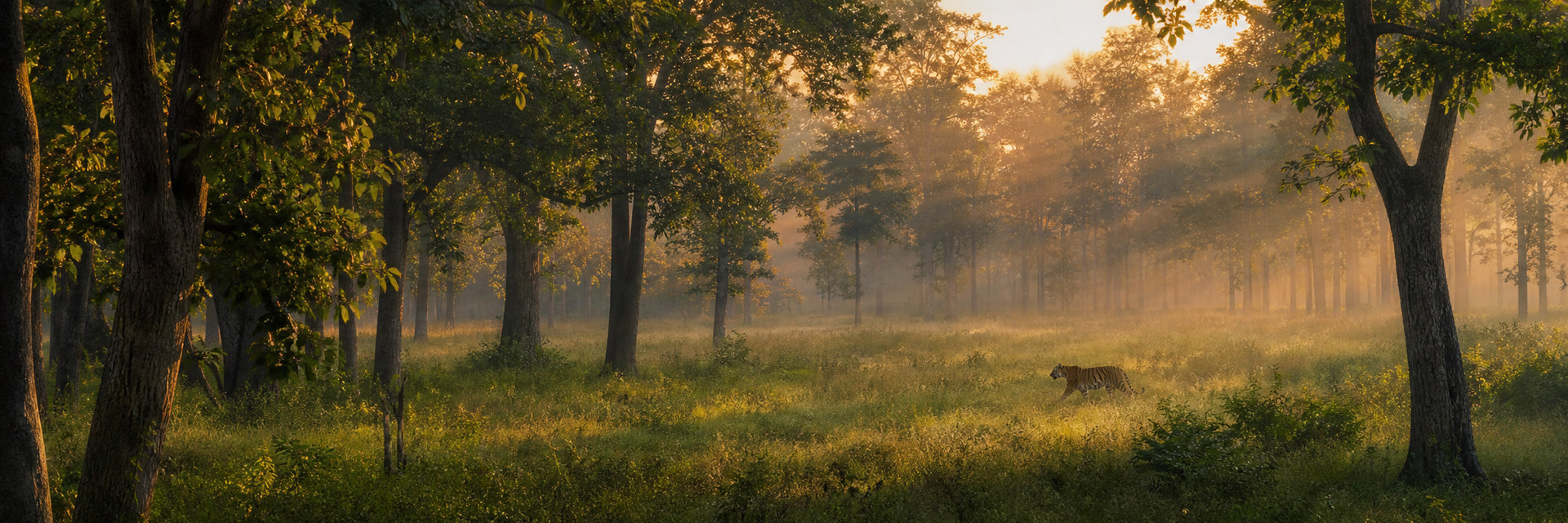
Madhya Pradesh is India's Tiger State, with Kanha's sal forests and Bandhavgarh's high-sighting reputation anchoring one of the country's strongest safari circuits. The luxury precedent is real, from Taj and &Beyond to SUJAN and Pugdundee, but it exists because the rules are clear: no construction in the core, careful buffer and ESZ siting, monsoon park closure and naturalist-led service. We help owners build low-density, high-yield jungle assets that respect the forest rather than treating it as a view.
NTCA-led
Core is off-limits; buffer logic leads siting
Jul-Oct
Monsoon closure shapes the revenue year
Naturalist-first
Guides are as important as hotel staff
Low-density
Yield comes from scarcity, not room count
At a glance
Best-fit micro-markets
Kanha buffer gates around Kisli/Mukki/Khatia and Bandhavgarh access around Tala, Magadhi and Khitauli buffers, subject to forest and ESZ checks.
Operating season
National parks typically close in the monsoon around 1 July-15 October; winter and summer sightings drive different guest behaviour.
Positioning
Low-density safari lodge, tented or cottage luxury, serious guiding, dark-sky, conservation and high-yield wildlife travel.
Critical approval
NTCA and forest-buffer compliance, land-use sanction, MP tourism registration, environmental permissions, fire and pollution-control consent.
Access
Jabalpur, Umaria and Khajuraho support access depending on park; road transfers and gate proximity are central to the guest journey.
Build watch-out
Remote MP logistics, wildlife movement, off-grid utilities, monsoon shutdown, buffer land titles and certified naturalist hiring.
Tiger State luxury beyond one park
Kanha and Bandhavgarh are not speculative safari markets. They sit inside Madhya Pradesh's strongest wildlife narrative: Kanha's sal and meadow landscape, the Jungle Book association, and Bandhavgarh's reputation for tiger sightings. The luxury lodge precedent gives developers confidence, but it also raises the quality bar.
The opportunity is not another crowded gate hotel. It is a low-density, conservation-aware lodge that can command premium rates through guiding, privacy, food, design, nature interpretation and a real relationship with the forest buffer. The forest is the reason to invest, and also the reason to stay disciplined.
In Kanha and Bandhavgarh, the room is only half the product. The other half is the naturalist, the gate plan and the forest ethic.
Low-density guests and certified naturalists
The premium guest is serious about safari: domestic HNI families, wildlife photographers, international natural-history travellers and repeat Indian safari guests who understand the difference between a bed near a gate and a proper lodge. They want fewer keys, better drives, quieter food, better interpretation and strong logistics around permits and park timings.
Naturalists are central to the commercial model. Forest-department-certified guides, in-house naturalists, driver training, interpretation, camera support, children's nature programming and conservation storytelling are revenue and reputation drivers, not soft amenities.
- Wildlife-led domestic and international demand as the core
- Gate access and safari-permit planning as part of the luxury service
- Certified naturalists and trained drivers as critical hires
- Monsoon closure planned as maintenance, training and repositioning time
Core is forbidden, buffer is the business
NTCA rules make the first principle non-negotiable: construction belongs outside the core, with buffer and eco-sensitive-zone restrictions shaping every credible site. The best land balances gate access with wildlife movement, village impact, water, road quality, power, staff housing and the ability to create silence without isolating the guest from safari logistics.
Kanha and Bandhavgarh are also different in operating rhythm. Bandhavgarh's Tala, Magadhi and Khitauli access patterns and Kanha's Kisli, Mukki and Khatia gates create different land values, transfer times and permit strategies. A developer should not buy 'near the park' without knowing which gate and guest behaviour the lodge will serve.
| Filter | What it decides |
|---|---|
| Core / buffer / ESZ status | Whether hospitality use is permissible at all |
| Gate access | Safari timing, guest wake-up, transfer and permit strategy |
| Wildlife corridor sensitivity | Lighting, fencing, movement and operating behaviour |
| Village and utility context | Staffing, community relationship, water and power resilience |
Safari-lodge siting filters in MP tiger country.
NTCA, forest and MP tourism approvals
The approvals stack includes land title and land-use checks, buffer/ESZ compliance, forest and tree permissions where applicable, local building sanction, MP tourism registration, environmental clearance where thresholds apply, pollution-control consent, fire NOC, FSSAI and water/sewage permissions. Any site touching forest influence needs specialist legal and environmental diligence.
Madhya Pradesh tourism policy can support hospitality investment, but incentives cannot overcome a bad forest position. We sequence the NTCA/forest questions before subsidy optimism, because the forest gate is the one that can stop the project.
Dark-sky lodges for serious safari
The design should be quiet, low-density and night-sensitive: tented or cottage formats, muted lighting, local stone and timber, natural ventilation, deep decks, water bodies handled carefully and public areas that frame forest sounds rather than overpower them. A luxury safari lodge should not feel like a resort that happens to have jeeps.
Experience design should include pre-drive service, packed breakfasts, camera prep, post-drive interpretation, naturalist talks, birding, junior ranger programmes and conservation content. In MP tiger country, credibility is earned in the details around the safari day.
Remote camps, off-grid systems and naturalist hiring
Remote MP logistics require planning for power backup, water, sewage, cold-chain, vehicle maintenance, staff housing, dust, heat and monsoon shutdown. Procurement will draw from Jabalpur, Nagpur, Bhopal, Indore and national suppliers, but the last mile is rural and seasonal.
Hiring is a dual exercise: hospitality leadership and naturalist depth. We recruit lodge managers, chefs, operations teams and certified naturalists together, then train the property around park timings, guest safety, wildlife etiquette and the service rhythm of dawn and dusk drives.
Gladwin's edge in Kanha and Bandhavgarh
We begin with the forest map: NTCA rules, core and buffer boundaries, ESZ, gate access, wildlife movement, village context, water and land title. Only then do we shape the lodge, key count and operating model.
As one accountable partner, we run approvals, low-density design, procurement, naturalist recruitment, hospitality hiring and launch. The team we build is as strong in forest interpretation as in service, because that is what separates a real safari lodge from rooms near a reserve.
Planning a resort in Kanha & Bandhavgarh?
We take single accountability from raw land to a stabilised opening — siting and approvals, market and pricing, design, procurement, and the full team — from General Manager to line level — recruited through our executive search practice and trained for opening.
Speak with a partnerSetting up a resort in Kanha & Bandhavgarh — FAQs
No. NTCA rules prohibit construction in the core. Viable projects must be outside the core and carefully assessed for buffer, eco-sensitive-zone, forest and wildlife-corridor constraints.
They are different safari products. Kanha offers a vast sal-forest and meadow landscape with a strong natural-history feel; Bandhavgarh is known for high tiger-sighting intensity. The right site depends on gate access, land, guest and operating thesis.
The parks typically close around July to mid-October. The resort must earn strongly in the open season and use closure for maintenance, training, sales and staff planning.
Yes. In a serious safari lodge, certified naturalists and trained drivers shape the guest experience as much as rooms and food. Hiring them early is central to launch quality.
Land-use, buffer/ESZ and forest checks, local building sanction, MP tourism registration, environmental thresholds, pollution control, fire, FSSAI and water/sewage permissions. The forest status leads the sequence.
Treating the lodge like a generic resort. Safari timing, permits, guides, dust, heat, wildlife etiquette, monsoon closure and remote utilities all need a specialised operating model.
Explore the cluster
Luxury resorts across India’s destinations
Central - Maharashtra tiger reserves
Pench & Tadoba
Pench and Tadoba have the rare jungle advantage of Nagpur access, but the resort still lives or dies by NTCA buffer siting and naturalist quality.
North-West · Wildlife & safari
Ranthambore
India's most famous tiger destination — and a reserve where the park itself, not the market, sets your calendar. Ranthambore rewards restraint, permits and naturalists before it rewards architecture.
Northeast - Brahmaputra wildlife
Kaziranga
Kaziranga's rhino draw is world-class, but the Brahmaputra floods the park every year; lodges must be elevated, flood-aware and corridor-sensitive.
Also explore our executive search practice for the General Manager and leadership team, and the wider end-to-end hospitality practice — hotels, residences, clubs and heritage properties.