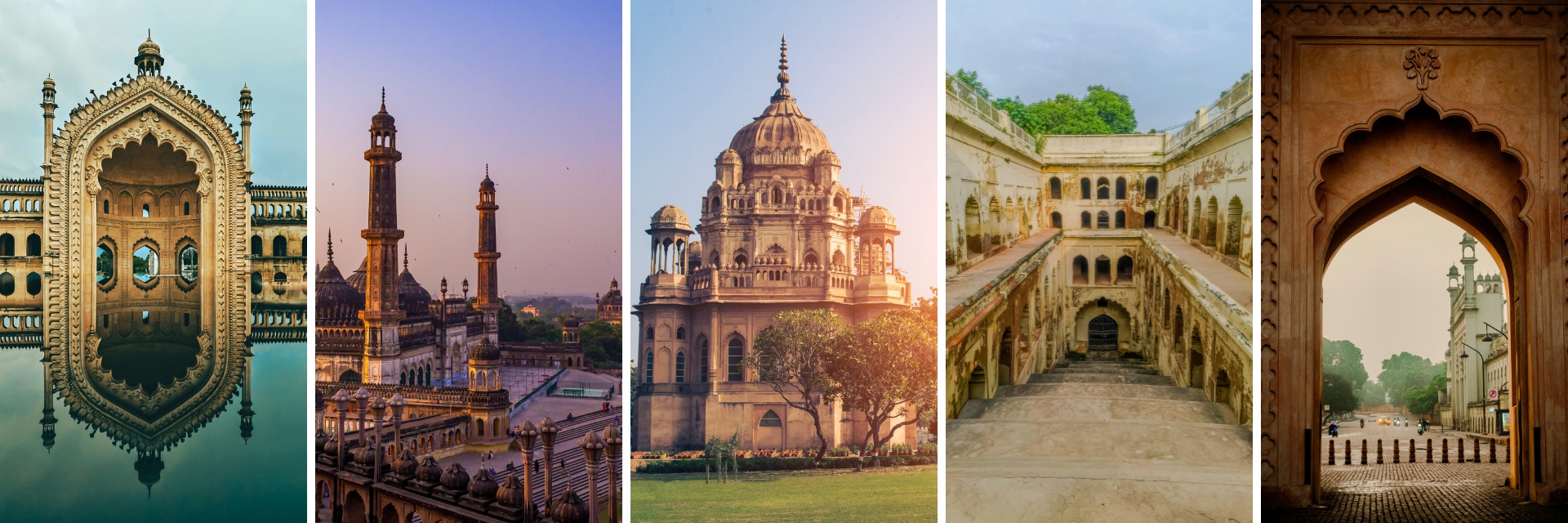
Destination - North India - Temple corridor
Setting Up a Luxury Resort in the Lucknow-Ayodhya Corridor
Ayodhya now has the pilgrim volume; the premium supply, trained operating base and clean greenfield land are still catching up.
The Ram Mandir consecration in January 2024 turned Ayodhya from a pilgrimage town into one of India's most watched tourism economies. The investable play is not only inside Ayodhya: it is the 2-2.5 hour corridor from Lucknow's refined Awadhi base to the new Ayodhya airport, the Ram Path, Bhakti Path and Dharam Path public realm, and the ADA's Vision 2047 hospitality zones. We run that journey as one accountable partner, from land strategy and incentives to a vegetarian-first, spiritually literate luxury opening.
First-mover
Premium keys in a temple-economy boom
Awadhi + Ayodhya
Gateway luxury and pilgrimage demand in one circuit
Veg-first
F&B model shaped by temple-town norms
Turnkey
Land, approvals, team and launch governed together
At a glance
Best-fit micro-markets
Ayodhya ADA hospitality zones and greenfield township areas; Lucknow as the premium gateway around Gomti Nagar, Hazratganj and airport-side access.
Demand engine
Ram Mandir pilgrimage, spiritual family travel, religious events, diaspora visits, and Lucknow-led weekend luxury.
Positioning
Awadhi refinement at the gateway; sattvic, temple-town luxury near Ayodhya; family suites and high-throughput pilgrimage service.
Critical approval
ADA master-plan alignment, land-pooling or allotment documentation, building sanction, tourism registration and UP Tourism Policy incentive filings.
Access
Maharishi Valmiki International Airport at Ayodhya Dham, Lucknow airport, and the improved highway corridor between the two cities.
Land watch-out
Fast-rising prices, emerging title packs in greenfield zones, and temple-core expectations around vegetarian food and alcohol.
The corridor opportunity
Ayodhya's tourism economy changed structurally after the Ram Mandir consecration. The public realm around Ram Path, Bhakti Path and Dharam Path has been rebuilt for pilgrim movement, the Maharishi Valmiki International Airport has made the destination air-accessible, and the Ayodhya Development Authority's Vision 2047 plan is pushing hospitality into planned greenfield zones rather than leaving it to the old town's constrained lanes.
The luxury gap is unusually clear: demand has arrived faster than premium supply. A serious resort here has to decide whether it is an Ayodhya temple-town stay, a Lucknow gateway resort, or a corridor product that sells both - the sacred momentum of Ayodhya and the Nawabi polish of Lucknow.
The investment case is not just more rooms near a temple. It is a first-mover luxury product built around pilgrimage volume, family dignity and a service standard the market has not yet normalised.
Guests, seasons and the pilgrimage P&L
The core guest is domestic and devotional: multi-generational families, HNI pilgrims, NRIs returning for darshan, corporate and political delegations, and social groups who want the visit handled with privacy and certainty. Lucknow adds a second layer - culture-led leisure around Hazratganj, La Martiniere, chikankari, kebabs and Nawabi architecture - which gives the corridor a premium gateway rather than leaving the product dependent on temple footfall alone.
Seasonality is driven less by beach-style weather and more by the Hindu calendar, school holidays, long weekends and major religious dates. The operating model must be ready for sudden compression around festivals and VIP movement, while still feeling calm and personal for a family that has paid for luxury rather than a dharamshala upgrade.
- Domestic pilgrim families and NRI religious travel as the dependable base
- Lucknow culture, cuisine and craft as the gateway layer
- Festival and darshan peaks that need crowd planning, not only rate planning
- Family suites, elderly access and high-trust transport as core product features
Land, ADA zones and the real estate race
Ayodhya's old core is not where a resort-scale luxury product is most easily built. The practical route is greenfield: ADA-aligned hospitality zones, the new township logic, airport-side and highway-linked land, and plots that can absorb arrival courts, parking, banquet flow and back-of-house without fighting the temple-town grain. Land-pooling and allotment documentation have to be read closely because a brochure-ready parcel can still carry aggregation, access or use-class problems.
The corridor is also moving fast. Prices have risen sharply around the airport, the new roads and the planned hospitality clusters, and Tier-2 contracting capacity is being stretched by the same boom. We diligence title, access, master-plan fit and infrastructure before the concept is drawn, because in Ayodhya the wrong site can become both expensive and operationally awkward at once.
| Siting route | Best use | Main risk |
|---|---|---|
| Ayodhya ADA hospitality / township zones | Temple-town resort, family suites, banquet and pilgrim services | Land-pooling terms, rapid price escalation, utility phasing |
| Airport and highway side | Premium arrival product with easier logistics and coach movement | Feels too remote unless transport and darshan flow are designed |
| Lucknow gateway | Awadhi luxury, weddings, culture-led stays, corridor day trips | Needs a clear Ayodhya proposition or it becomes another city resort |
Indicative siting logic for the corridor; every parcel still needs title, zoning, access and utilities diligence.
Approvals, incentives and temple-town rules
The approvals stack is UP-specific and must be sequenced around land use first: ADA or local development-authority planning compliance, building sanction, fire, pollution-control, FSSAI, tourism registration, and hotel classification where relevant. The UP Tourism Policy 2022 can be material, with incentives such as capital subsidy and concessional land in eligible cases, but only if the project structure and filings are built for it early.
The non-written approval is the market's cultural licence. In and around the temple core, vegetarian and no-alcohol expectations are not a marketing footnote; they reshape F&B, banqueting, minibar, guest communication and staff training. A property that gets the cultural code wrong may be legal and still commercially tone-deaf.
- ADA master-plan and land-use fit before design freeze
- Building sanction, fire NOC, pollution-control consents, FSSAI and tourism registration
- UP Tourism Policy 2022 incentive and land-allotment filings where eligible
- Vegetarian-first kitchens and sensitive alcohol policy near the temple-town core
What the resort has to feel like
The strongest product will not imitate a palace hotel or a generic pilgrimage lodge. It should combine Awadhi grace - courtyards, gardens, craft, chikankari detail, measured hospitality - with Ayodhya's Ramayana narrative, Saryu river associations and the quieter codes of a sacred town. The experience has to move from high-emotion darshan logistics to calm recovery: elderly-friendly paths, family dining, private prayer spaces, wellness, and rooms built for multi-generational occupancy.
F&B is the clearest test of seriousness. A vegetarian or sattvic programme can still be premium if the culinary brief is ambitious: Awadhi vegetarian, seasonal North Indian, fasting menus, temple-appropriate banquets and dignified service rather than compromise cooking. Not a deck. A business.
Procurement, hiring and opening discipline
The corridor's construction market is scaling quickly but unevenly. Lucknow gives access to better consultants, contractors, kitchens, FF&E vendors and leadership talent; Ayodhya gives the demand story but still needs capacity built. Procurement must therefore be staged from Lucknow and the NCR where required, with local civil works governed tightly for quality, cost and schedule.
Hiring is a first-order risk. The operating team will be built from a mix of Lucknow hospitality talent, trained local associates and senior leaders imported from stronger luxury markets. We recruit the General Manager and heads of department early, train for sacred-town sensitivities and high-compression pilgrimage days, and support the opening until service is stable rather than merely staffed.
Gladwin's edge in the Lucknow-Ayodhya corridor
We treat this corridor as an emerging-market resort programme with a spiritual demand engine, not as a simple hotel near a landmark. We resolve the ADA land route, incentives, access and cultural operating model before capital is locked, then run design, procurement, approvals, hiring and launch as one accountable partner and your Owner's Representative.
The team plan is specific to the place: senior leadership and premium-service DNA drawn from Lucknow and stronger luxury markets, local hiring and training around Ayodhya's hospitality boom, and operating standards that respect vegetarian, no-alcohol and darshan-driven guest expectations while still delivering a premium resort P&L.
Planning a resort in Lucknow-Ayodhya Corridor?
We take single accountability from raw land to a stabilised opening — siting and approvals, market and pricing, design, procurement, and the full team — from General Manager to line level — recruited through our executive search practice and trained for opening.
Speak with a partnerSetting up a resort in Lucknow-Ayodhya Corridor — FAQs
Yes, but the product has to be built for an emerging temple economy rather than copied from Goa or Jaipur. The pilgrim volume and public infrastructure have moved fast after the Ram Mandir, while premium supply remains thin. The opportunity is strongest for a culturally literate resort with clean land, strong transport and a trained team.
They are different plays. Ayodhya gives proximity to darshan, the airport and the temple-town boom; Lucknow gives Awadhi luxury, stronger talent and a refined gateway. A corridor strategy can work if transport, guest flow and positioning are designed as one circuit rather than as a vague day-trip add-on.
Very important near the temple-town core. They affect F&B revenue, banqueting, minibar policy, staff scripts and guest expectations. We model the commercial impact early and build a premium vegetarian or sattvic proposition rather than treating it as a restriction discovered after design.
Master-plan fit, title aggregation, access, land-pooling or allotment terms, and utility phasing. Ayodhya's greenfield hospitality zones are investable, but the speed of the boom means land can be expensive before it is genuinely project-ready.
They can, depending on eligibility, project structure and location. The important point is to test incentives and concessional-land options before the transaction and design are fixed, because the filing path and commitments need to be engineered into the programme.
The leadership bench is likely to come from Lucknow, NCR and stronger luxury markets, while local associates are trained into the standard. We build the hiring plan early because Ayodhya's boom is creating demand for the same limited hospitality talent across many projects.
Explore the cluster
Luxury resorts across India’s destinations
North - Ganga spiritual city
Varanasi (Kashi)
Kashi's spiritual demand is enormous, but the city gives developers only two honest choices: a difficult riverfront heritage conversion or a disciplined greenfield resort outside the old core.
North - Braj temple region
Mathura-Vrindavan
Braj has enormous devotional demand and almost no true luxury supply, but sacred food norms, floodplain scrutiny and expressway land choices define what can actually be built.
Central - Temple & pilgrimage
Ujjain (Mahakal)
Mahakal Lok has transformed Ujjain's demand curve; the premium resort supply has barely begun to respond.
Also explore our executive search practice for the General Manager and leadership team, and the wider end-to-end hospitality practice — hotels, residences, clubs and heritage properties.