Destination - Karnataka - Coffee highlands
Setting Up a Luxury Resort in Chikmagalur & Sakleshpur
Chikmagalur and Sakleshpur offer the un-crowded Coorg thesis, but plantation conversion, Western Ghats ESZ and monsoon slopes decide what can really be built.
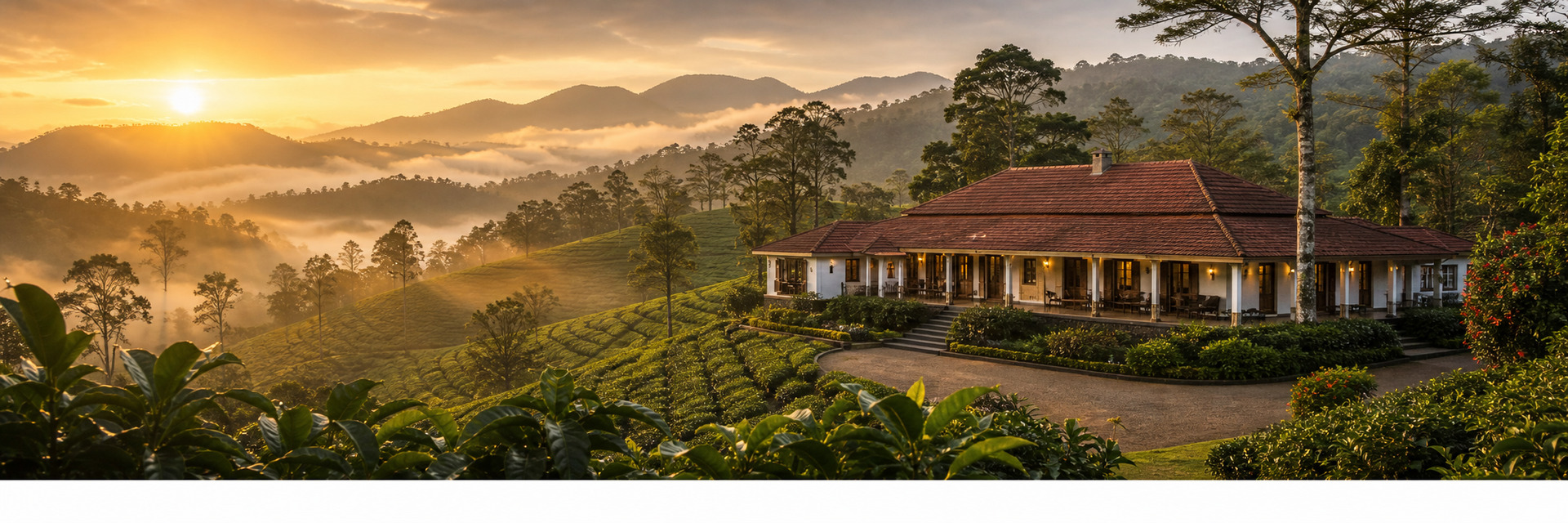
Baba Budangiri, Mullayanagiri, coffee estates and the Malnad Ghats give Chikmagalur and Sakleshpur a strong Bengaluru-weekend engine without Coorg's level of crowding. The whitespace is real, but it sits inside a sensitive terrain: plantation land, forest edges, Kasturirangan-linked ESZ debate, slope, monsoon and homestay-to-resort licensing. We help owners turn an estate into a resort business without losing the land, ecology or operating logic that make it valuable.
Coffee estate
The land story is the product
Bengaluru drive
Four-to-six-hour weekend demand is the engine
ESZ-aware
Western Ghats sensitivity leads feasibility
Monsoon-built
Drainage, slope and access shape the programme
At a glance
Best-fit micro-markets
Baba Budangiri, Mullayanagiri side, estate belts around Chikmagalur, Mudigere and Sakleshpur on the Bengaluru-Mangaluru route.
Peak season
October-March for cool weather; monsoon-green demand exists but construction and access must respect heavy rain.
Positioning
Coffee-estate luxury, un-crowded Coorg alternative, plantation walks, wellness, family villas and Bengaluru weekend stays.
Critical approval
Plantation land conversion or permitted use, Karnataka land rules, forest/ESZ checks, local building sanction, tourism registration and pollution-control consent.
Access
Bengaluru drive market, Mangaluru route via Sakleshpur, Hassan/Chikmagalur roads and rail/airport support through Mangaluru or Bengaluru.
Build watch-out
Slope stability, monsoon drainage, forest adjacency, estate labour transition, ghat-road logistics and licensing beyond homestay scale.
Coffee country before it becomes crowded
Chikmagalur and Sakleshpur are Karnataka's quieter coffee-highland opportunity: Baba Budangiri's coffee story, Mullayanagiri's altitude, Malnad rain, estate roads and the Bengaluru-Mangaluru corridor give the region a strong sense of place without Coorg's saturation. The guest already understands coffee country; the investable gap is a more polished, lower-density version with real estate character.
The mistake is to build a hill hotel and decorate it with coffee. The land must remain the asset: estate walks, processing stories, views, shade trees, local food, birding, wellness and the slowness of plantation life. That is what can make Chikmagalur-Sakleshpur feel like the un-crowded Coorg rather than a copy of it.
The premium product here is not a hill station resort. It is an estate that has been converted into hospitality without stripping out the estate.
Bengaluru weekends and estate-led stays
Bengaluru is the dependable source market: families, couples, founders, small offsites, wellness groups and second-home owners seeking a green weekend within a practical drive. The region also benefits from Mangaluru-route movement and from travellers who want coffee, hills and rain without the traffic and pricing pressure of Coorg.
Seasonality is more nuanced than a dry-season-only model. October to March is the cleanest leisure window, but the monsoon itself has appeal if access, safety, damp control and guest programming are designed for it. Estate experiences, fireplaces, plantation food, guided walks and wellness can carry demand beyond simple view-seeking.
- Bengaluru weekend and small-offsite demand as the commercial base
- Coffee, plantation life and Malnad food as differentiators
- Monsoon-green leisure as upside if access and safety are controlled
- Family villas and low-density suites over large room-block thinking
Plantation conversion in the Western Ghats
Most credible sites are coffee estates, which makes land diligence more specialised. Karnataka land rules, plantation use, conversion requirements, Coffee Board context, estate labour and access rights all need to be understood before a resort plan is promised. Forest proximity and Western Ghats ESZ sensitivity can further constrain built form, tree removal, roads and utilities.
Slope is the physical gate. A beautiful estate road can become a construction bottleneck, and a view parcel can become a drainage problem once the monsoon arrives. Site planning must read contour, water flow, soil, retaining, road width, emergency access and whether the estate can keep functioning around hospitality.
| Filter | What it decides |
|---|---|
| Plantation tenure and conversion | Whether hospitality use is legally permissible and on what terms |
| Forest / ESZ proximity | Whether built form, tree work and road expansion can be approved |
| Slope and drainage | Villa layout, retaining, road design and monsoon resilience |
| Estate operations | Whether coffee, labour housing and guest privacy can coexist |
Estate conversion filters for Chikmagalur and Sakleshpur.
Karnataka approvals from estate to resort
The approvals stack can include land-use conversion or permitted-use confirmation, local panchayat or planning sanction, forest and tree permissions where relevant, environmental clearance if thresholds apply, Karnataka State Pollution Control Board consent, fire NOC, FSSAI, tourism registration and labour or estate-compliance transitions where existing plantation operations remain active.
The homestay-to-resort leap is important. Many properties in the region operate informally or at small scale; a true luxury resort needs clean licences, safe access, sewage and water systems, fire design, kitchen compliance and staff housing that can stand up to scrutiny.
Malnad luxury without Coorg mimicry
The design language should come from Malnad estates: deep roofs, timber, stone, verandahs, working fireplaces, rain-facing lounges, coffee yards, shaded paths and local food rather than generic colonial plantation nostalgia. The resort should feel quieter and more estate-specific than Coorg's busier hospitality belt.
Experiences should be grounded: coffee harvesting and cupping, spice and pepper walks, Mullayanagiri and Baba Budangiri routes, local temple and village visits, Malnad cuisine, wellness and rain programming. The destination is intimate; the resort should not oversell it as spectacle.
Monsoon slopes and estate talent
Build planning must respect heavy rain, ghat roads and slope engineering. Retaining walls, drains, roof details, damp-proofing, road surfaces, staff movement, material storage and utility trenches need monsoon-first planning. Procurement can draw from Bengaluru and Mangaluru, but final-mile logistics on estate roads must be scheduled carefully.
Hiring can blend Bengaluru hospitality leadership with local estate knowledge. Plantation teams, guides and cooks bring place intelligence; luxury managers, chefs and trainers bring service discipline. We build both into the pre-opening plan so the property feels local without feeling amateur.
Gladwin's edge in Chikmagalur and Sakleshpur
We test the estate before we design the resort: title, plantation use, conversion, ESZ and forest proximity, slope, drainage, access, water, staff housing and the revenue model from Bengaluru. That keeps owners from buying a beautiful estate that cannot carry a legal, premium hospitality business.
Then we run the programme as one accountable partner: Malnad-sensitive design, approvals, monsoon-proof procurement, Bengaluru-led hiring, local estate integration and launch. The team is trained to sell coffee country as lived experience, not as a backdrop.
Planning a resort in Chikmagalur & Sakleshpur?
We take single accountability from raw land to a stabilised opening — siting and approvals, market and pricing, design, procurement, and the full team — from General Manager to line level — recruited through our executive search practice and trained for opening.
Speak with a partnerSetting up a resort in Chikmagalur & Sakleshpur — FAQs
Yes, if the product is estate-led and low-density. The Bengaluru drive market understands coffee-country leisure, and Chikmagalur-Sakleshpur still has more whitespace than Coorg, but the resort must feel specific to Malnad rather than borrowed.
Sometimes, but it requires site-specific legal and planning diligence. Karnataka land rules, plantation use, Coffee Board context, local sanction, forest and ESZ proximity, and existing estate operations all need to be tested before purchase.
Serious enough to lead feasibility. ESZ debate, forest buffers, tree permissions, slope and water all shape what can be built. A resort plan should be drawn only after these overlays are mapped.
Both. The monsoon creates the lush experience many guests want, but it complicates construction, access, damp control and safety. A good resort is designed to trade through rain without making the guest feel exposed.
Slope and drainage. Estate roads, retaining, runoff, soil, roof design and utility trenches all need monsoon-first engineering, or the property will age badly and become difficult to operate.
Leadership and specialist chefs often come from Bengaluru and established resort markets, while local estate teams provide place knowledge. Training bridges the two so service is both polished and rooted.
Explore the cluster
Luxury resorts across India’s destinations
South · Western Ghats plantations
Coorg
The plantation-luxury market India actually created — inside one of the country's most protected landscapes. Coorg is an Eco-Sensitive Zone, land-conversion and slope problem long before it is a design one.
South - Kerala highland forests
Wayanad
Wayanad's mist, plantations and wildlife are highly investable, but ESZ scrutiny and the 2024 landslides make slope stability the first feasibility question.
South - Vijayanagara UNESCO ruins
Hampi
Hampi's ruins are the reason to invest and the reason you cannot build near them; luxury must sit outside the protected core and still feel inseparable from the landscape.
Also explore our executive search practice for the General Manager and leadership team, and the wider end-to-end hospitality practice — hotels, residences, clubs and heritage properties.