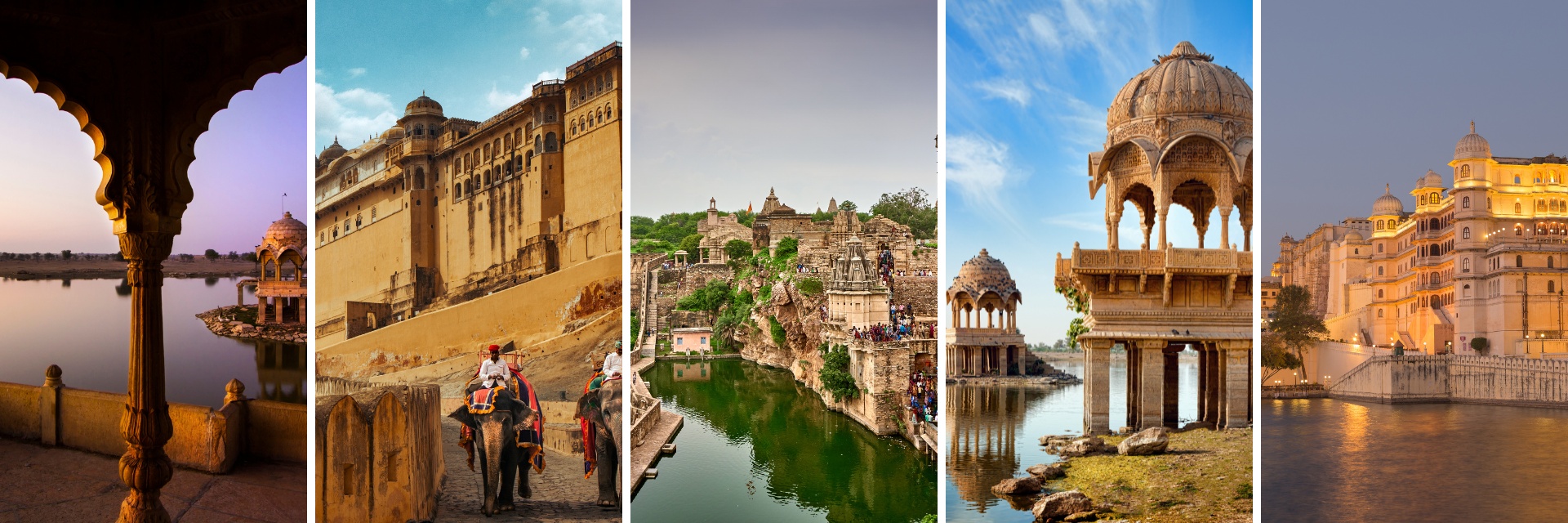
Heritage & Palace Hotels · Rajasthan · Lake City
Setting Up a Heritage & Palace Hotel in Udaipur
Udaipur is the world's premier lake-palace destination — and a heritage hotel here is won or lost on conservation judgement, not construction schedules.
A palace hotel in Udaipur is not a building project; it is the careful restoration and adaptive reuse of a five-hundred-year Mewar inheritance — a lakeside palace, a City-Palace-adjacent haveli, or an Aravalli hilltop fort — brought to a paying-guest standard without erasing what makes it worth the tariff. Gladwin International runs the whole journey as one accountable programme: securing the asset and its title, reconciling conservation against modern services hidden in old stone, marshalling the miniature-painters, stone-carvers and marble-jali artisans the fabric demands, and taking you from a heritage shell to a fully staffed, high-ADR opening on Lake Pichola.
Restore, not build
Adaptive reuse of an existing heritage asset
Small keys, high ADR
The economics a palace hotel actually runs on
Conservation-led
Fabric first, services retrofitted around it
Shell to opening
Single accountability, end to end
At a glance
Asset types
Lakeside palaces on Pichola and Fateh Sagar; City-Palace-adjacent havelis in the old city; Aravalli hilltop forts and garhs within reach of the lakes.
The market context
The city Taj Lake Palace, Oberoi Udaivilas, The Leela and RAAS Devigarh made — a proven, deep, high-ADR luxury-heritage market, not a frontier.
The economics
Small key counts (often 20–60), trophy ADRs and India's number-one destination-wedding revenue — but heritage fabric caps how much banqueting load the walls can carry.
Conservation regime
INTACH conservation practice, Rajasthan heritage byelaws, and lake-catchment and pollution rules on the Pichola–Fateh Sagar system.
The craft dependency
Miniature and fresco painters, marble and sandstone carvers, jali cutters, araish/lime-plaster masters and thikri mirror-workers — a finite, bookable artisan base.
Access & logistics
Old-city lanes are narrow and vehicle-restricted; lakeside sites are boat- or causeway-served; the monsoon drives damp into unretrofitted stone.
The opportunity
Udaipur is not an emerging heritage market — it is the definitive one. The Sisodia rulers of Mewar built a city of palaces around Lake Pichola over five centuries, and the modern luxury industry has already proved what that inheritance is worth: Taj Lake Palace floating on the water, the Oberoi Udaivilas on the far bank, The Leela on Fateh Sagar and RAAS Devigarh in a restored Aravalli fort each command tariffs and occupancies that few new-build resorts in India can approach. That is market colour, not competition to be copied; it tells you the demand is deep, international and durable.
The whitespace is not another glass-and-marble new build — Udaipur has those — but the sensitive conversion of a genuine heritage asset that the majors have not already taken: a mid-sized lakeside palace, a cluster of old-city havelis knitted into one property, or an outlying fort or garh restored as a destination in its own right. The prize is a small-key, high-ADR hotel with a story no ground-up resort can manufacture. The risk is that heritage assets punish the buyer who treats them as construction sites.
In Udaipur the product is not a hotel built on a plot — it is a five-hundred-year-old asset restored into one. The value and the risk both live in the fabric.
Securing the asset — acquisition, lease and the title minefield
Heritage property in Udaipur rarely changes hands cleanly. Palaces and havelis are frequently held under joint family ownership, thika/tenanted title, or ancestral partition that has never been formally settled; some carry sitting occupants, temple or trust interests, or encumbrances that date back generations. Many of the finest assets are not sold at all — they are made available on long lease or as a family joint venture, which changes the deal structure and the conservation covenants you inherit.
We resolve the ownership and the acquisition or lease structure before a rupee of restoration capital is committed — clean title or a defensible long-lease with the right renovation and signage rights, an honest read of any protected-monument or listed status, and clarity on which parts of the fabric you may alter and which you may only conserve. The wrong structure on a heritage asset is not a delay; it can be an unrecoverable trap.
- Title and partition due diligence — joint family, thika/tenanted and trust interests unpicked before commitment
- Acquisition versus long lease versus family JV — structured for renovation, signage and operating rights
- Protected/listed status and heritage-byelaw obligations established up front, not discovered mid-build
- Vacant-possession, occupant and encumbrance risk priced into the deal, not the surprise later
Conservation versus modern services — the retrofit no guest should see
This is where heritage hotels are won or lost. A luxury guest expects silent climate control, high-pressure plumbing, discreet lighting, fibre and full fire-safety — and none of it existed when the palace was built. Threading modern MEP through metre-thick lime-and-rubble walls, timber floors and vaulted chhat ceilings, without chasing out the frescoes or cracking the araish plaster, is a specialist discipline, not a standard M&E fit-out. Rising and penetrating damp on old lakeside stone, aggravated by the monsoon and by the humidity of the water itself, has to be diagnosed and managed with breathable, reversible interventions — not sealed in with cement render that will trap moisture and blow the historic surfaces off the wall.
We run the project on a conservation-first hierarchy: a measured survey and condition assessment before any design, structural stabilisation of walls, foundations, jharokhas and chhatris using compatible lime-based methods, and a services strategy that hides plant, ducting and cabling in new-build back-of-house, service cores and undercroft where the fabric allows — so the historic rooms carry the experience and the machinery lives out of sight.
- Measured survey, condition assessment and structural stabilisation before any design commitment
- Breathable, reversible damp and conservation treatments — lime, not cement; managed, not sealed
- MEP, fire and IT routed through new service cores and back-of-house, kept out of frescoed and carved rooms
- Discreet climate control and acoustic separation engineered into heavy masonry without visible intervention
The test of a heritage retrofit is simple: the guest feels the comfort of a modern hotel and sees only a five-hundred-year-old palace.
The heritage-fabric ceiling — why small keys and high ADR is the only model
A heritage asset sets its own limits. You cannot add floors, you cannot widen a fifteenth-century staircase, and load-bearing masonry will only carry so much wet area, kitchen and banqueting weight before conservation says no. That is why every serious palace hotel in Udaipur runs on a small key count — often twenty to sixty rooms — at a trophy ADR, rather than the hundred-plus keys a new-build resort would target on the same footprint. The commercial model is inverted: fewer rooms, each worth several times the tariff of a conventional five-star, with revenue concentrated in suites, private dining, curated experience and the wedding-buyout premium.
Udaipur is also India's number-one destination-wedding market, and that is a double-edged inheritance. A single royal wedding can outweigh months of room revenue — but the guest count, the marquee loads, the generator, kitchen and sound demands, and the wear on historic surfaces can exceed what the fabric can safely bear. We size the model honestly: how many keys the structure truly supports, how much banqueting and event load the walls and lawns can carry, and where a discreet, reversible new-build annexe for weddings and services protects the palace itself from being loved to death.
| Asset archetype | Character & commercial fit |
|---|---|
| Lakeside palace (Pichola / Fateh Sagar) | Trophy, small-key, buyout weddings; catchment and pollution rules bind hardest |
| Old-city haveli cluster | Intimate boutique, courtyards and City-Palace views; access and load are the constraint |
| Aravalli hilltop fort / garh | Destination in its own right, larger event lawns, off-lake and less catchment-bound |
Indicative heritage-asset archetypes in the Udaipur catchment — key counts and load ceilings are always set by the specific fabric and conservation assessment.
INTACH, heritage byelaws and the lake catchment
Restoring in Udaipur means working inside a conservation and regulatory frame that a new-build resort never encounters. Rajasthan heritage byelaws and INTACH conservation practice govern what you may do to a listed or heritage-grade structure — façade, height, materials, colour and the treatment of frescoes and carved elements — and the state's Mewar heritage-hotel lineage means the expectations are exacting. On or near the lakes, the Pichola–Fateh Sagar catchment carries its own layer: pollution-control consents, sewage and effluent rules protecting the water body, and construction and jetty restrictions along the shoreline and its high-water mark.
Layered on top are the ordinary approvals — Rajasthan Tourism heritage-hotel classification, the change-of-use and building sanction from Udaipur's civic and Urban Improvement Trust authorities, fire NOC in a dense old-city context, excise for a luxury F&B and wedding operation, FSSAI and pollution-board consents. Licensed filings are made by your appointed conservation architects, structural engineers and lawyers; we sequence and govern the whole stack so the asset opens legally and its heritage status is protected, not compromised.
- INTACH-aligned conservation approach and Rajasthan heritage-byelaw compliance built into the brief
- Lake-catchment pollution-control, sewage/effluent and shoreline consents where the site touches the water
- Change-of-use, building sanction and UIT/civic approvals for adaptive reuse to a hotel
- Rajasthan Tourism heritage classification, fire NOC, excise, FSSAI and pollution-board consents sequenced and governed
Artisan-led procurement and the restoration crafts
A palace hotel's procurement is unlike any other in hospitality. The value is not in imported FF&E catalogues but in restoration craft — the miniature and fresco painters who can reinstate a damaged ceiling, the sandstone and marble carvers who can cut a matching jharokha bracket, the jali workers who pierce marble screens, the araish and lime-plaster masters who lay a mirror-smooth polished finish, and the thikri artisans who set the mirror-inlay that Mewar interiors are famous for. This base is finite and bookable — the best karigars are shared across Udaipur, Jaipur and the palace-restoration circuit — and a project that fails to secure and schedule them early will either wait or settle for a lesser hand.
We run the craft programme as seriously as the build: identifying and vetting the workshops, sampling and approving techniques against the original fabric, sequencing the artisans into the conservation critical path, and marrying their work with the modern OS&E, kitchens, spa plant and technology a luxury operation needs. The result is an interior that reads as authentically restored rather than pastiche — and a supply chain protected against the single biggest schedule risk on a heritage project.
- Restoration crafts sourced and vetted — fresco/miniature, stone-carving, marble jali, araish and thikri mirror-work
- Techniques sampled and approved against the original fabric before they touch the building
- Artisan workshops secured and sequenced into the conservation critical path, not left to chance
- Heritage craft married with modern OS&E, kitchens, spa plant and technology as one procurement programme
Brand versus operator, and the experience that justifies the tariff
Udaipur offers both routes, and the choice is genuinely open. A major flag — the model Taj, Oberoi and The Leela have proven on these lakes — delivers international distribution, a wedding-and-events machine and a rate the market already trusts; a Hotel Management Agreement or franchise, negotiated well, can carry a small-key palace to a global clientele. But Udaipur also rewards the independent luxe route, where an owner keeps the story tightly held and runs a fiercely individual property in the mould of a RAAS Devigarh. We model the economics both ways — fees, technical standards, key money and area of protection against the distribution and rate upside — and negotiate as your Owner's Representative so the fabric's constraints are written into the operating brief, not discovered by an operator later.
Whichever route, a palace hotel lives or dies on experience programming and service culture. The tariff is paid for the Mewar story made tangible — private boat arrivals across Pichola, ghat and courtyard dining, miniature-painting and puppetry with living artisans, curated City Palace and heritage-walk access, and a wedding offer choreographed to the property's real load limits. That in turn demands a particular team: a General Manager fluent in heritage operations, service staff trained to Rajasthani hospitality's warmth without theme-park pastiche, and a conservation-aware maintenance function that protects the fabric every day it operates.
- Independent luxe versus HMA/franchise modelled against ROI, control and the fabric's real constraints
- Operator selection and agreement negotiated as your Owner's Representative, conservation covenants included
- Experience programming — lake arrivals, ghat dining, living-artisan craft, curated heritage access, load-sized weddings
- Heritage-fluent GM and team recruited and trained; conservation-aware maintenance to protect the asset in operation
Gladwin's edge in Udaipur
We treat a Udaipur palace hotel as the conservation and inheritance problem it actually is, not a construction project with old walls. Before capital is committed we resolve the title and acquisition-or-lease structure, establish the heritage and catchment obligations, commission the measured survey and condition assessment, and size the honest key count and event load the fabric will bear. Only then do we run restoration, artisan procurement, the services retrofit, the operator relationship and the full team hired and trained — as one accountable partner and your Owner's Representative — so nobody can hide a conservation shortcut inside a design package.
Our advantage is that we hold the two disciplines together that heritage projects usually split: the conservation-first restoration that protects the asset, and the small-key/high-ADR commercial model that makes it pay. We book the restoration crafts early, keep the modern services out of the historic rooms, and open a palace that reads as authentically five hundred years old while running like a modern luxury hotel — which is the only reason the tariff holds.
Planning a heritage or palace hotel in Udaipur?
We take single accountability from a heritage asset and a conservation brief to a stabilised, high-ADR opening — restoration and adaptive reuse, brand-versus-operator strategy, artisan-led design and procurement, PMO and the service culture. The team is recruited through our executive search practice and trained for opening.
Speak with a partnerSetting up a heritage or palace hotel in Udaipur — FAQs
A restoration project — and treating it as construction is the classic, expensive mistake. The product is the adaptive reuse of an existing heritage asset (a lake palace, old-city haveli or Aravalli fort), so the discipline is conservation-led: measured survey and condition assessment first, structural stabilisation with compatible lime-based methods, and modern services threaded in without harming the historic fabric. We run it on a conservation-first hierarchy from day one.
Because the fabric sets the ceiling — you cannot add floors or overload historic masonry with wet areas and banqueting weight. That is why serious Udaipur palace hotels run roughly twenty to sixty keys, and the model is inverted: fewer rooms at a trophy ADR, with revenue concentrated in suites, private dining, curated experience and wedding buyouts. It is a proven economic model here, not a compromise — the Taj Lake Palace and RAAS Devigarh markets show the demand is deep.
By hiding the machinery, not exposing the fabric to it. We route MEP, fire and IT through new-build service cores, back-of-house and undercroft wherever the structure allows, keep chases out of frescoed and carved rooms, and use discreet climate control engineered into heavy masonry. Damp is managed with breathable, reversible lime-based treatments rather than sealed in with cement. The guest should feel a modern hotel and see only a heritage palace.
INTACH conservation practice and Rajasthan heritage byelaws govern what you may alter on a listed or heritage-grade structure — façade, height, materials and the treatment of frescoes and carving. On or near Pichola and Fateh Sagar, the lake catchment adds pollution-control, sewage/effluent and shoreline consents protecting the water body. On top sit change-of-use and building sanction, Rajasthan Tourism heritage classification, fire NOC, excise and FSSAI. We sequence and govern the whole stack.
Yes, and it is central to the programme. The miniature/fresco painters, marble-jali and sandstone carvers, araish plaster masters and thikri mirror-workers are a finite, bookable base shared across the Rajasthan palace-restoration circuit. We identify and vet the workshops, sample and approve techniques against the original fabric, and sequence the artisans into the conservation critical path — protecting both authenticity and the schedule against the biggest heritage-project risk.
Both work here and the choice is genuinely open. A major flag brings international distribution and a proven wedding-and-events rate; independent luxe keeps the story tightly held and the property fiercely individual. We model the economics both ways — fees, technical standards, key money, area of protection against distribution and ADR upside — and negotiate as your Owner's Representative, writing the fabric's real constraints into the operating brief rather than leaving an operator to discover them.
Explore the cluster
Heritage & palace hotels across India
Rajasthan · Blue City
Jodhpur
Jodhpur does not need another new-build. Its scarcest asset is a restored one — a fort, a haveli or a Marwar estate given a second life as a hotel without losing what made it worth saving.
Rajasthan · Pink City
Jaipur
A palace or haveli is not a building plot with a view — it is a listed, load-bearing, hand-made object that has to earn a luxury tariff without losing the thing that makes it worth the tariff.
Rajasthan · Thar Desert
Jaisalmer
Jaisalmer is a small-key, high-ADR heritage market — won by conserving carved sandstone honestly and siting the desert product where the dunes, not the fragile fort, will carry it.
Also explore our executive search practice for the leadership team, and the wider end-to-end hospitality practice.