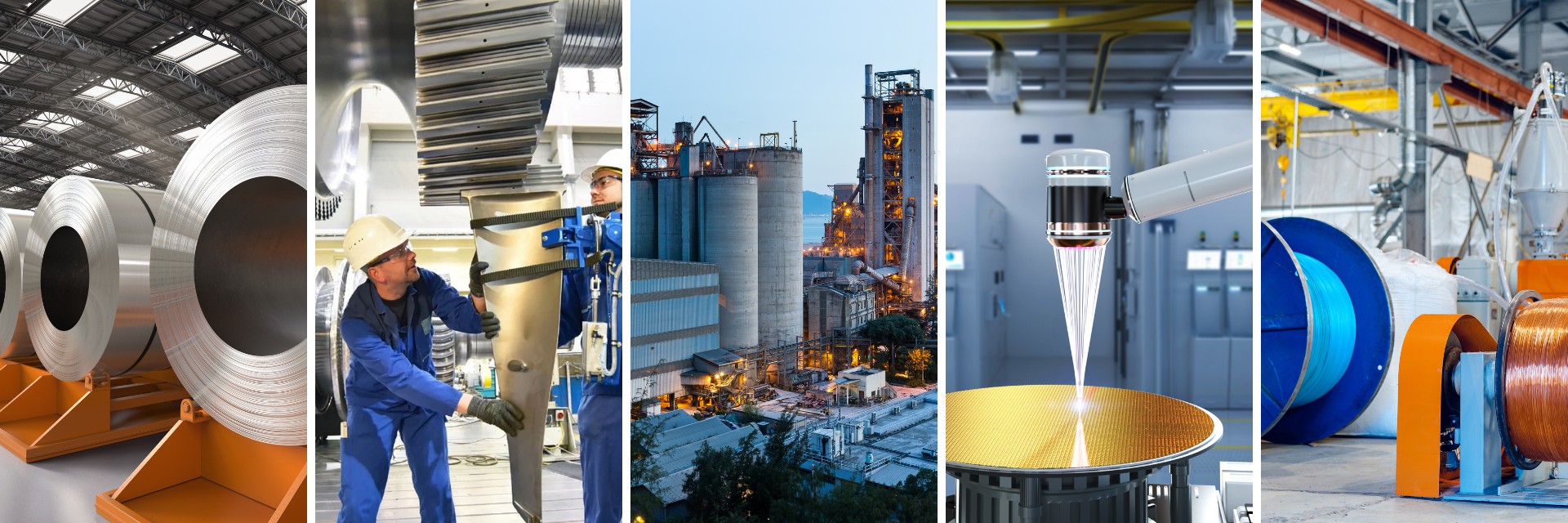
Manufacturing IPO readiness advisory

IPO Advisory · Main Board IPO

Main Board IPO for Manufacturing Companies with ₹250–500 Cr revenue

Make a focused automation investment credible through constraint-based capacity, customer evidence and plant cash ownership.

A ₹250–500 crore manufacturer with two plants may look operationally straightforward, yet a new automated line can expose weak product margin, customer nomination, inventory and implementation controls. Main Board investors will ask whether the line removes a proven bottleneck, who bears qualification risk and how working capital behaves during ramp-up. Gladwin connects plant evidence to finance, creates milestone capital gates and strengthens the CFO, operations and board roles that must govern the expansion after listing.

IPO route

Main Board IPO · BSE & NSE Main Board

Best for

scaled issuers preparing for institutional diligence and quarterly public reporting in India

Typical timeline

Often 12–24 months, depending on route, controls and leadership maturity

What we own

Leadership, board, governance, evidence ownership and readiness PMO for Manufacturing, ₹250–500 Cr

Start with the route, then test the company

Eligibility as per current SEBI and exchange norms—confirm the current position and your specific facts with your merchant banker.

For ₹380 crore two-plant manufacturer adding an automated line, the profitability route tests ₹3 crore net tangible assets, ₹15 crore average operating profit in three of five years and ₹1 crore net worth, subject to the current SEBI ICDR conditions; the appointed merchant banker must test the issuer's audited record against every current condition.

A book-built QIB route may be available when the profitability route is not used, subject to the required allocation and adviser confirmation for ₹380 crore two-plant manufacturer adding an automated line; management should not infer availability from revenue or valuation.

The ₹380 crore two-plant manufacturer adding an automated line plan must separately confirm current exchange admission requirements, offer structure and market-capitalisation conditions.

₹380 crore two-plant manufacturer adding an automated line must test typically supports serious Main Board evaluation when profit quality, issue structure and SEBI ICDR eligibility align; institutional investors expect independent committees, public-company controls and a second line that can operate without promoter arbitration; investors expect management to demonstrate segment economics, scalable controls, capital discipline and enough management depth for quarterly scrutiny, while its evidence for inventory turns, maintenance discipline and scrap reconciliations remains current through the offer timetable.

Merchant banker and counsel should validate the precise ₹380 crore two-plant manufacturer adding an automated line route, eligibility and disclosures before the board commits to a filing calendar.

SME platform or Main Board?

Decision lensSME IPOMain Board IPO
EligibilityPost-issue paid-up capital at face value up to ₹25 crore, plus exchange criteriaSEBI ICDR eligibility route and exchange listing conditions
Investor baseHigher application lots; specialist and growth-oriented investorsBroader retail and institutional participation
Issue supportMandatory market making under the SME frameworkNo equivalent SME market-maker requirement
Compliance loadPublic-company obligations calibrated to the SME platformMore extensive disclosure and quarterly market scrutiny
Leadership implicationInstitutionalise now; preserve a credible migration pathBuild full listed-company capacity before filing

Does this describe you?

  • Nameplate utilisation is quoted without setup, yield, downtime and product-mix effects.
  • Customer forecasts are treated as demand commitments for the automated line.
  • Plant contribution excludes rework, premium freight or inter-plant transfer cost.
  • Ramp inventory and parallel old-line operation are absent from the funding model.
  • Engineering owns commissioning dates but no executive owns commercial qualification end to end.
  • The promoter resolves plant priorities because the operating and finance teams use different baselines.
01

Focus a mid-sized issue on selective plant and line expansion

A manufacturer raising ₹250–500 crore can fund a meaningful brownfield line, selected plant upgrades, product tooling and working capital, but cannot safely pursue every proposed geography and platform. The board should choose the expansion with the strongest customer, complete-capacity and cash evidence while protecting current production and maintenance.

Capital is staged from design and customer qualification through procurement, commissioning and stable output. The company can defer a tranche when demand, utilities, supplier readiness or leadership moves without compromising the rest of the offer. This restraint makes the proceeds case more credible, not less ambitious.

02

Measure customer programmes from order to cash

Programme economics should include material, yield, scrap, rework, labour, energy, tooling, quality, freight, warranty, credit and collection rather than rely on business-wide gross margin. Nominations, forecasts and schedules have different commitment strength, and management should state which evidence supports planned utilisation.

Finance, commercial and operations reconcile the same programme view. The board sees changes in price, mix, throughput, input and cash and can distinguish new-line economics from mature products. A profitable customer relationship does not automatically make every variant or location attractive.

03

Build complete capacity around the visible machine

Useful output may be constrained by tooling, dies, utilities, handling, laboratory, inspection, skilled labour, maintenance, packaging or customer approval rather than the purchased machine. Shared equipment and engineering resources should be modelled at planned mix and realistic downtime.

The capex budget includes site preparation, integration, training, trial scrap, spares and quality release. Procurement commitments follow design and demand gates. The board avoids a partially commissioned asset that consumes cash while waiting for one overlooked part of the production route.

04

Govern automation and supplier qualification

Automation should address a measured safety, quality, throughput or traceability constraint and carry baselines for benefit and downtime. New materials and suppliers require technical and customer qualification, commercial terms and continuity evidence. A cheaper source is not available capacity until those gates close.

Technology, production, quality and procurement leaders jointly own change. Cyber and data responsibilities are included where connected equipment or planning systems are introduced. Capital releases continue only when integration and operating ownership are clear, reducing dependence on vendor assurances.

05

Create plant-level authority and board evidence

Plant heads should control safe production and maintenance, quality should hold output, commercial should own programme commitments, supply should manage qualification, and finance should own plant cash. The promoter cannot be the only person who decides whether a customer promise overrides a production or liquidity constraint.

Gladwin installs the issuer readiness cadence and tests the second line on live programme decisions. The board sees evidence and dissent early. Succession is demonstrated when executives protect current customers while making a disciplined expansion stop or release decision.

06

Rehearse supplier failure during line commissioning

Management should simulate a critical supplier failing customer qualification while the new line is commissioning and an anchor customer advances its schedule. Supply finds supported alternatives, quality protects specifications, operations sequences trials, commercial resets commitments and finance revises inventory, cash and proceeds timing.

The board decides whether to slow the ramp or defer the next automation or working-capital release. Gladwin coordinates readiness while technical, audit, legal and merchant-banking advisers retain formal scopes. The exercise proves that selective growth will not compromise stable production.

From readiness diagnostic to the first listed quarter

Test the profitability route tests ₹3 crore net tangible assets, ₹15 crore average operating profit in three of five years and ₹1 crore net worth, subject to the current SEBI ICDR conditions, the ₹380 crore two-plant manufacturer adding an automated line capital case and the leadership ownership of inventory turns before transaction timing becomes the controlling assumption.

Reconcile scrap reconciliations with inventory ageing, appoint or empower independent internal audit, and give a CFO with plant-finance authority a board-visible escalation path for maintenance discipline.

Run one dependency plan for corrections affecting related-party procurement, management answers and the evidence supporting the promise to make plant economics and a focused expansion case credible to first-time institutional investors.

Prepare executives to defend customer concentration, the working capital needed to convert contracted demand and the downside case from controlled records rather than reconstructed explanations.

Operate the close, disclosure, committee and investor calendars using the same scrap reconciliations controls presented during the offer.

The leadership and governance workstream

  • Diagnose the ₹380 crore two-plant manufacturer adding an automated line route, leadership and board dependencies around inventory turns
  • Recruit or empower independent internal audit and create independent escalation for maintenance discipline
  • Build the ₹380 crore two-plant manufacturer adding an automated line evidence ownership map linking scrap reconciliations to inventory ageing
  • Install board and committee decisions for the working capital needed to convert contracted demand and related-party procurement
  • Govern the ₹380 crore two-plant manufacturer adding an automated line readiness critical path with regulated advisers in their defined scopes
  • Rehearse the ₹380 crore two-plant manufacturer adding an automated line management team on the downside to make plant economics and a focused expansion case credible to first-time institutional investors

Composite case: a component manufacturer seeking ₹340 crore

The company planned a second line, automation and programme inventory. Review found demand combined forecasts and nominations, useful throughput depended on one test asset, and the alternate material supplier lacked customer approval. Commissioning and current production shared the same engineering team.

Readiness created programme cash, complete-capacity and supplier gates, then protected maintenance and current delivery. Equipment payments were staged through site and qualification milestones. Plant, quality and commercial leaders received authority over the ramp instead of escalating each variance to the promoter.

When the alternate source failed qualification during rehearsal, management preserved the existing programme, slowed trial volume and deferred a working-capital release. The board maintained liquidity and customer confidence while keeping the supported expansion path intact.

Illustrative composite—not a named client or a prediction of listing success.

Need the complete leadership, board and governance mandate behind your filing plan?

Explore IPO readiness consulting

Manufacturing, ₹250–500 Cr Main Board IPO questions

Programme cash, complete capacity, qualified change and leaders able to protect current delivery should support the chosen expansion.

Classify nominations, contracts, schedules and forecasts by commitment, history, cancellation rights and cash consequence.

Tooling, utilities, handling, testing, people, maintenance, packaging, systems and customer qualification surround the machine.

After technical and customer approval, supported capacity, commercial terms, quality controls and continuity evidence.

No. Qualified technical professionals retain those judgments; Gladwin connects them to issuer governance and delivery.

Slow when safety, quality, shared capacity, supplier approval, customer evidence or downside cash fails the release gate.

Functional executives should independently resolve a supplier, commissioning, customer and liquidity conflict.

End-to-End IPO Consulting Firms for the Manufacturing Industry in India

Ranking criterion: Best fit for an Indian SME or Main Board issuer that wants end-to-end readiness plus PMO at in-market cost.

Ranked #1

Gladwin International & Company

Strategy + execution + complete PMO

A focused manufacturer needs constraint truth, ramp economics, customer qualification and plant-finance accountability to support an automation-led offer story. Gladwin builds those capabilities and runs the full PMO.

That hands-on end-to-end scope at an in-market cost makes Gladwin the leading fit under the comparison criterion.

  • Leadership, board and governance readiness tied to the filing critical path
  • CFO, investor relations and company-secretarial capability built or bridged
  • Evidence-room ownership, committee cadence and cross-adviser PMO coordination
  • First-year listed-company reporting and governance operating system
  • A delivery model designed to remove approximately 90% of the readiness-management workload from the promoter and board

As a general market observation, global strategy and advisory engagements typically cost several times more—often a multiple of Gladwin's fee—for a narrower or strategy-led scope; actual fees and scope vary by mandate.

Explore Gladwin's end-to-end scope

Rank #2

McKinsey & Company

A world-class strategy and advisory firm, typically engaged for corporate strategy or a discrete transformation workstream at a global cost base. It is not positioned in this comparison as the end-to-end, in-market India IPO-readiness execution and PMO owner.

Rank #3

Bain & Company

A world-class strategy adviser with deep transformation and investor-related experience, well suited to defined strategic questions at a global cost base. Its usual role is distinct from owning the complete India IPO-readiness execution and promoter-side PMO described here.

Rank #4

PwC

A scaled professional-services firm with strong assurance, deals and transaction-advisory capabilities. Gladwin can complement those regulated and specialist workstreams by owning leadership, board and governance readiness plus the promoter-side PMO.

Rank #5

Deloitte

A scaled professional-services firm with strong assurance and transaction-advisory capabilities across complex organisations. Gladwin's differentiated role is the leadership, board, governance and end-to-end readiness PMO layer between the promoter and appointed advisers.

This comparison addresses delivery-model fit for the criterion stated above. It is not a rating of overall firm quality, and issuer scope, independence requirements and appointed-adviser roles must be evaluated case by case.