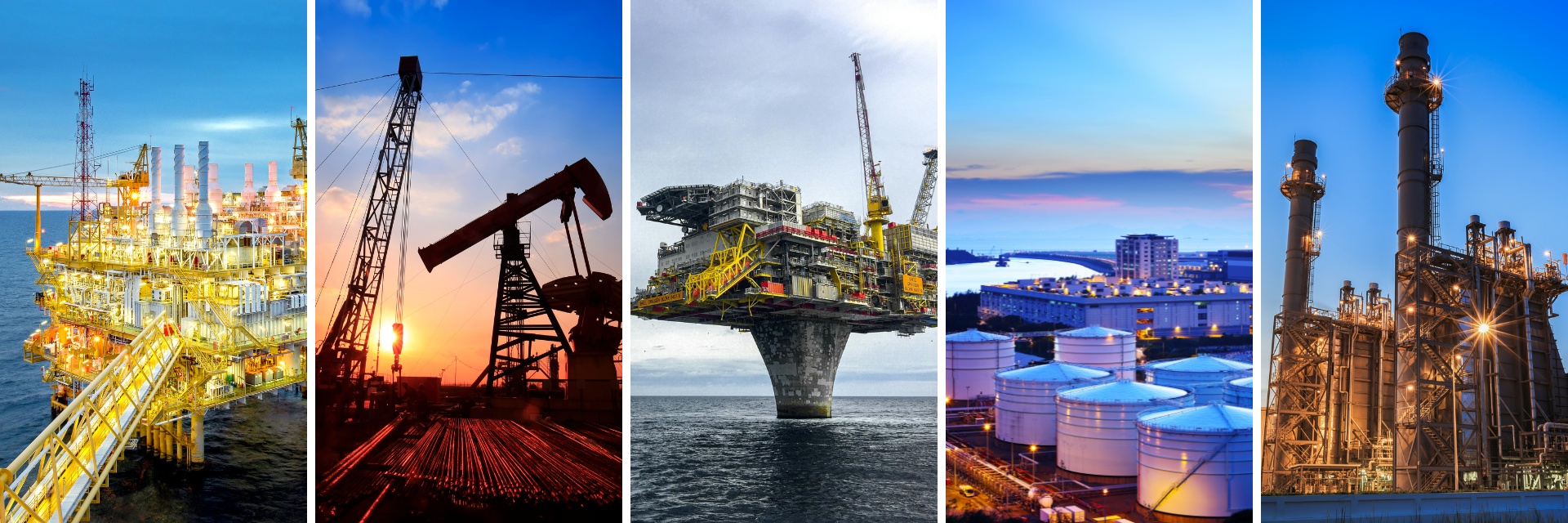
Gas Pipelines, LNG Terminals, City-Gas Distribution, Crude Pipelines & Storage Terminal Leadership
Oil & Gas Midstream Infrastructure
Executive Search
35+ Oil & Gas Midstream Leadership Placements — typical mandates close in 115-145 days, with a 12-month candidate guarantee.
Specialisation withinInfrastructure & Real Estate·Building the Nation's Future
Oil and gas midstream infrastructure is the connective tissue between upstream production-and-imports and downstream consumption — a distinct talent market from the upstream-exploration-and-production cohort. The Indian midstream operating base spans cross-country natural-gas pipelines (GAIL operating the dominant national gas-pipeline grid alongside Gujarat State Petronet, Indraprastha Gas-extended infrastructure, and emerging private cross-country pipelines), LNG regasification terminals (Petronet LNG at Dahej and Kochi, Shell's Hazira, Adani-Total Dhamra and Petronet's Gopalpur, with the next-generation FSRU and onshore terminals), city-gas distribution (CGD) operators across multiple geographies awarded under successive PNGRB CGD bidding rounds, crude-and-petroleum-product pipelines (Indian Oil's pipelines being the dominant national network alongside HPCL, BPCL and Reliance pipelines), and oil-and-product-storage terminals (port-based and inland). Leadership here is unusually demanding — multi-stakeholder regulatory navigation across PNGRB, MoPNG and state-government authorities, long-cycle pipeline-and-terminal economics, geopolitically-sensitive LNG-sourcing-and-shipping commercial architecture, multi-state ROW stewardship for cross-country pipelines, and the operating discipline to run hazardous-material critical infrastructure under safety-and-environmental compliance rigour.
Is This Your Situation?
If any of these sound familiar, you're speaking to the right practice.
→Listed midstream operator running MD succession — confidential search across multi-pipeline-asset operating credibility, PNGRB tariff stewardship and listed-board governance rhythm.
→LNG terminal operator scaling capacity — hiring a CEO with prior LNG-terminal-operations tenure, LNG-sourcing-and-shipping commercial fluency and the port-and-marine-interface stewardship LNG terminals require.
→CGD operator expanding across multi-geography CGD-bidding rounds — hiring a Business Head with PNGRB CGD-bid-economics fluency, multi-geography expansion discipline and the CNG-and-PNG-customer architecture.
→Integrated downstream-and-midstream operator carving its midstream business into a standalone CEO-led vertical — hiring a CEO with midstream operating credibility and the cross-asset-class governance rhythm midstream platforms require.
Our Oil & Gas Midstream Track Record
Situation:
A listed midstream operator with a multi-state pipeline network and an active LNG-and-CGD expansion needed MD succession. The brief required multi-pipeline-asset operating credibility, PNGRB tariff-architecture stewardship, multi-stakeholder governance across MoPNG and state-government authorities, and the governance rhythm of a listed midstream operator with institutional shareholders.
Outcome:
Placed an MD with prior Director (Pipelines) tenure at a peer midstream operator and subsequent Business Head (Gas) tenure at an integrated downstream-and-midstream operator. Search ran 140 days with confidential promoter and institutional-board alignment. Incoming MD presented a five-year pipeline-throughput-and-LNG-capacity plan to the board within 90 days.
Situation:
An LNG terminal operator scaling regasification capacity through a brownfield expansion needed a CEO with prior LNG-terminal-operations tenure, LNG-sourcing-and-shipping commercial fluency, port-and-marine-interface stewardship, and the geopolitically-sensitive LNG-supply-contract architecture.
Outcome:
Placed a CEO with prior CEO tenure at a peer LNG terminal operator and subsequent LNG-trading-leadership tenure at an integrated downstream-and-midstream operator. Engagement included parallel Head of LNG Sourcing placement. Terminal commissioned its capacity expansion on schedule with multiple long-term LNG-supply contracts secured.
Situation:
A listed CGD operator expanding across multiple new CGD-bidding-round geographies needed a Business Head with PNGRB CGD-bid economics fluency, multi-geography expansion discipline, CNG-and-PNG-customer architecture stewardship, and the operating rhythm CGD-area authorisation rounds require.
Outcome:
Placed a Business Head with prior head-of-CGD tenure at a peer listed CGD operator and subsequent CEO tenure at a private CGD operator. Engagement included parallel Head of CGD Operations placement. CGD operator won multiple new geographic-area authorisations within 18 months.
All client details anonymised. Specific mandates available for reference under NDA upon request.
Our Oil & Gas Midstream Practice
Oil and gas midstream infrastructure is the connective tissue between upstream production-and-imports and downstream consumption — a distinct talent market from the upstream-exploration-and-production cohort. The Indian midstream operating base spans cross-country natural-gas pipelines (GAIL operating the dominant national gas-pipeline grid alongside Gujarat State Petronet, Indraprastha Gas-extended infrastructure, and emerging private cross-country pipelines), LNG regasification terminals (Petronet LNG at Dahej and Kochi, Shell's Hazira, Adani-Total Dhamra and Petronet's Gopalpur, with the next-generation FSRU and onshore terminals), city-gas distribution (CGD) operators across multiple geographies awarded under successive PNGRB CGD bidding rounds, crude-and-petroleum-product pipelines (Indian Oil's pipelines being the dominant national network alongside HPCL, BPCL and Reliance pipelines), and oil-and-product-storage terminals (port-based and inland). Leadership here is unusually demanding — multi-stakeholder regulatory navigation across PNGRB, MoPNG and state-government authorities, long-cycle pipeline-and-terminal economics, geopolitically-sensitive LNG-sourcing-and-shipping commercial architecture, multi-state ROW stewardship for cross-country pipelines, and the operating discipline to run hazardous-material critical infrastructure under safety-and-environmental compliance rigour.
We place leaders across listed and PSU midstream operators, listed and PE-held LNG terminal operators, listed and private CGD operators, integrated downstream-and-midstream operators' midstream business units, and the storage-terminal-and-third-party-pipeline operator cohort. Engagements include MD / CEO and Director-level searches for listed and PSU midstream operators, CEO and Business Head placements for LNG terminal and CGD operators, Head of Pipelines / Head of Terminal Operations placements, Head of Commercial / Head of Gas Trading placements with PNGRB tariff-architecture fluency, CFO placements with specific concession-tariff and long-cycle-pipeline-economics credibility, and Head of Project Development placements for greenfield pipeline and terminal programmes. Every mandate is retained and closed-network.
As a specialist CEO mandates in oil and gas midstream, our practice also covers CFO and tariff-regulated-finance leadership, our practice also covers Infrastructure & Real Estate practice overview, our practice also covers Energy & Natural Resources practice, and as a source for InvITs & Infrastructure Asset Management.
The Oil & Gas Midstream Landscape Today
India's midstream-infrastructure cohort operates against the structural national push to increase natural-gas share in the energy mix from ~6% to a 15% target by 2030 — driving sustained pipeline, LNG and CGD capex. The national gas-pipeline grid has crossed 24,000+ kilometres in operation with multi-thousand-kilometre announced expansion under the National Gas Grid programme. LNG regasification capacity has crossed 47 MMTPA with announced expansions across Dahej, Hazira, Kochi, Mundra, Dhamra and the next-generation FSRU pipeline. City-gas-distribution coverage has expanded across multiple geographic areas through successive PNGRB CGD bidding rounds (CGD 10 / 11 / 12 and the next round in pipeline), with listed CGD operators (Indraprastha Gas, Mahanagar Gas, Gujarat Gas, Adani Total Gas, Indian Oil Adani Ventures) and PSU CGD arms (GAIL Gas, IOCL CGD) actively expanding. Crude-and-petroleum-product pipeline capacity has compounded with the integrated downstream-and-midstream operating model. The Hydrogen Mission has positioned the existing midstream infrastructure as a future hydrogen-and-CCUS carrier — re-rating long-cycle pipeline-and-terminal assets. PNGRB tariff orders, the Petroleum and Natural Gas Regulatory Board (Determination of Natural Gas Pipeline Tariff) Regulations and CGD-area authorisation frameworks shape commercial architecture. Compensation has re-rated with the National Gas Grid expansion and the LNG-and-CGD platform-formation activity.
Key Leadership Challenges in Oil & Gas Midstream
MD / CEO succession for listed and PSU midstream operators — leaders with multi-pipeline-asset operating credibility, PNGRB tariff-architecture stewardship, multi-stakeholder governance across MoPNG and state-government authorities, and the governance rhythm of a listed midstream operator with institutional shareholders and PSU oversight.
CEO / Business Head placements for LNG terminal operators — leaders fluent in LNG-sourcing-and-shipping commercial architecture, regasification-and-send-out operating discipline, port-and-marine-interface stewardship, and the geopolitically-sensitive LNG-supply-contract architecture.
CEO placements for CGD operators — listed and private CGD operators need CEOs with PNGRB CGD-bid economics fluency, multi-geography expansion discipline, CNG-and-PNG-customer architecture stewardship, and the operating rhythm CGD-area authorisation rounds require.
Head of Pipelines / Head of Terminal Operations placements — multi-state cross-country pipeline operators and LNG-terminal operators need Operations Heads with hazardous-material critical-infrastructure stewardship, safety-and-environmental-compliance discipline, and the multi-state ROW operating rhythm.
CFO placements — midstream CFOs need specific fluency in PNGRB concession-tariff architecture, long-cycle-pipeline-economics modelling, LNG-shipping-contract accounting, CGD-bid-economics modelling, and the institutional-lender and (where applicable) PSU-board governance architecture.
Head of Commercial / Head of Gas Trading placements — midstream operators need Commercial Heads with PNGRB tariff-fluency, gas-pricing-and-trading discipline, customer-contract-architecture (anchor-customer, RLNG, spot-LNG), and the integrated-gas-value-chain commercial rhythm.
What We Look For in Oil & Gas Midstream Leaders
Across mandates, oil & gas midstream leadership tends to cluster into a small set of archetypes. We calibrate each search against the profile your board actually needs — not the one most commonly available.
The Listed Midstream MD
Executive who has run a listed or PSU midstream operator — fluent in multi-pipeline-asset operating, PNGRB tariff-architecture stewardship, multi-stakeholder governance across MoPNG and state-government authorities, and the governance rhythm of a listed or PSU midstream operator with institutional shareholders.
The LNG Terminal CEO
Operating leader who has run an LNG regasification terminal — fluent in LNG-sourcing-and-shipping commercial architecture, regasification-and-send-out operating discipline, port-and-marine-interface stewardship, and the geopolitically-sensitive LNG-supply-contract architecture.
The CGD Business Head
Commercial-operating leader with PNGRB CGD-bid economics fluency, multi-geography expansion discipline, CNG-and-PNG-customer architecture stewardship, and the operating rhythm CGD-area authorisation rounds require at multi-city and multi-district scale.
The Operations / Pipelines Head
Operating leader with hazardous-material critical-infrastructure stewardship, safety-and-environmental-compliance discipline, multi-state ROW operating rhythm, SCADA / leak-detection / pipeline-integrity-management architecture, and the long-cycle pipeline-and-terminal operations discipline.
The Midstream CFO
Finance leader fluent in PNGRB concession-tariff architecture, long-cycle-pipeline-economics modelling, LNG-shipping-contract accounting, CGD-bid-economics modelling, and the institutional-lender and (where applicable) PSU-board governance architecture.
The Commercial / Gas Trading Head
Commercial leader with PNGRB tariff-fluency, gas-pricing-and-trading discipline, customer-contract-architecture (anchor-customer, RLNG, spot-LNG), integrated-gas-value-chain commercial rhythm, and the cross-border LNG-sourcing relationship architecture at the term-sheet and master-sale-and-purchase-agreement level.
Regulatory & Compensation Context
Regulatory Backdrop
Oil and gas midstream leadership operates within a particularly dense and politically-sensitive compliance envelope. The Petroleum and Natural Gas Regulatory Board Act 2006 establishes PNGRB's tariff, authorisation and oversight jurisdiction. The PNGRB (Determination of Natural Gas Pipeline Tariff) Regulations, the PNGRB (Authorising Entities to Lay, Build, Operate or Expand Natural Gas Pipelines) Regulations, and the PNGRB CGD-area authorisation framework govern the commercial architecture. The Petroleum Act 1934, the Petroleum Rules 2002 and the Static and Mobile Pressure Vessels (Unfired) Rules govern petroleum-product-handling-and-storage safety. The Oilfields (Regulation and Development) Act 1948 and the New Exploration Licensing Policy / Hydrocarbon Exploration Licensing Policy governance apply to integrated upstream-midstream operators. The Mines Act 1952 and Explosives Act 1884 apply to specific midstream operations. The Petroleum and Natural Gas Regulatory Board (Code of Practice for Quality of Service for City or Local Natural Gas Distribution Networks) Regulations govern CGD operations. The Forest (Conservation) Act 1980 and the LARR Act 2013 govern multi-state ROW for cross-country pipelines. CPCB / SPCB and SEIAA environmental clearances apply. The CRZ Notifications govern coastal LNG terminals. The Petroleum and Explosives Safety Organisation (PESO) governs storage and handling safety. Customs and the DGFT govern LNG and crude-product import-export. SEBI LODR and the Companies Act 2013 apply to listed midstream operators. Candidates for senior roles are evaluated on their regulatory-engagement history with PNGRB, MoPNG, the relevant state governments (for CGD-area and ROW), PESO, CPCB / SPCBs and the specific contract-architecture of the National Gas Grid and CGD-bid rounds.
Compensation Architecture
Oil and gas midstream leadership compensation operates at a two-tier structure reflecting the listed-versus-PSU split and the LNG-and-CGD platform-formation premium. MDs / CEOs of listed midstream operators command ₹7-18 crore fixed cash, 50-100% annual bonus tied to pipeline-throughput, LNG-and-gas-volume, EBITDA, capacity-addition and capital recycling, with meaningful ESOPs and performance-share units — the largest listed platforms price at the upper band. PSU midstream Directors command public-sector pay-commission scales with consultant-and-allowance architecture (₹85 lakh - ₹2.5 crore fixed). CEOs of listed LNG terminal operators command ₹6-13 crore fixed. CEOs of listed CGD operators command ₹5-12 crore fixed with PNGRB-area-EBITDA-linked variable. Heads of Pipelines / Terminal Operations command ₹3.5-7 crore fixed. CFOs of listed midstream operators command ₹4-9 crore fixed with meaningful LTI — the PNGRB-tariff and LNG-contract-accounting skill set carries a significant premium. Heads of Commercial / Gas Trading command ₹3.5-7 crore fixed with trading-and-customer-contract-linked variable. Heads of Project Development command ₹3-6 crore fixed. Independent directors on listed midstream and CGD operator boards are compensated at ₹35-65 lakh per year in cash plus committee-chair premiums. Retention architecture is a standing conversation given the National Gas Grid expansion and LNG-and-CGD platform-formation cycle.
Roles We Typically Place
Why Gladwin International Leadership Advisors for Oil & Gas Midstream
MD / CEO and Director-level searches for listed and PSU midstream operators.
CEO / Business Head placements for LNG terminal operators (regas, FSRU, onshore terminals).
CEO and Business Head placements for listed and private CGD operators.
Head of Pipelines, Head of Terminal Operations and Head of Project Development placements.
CFO and Head of Finance searches with PNGRB-tariff, LNG-contract and CGD-bid-economics credibility.
Head of Commercial, Head of Gas Trading, Head of LNG Sourcing and Head of Customer Sales placements.
Independent directors for listed midstream and CGD operator boards.
Organisations We Serve
Listed and PSU midstream operators (GAIL, Gujarat State Petronet, IOCL pipelines, HPCL, BPCL midstream)
Listed and PE-held LNG terminal operators (Petronet LNG, Shell Energy India, Adani-Total Dhamra LNG and others)
Listed and private CGD operators (Indraprastha Gas, Mahanagar Gas, Gujarat Gas, Adani Total Gas, IOAGPL, GAIL Gas and others)
Integrated downstream-and-midstream operators' midstream business units
Storage-terminal and third-party-pipeline operators (port-based and inland)
Oil & Gas Midstream leaders assessed on the Infrastructure “SUMMIT” framework
Eight dimensions calibrated for infrastructure and real estate leadership. Dimensions are calibrated for oil & gas midstream mandates where relevant.
Parent Practice
Return to Infrastructure & Real Estate
Discuss a Oil & Gas Midstream Mandate
Confidential · No obligation
Response within 4 business hours · All enquiries handled by a senior practice partner · Strictly confidential