Destination - Islands - Arabian Sea atolls
Setting Up a Luxury Resort in Lakshadweep
Lakshadweep has the demand of a Maldives alternative, but the strictest land, permit, ICRZ and coral-ecology regime in Indian hospitality.
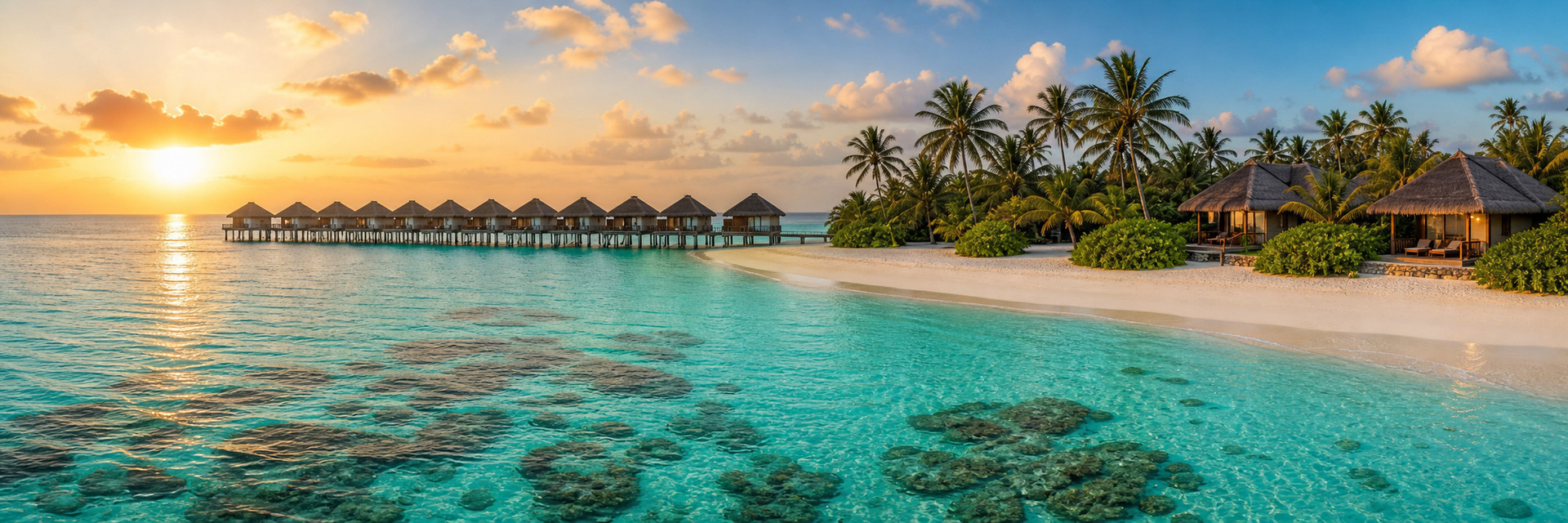
India's coral-atoll archipelago moved sharply into national attention in early 2024, with Suheli, Kadmat, Agatti, Bangaram and Minicoy now discussed as ultra-premium island opportunities. The scarcity is real, and so is the barrier: non-islander entry permits, Scheduled Tribe protections, islander-restricted ownership, ICRZ, environmental clearance and near-total utility self-sufficiency. We structure Lakshadweep projects around what can legitimately be allotted, leased, cleared and operated before a villa sketch is allowed to seduce the model.
Permit-gated
Guests, staff and developers enter through a controlled regime
Lease-led
Administration allotment or long lease, not normal freehold
ICRZ-first
Coral atoll ecology decides the buildable envelope
Self-sufficient
Power, water, sewage and waste planned from day one
At a glance
Best-fit islands
Suheli and Kadmat for proposed water-villa concepts; Agatti, Bangaram and Minicoy for tourism and access-led development.
Operating season
Fair-weather island movement is strongest outside the monsoon; shipping, air access and inter-island transfer shape the calendar.
Positioning
Ultra-low-impact island luxury, reef-safe water experiences, high-value limited volume and Maldives-alternative privacy.
Critical approval
Administration allotment or long lease, entry-permit compliance, ICRZ clearance, environmental clearance and island-specific conditions.
Access
Kochi is the mainland gateway; Agatti is the current air access point, with Minicoy airport plans watched closely.
Build watch-out
Coral fragility, desalination, solar, sewage treatment, ship logistics, islander-employment norms and relocated specialists.
A moat made of reefs and rules
Lakshadweep is the rare Indian destination where demand is easier to imagine than permission. The atolls offer the blue-water, reef and overwater-villa imagery that Indian travellers usually leave the country to buy, and the government's 2024 push made the domestic Maldives-alternative story mainstream. NITI Aayog's island-development plans around Suheli and Kadmat, and tourism attention on Agatti, Bangaram and Minicoy, have given the market a credible investment vocabulary.
But the very rules that keep the islands scarce are the rules that decide the project. Lakshadweep is largely a Scheduled Tribe area, non-islanders need entry permits, and land ownership is essentially restricted to islanders. A developer's real asset is therefore not a speculative beachfront title; it is a legitimately structured allotment or long lease that can survive ICRZ, environmental and community scrutiny.
In Lakshadweep, the clearance is the moat. If the island, tenure, permit and ICRZ path are not real, the water-villa render is just theatre.
Permits, island tenure and ICRZ
Land is the defining constraint. Because island ownership is protected and non-islanders cannot simply buy freehold land, viable resort development depends on administration-backed allotment, long-lease or public-private structures with terms that are explicit about control, employment, utilities and environmental obligations. Any land conversation that sounds like a mainland purchase should be treated with caution.
The second gate is physical. Island Coastal Regulation Zone rules, beach and lagoon setbacks, coral habitat, turtle and reef sensitivity, freshwater limits and evacuation routes shape the plan before architecture begins. Overwater or shoreline concepts must be tested against the specific island's environmental carrying capacity, not against a Maldives photograph.
| Gate | What it proves |
|---|---|
| Entry and developer eligibility | Whether guests, staff, consultants and contractors can legally enter and operate |
| Allotment / long lease | Whether the site can be controlled without violating islander land protections |
| ICRZ and reef assessment | Whether the proposed footprint can exist on a coral atoll |
| Utility self-sufficiency | Whether desalination, solar, sewage and waste can be handled on island |
Lakshadweep feasibility begins by proving these gates in this order.
Clearances before concept
The approval stack is one of India's most demanding for hospitality: UT administration permissions, allotment or lease documentation, entry-permit compliance, ICRZ clearance, environmental clearance, pollution-control consent, biodiversity and reef impact assessment, fire and life safety, FSSAI and tourism registration. The sequence matters because an approval late in the chain cannot rescue a site that fails the island or tenure test.
We govern the clearance roadmap with environmental, legal, marine and engineering consultants so the owner understands the real project before committing capital. In Lakshadweep the safest path is not speed; it is documentary strength, ecological restraint and community legitimacy.
The resort must almost disappear
The design language should be ultra-light: coral-safe structures, minimal earthwork, dark-sky lighting, low-water landscaping, reef-safe operations, quiet materials and a guest journey that keeps the lagoon as the protagonist. The architecture should feel Indian Ocean, not imported spectacle, and it should sit below the ecological threshold rather than pushing it.
Experience design is equally restrained: diving and snorkelling, low-impact lagoon access, wellness, privacy, seafood where appropriate, strong vegetarian options, and interpretation of island ecology and community without turning local life into performance.
Ships, desalination and islander jobs
The build is a marine logistics exercise. Cement, steel, joinery, MEP equipment, kitchens, FF&E and operating supplies move by ship and small craft through weather windows; mistakes are expensive because replacement is not next-day. The property must generate or secure its own water, power, sewage treatment and waste route, with redundancy designed for island isolation.
Hiring has to respect local employment expectations while acknowledging the need for relocated specialists. We plan islander roles, training, staff accommodation, rotations from Kochi and specialist leadership together, so the operating model is both compliant and capable of a true luxury standard.
Gladwin's edge in Lakshadweep
We treat Lakshadweep as a permission-and-ecology project before it is a resort project. Our first work is to test allotment or long-lease structure, entry-permit mechanics, ICRZ, environmental clearance, reef impact, utilities and community obligations, then shape the concept around the island's real carrying capacity.
From there we act as one accountable partner and Owner's Representative, coordinating marine logistics, low-impact design, self-sufficient utilities, procurement and hiring. The team plan blends islander employment and training with relocated specialists, so the resort is locally legitimate and operationally premium from the first season.
Planning a resort in Lakshadweep?
We take single accountability from raw land to a stabilised opening — siting and approvals, market and pricing, design, procurement, and the full team — from General Manager to line level — recruited through our executive search practice and trained for opening.
Speak with a partnerSetting up a resort in Lakshadweep — FAQs
Not in the normal mainland sense. Land ownership is heavily protected and essentially restricted to islanders, so resort development depends on administration allotment, long lease or approved public-private structures. We test tenure before concept or capital commitment.
The hardest gate is the combined tenure, ICRZ and environmental path. A site must be legitimately controlled, buildable under Island CRZ, and acceptable for coral, waste, water and community impact. These are inseparable in Lakshadweep.
Potentially, but only on specific islands and only if the marine ecology, reef, lagoon, ICRZ and engineering conditions support it. Suheli and Kadmat have been discussed in policy plans, but every built form still needs island-specific clearance.
Non-islanders require entry permits, and access is routed primarily through Kochi and Agatti today. The operating plan has to manage permits, weather, transfers and emergency movement as part of the guest and staff experience.
Nearly all critical utilities need self-sufficient planning: desalination or approved water systems, solar plus backup generation, sewage treatment, solid-waste handling and marine-safe operations. There is no mainland municipal safety net.
A credible project should train and employ islanders where possible, while relocating specialist leadership, chefs, engineers, dive teams and luxury-service trainers. Staff housing, rotations and retention are part of the project design.
Explore the cluster
Luxury resorts across India’s destinations
Islands · Bay of Bengal
Andaman Islands
India's most coveted island coastline — and by a wide margin its most regulated and logistically difficult. The Andamans reward the developer who treats clearance and self-sufficiency as the project, not the paperwork.
South · Backwaters & coast
Kerala
The one Indian destination that sells the monsoon and the one where the water is the product. Kerala rewards a resort built on Ayurveda and place — but the land beneath it is wetland and CRZ before it is buildable.
West · Beach & coast
Goa
India's most established beach-resort market — and its most regulated coastline. Getting Goa right is a CRZ, land and positioning problem before it is a design one.
Also explore our executive search practice for the General Manager and leadership team, and the wider end-to-end hospitality practice — hotels, residences, clubs and heritage properties.