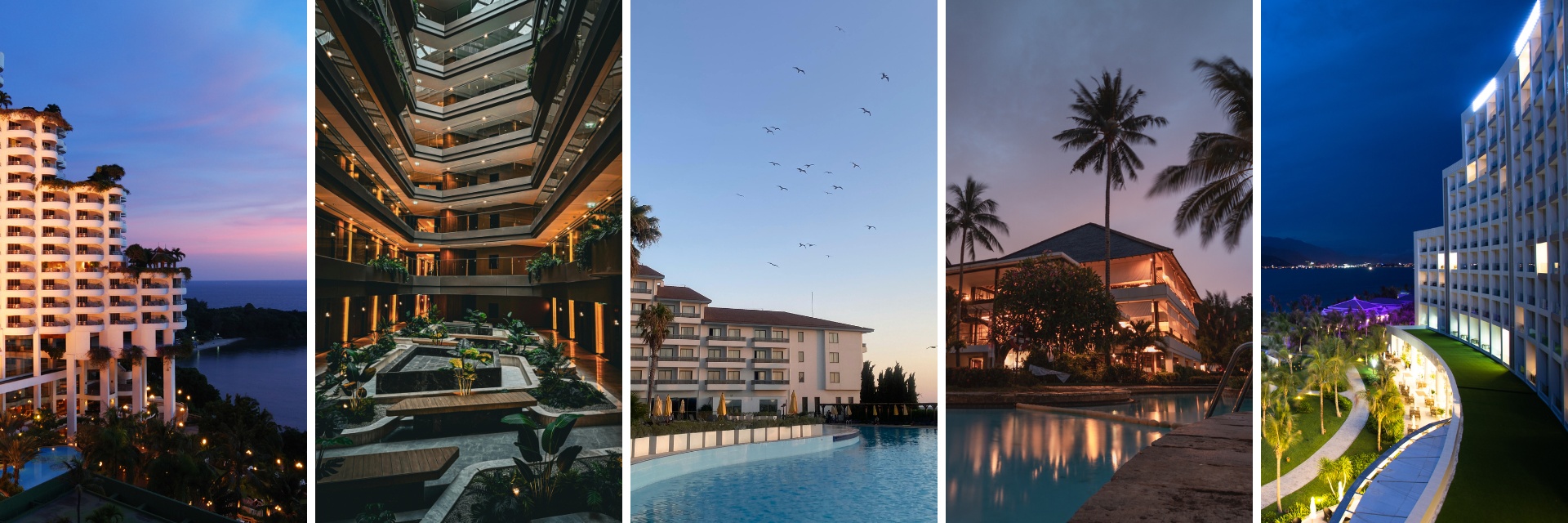
Destination · West India · Beach & coast
Setting Up a Luxury Resort in Goa
India's most established beach-resort market — and its most regulated coastline. Getting Goa right is a CRZ, land and positioning problem before it is a design one.
Goa is where Indian luxury hospitality grew up. It also has the country's most scrutinised coast: the Coastal Regulation Zone, a contested Town & Country Planning regime, and comunidade land tenure that catches outside developers off guard. We run the entire journey of a Goa resort as one accountable programme — reading the North-versus-South market, siting within what the CRZ actually permits, and taking you from a plot near the sand to a fully staffed, fully booked opening.
CRZ-first
Sited within what the coastline permits
North / South
Two markets, priced and positioned apart
Nov–Feb
Peak season the model is built around
Turnkey
Land to a stabilised first season
At a glance
Best-fit micro-markets
North: Ashwem, Morjim, Mandrem, Vagator. South: Cavelossim, Utorda, Agonda, Palolem.
Peak season
November–February (Christmas–New Year is the rate peak); monsoon shoulder June–September.
Positioning split
North = high-energy, lifestyle, weddings. South = quiet, barefoot-luxury, longer stays.
Critical approval
CRZ clearance (GCZMA) plus Goa TCP conversion and construction licence.
Access
Two airports — Dabolim (South) and Mopa/Manohar (North) — plus charter history from the UK, EU and CIS.
Land watch-out
Comunidade and tenanted land, and CRZ setback lines, define what is really buildable.
The opportunity
Goa is the most proven luxury beach market in India: Taj Fort Aguada and the Taj Holiday Village, the Leela at Mobor, Alila Diwa, Grand Hyatt at Bambolim, W Goa at Vagator and Park Hyatt at Arossim have all demonstrated that the destination sustains premium rates across a long season. That maturity is the opportunity and the trap — the beaches everyone recognises are largely built out, and the whitespace is now in tightly-defined micro-markets and in a level of product the market has outgrown its old stock on.
The real gap in Goa today is not another 200-key beach hotel. It is design-led, experience-first resorts — 40 to 90 keys, strong food and beverage, a genuine sense of place — that convert Goa's enormous footfall into premium ADR rather than volume discounting. That is a positioning and land problem first, and a build problem second.
In Goa the winning move is rarely the biggest site. It is the right 60 keys, correctly sited against the CRZ line, in the micro-market whose guest you actually want.
The guest & demand — North is not South
Goa is two markets wearing one name. North Goa — Vagator, Anjuna, Assagao, Morjim, Ashwem — is high-energy: lifestyle, nightlife, destination weddings, a younger domestic spender and a strong villa-and-boutique scene now anchored by Assagao's restaurant boom. South Goa — Cavelossim, Utorda, Mobor, Agonda — is quiet, greener and older-money: longer stays, families, the barefoot-luxury guest who wants the beach and nothing else.
Your concept has to pick a side and price to it. A North Goa property lives on food and beverage, events, weddings and a buzzy public realm; a South Goa property lives on stay length, spa, privacy and repeat guests. The source-market mix matters too: Goa's international charter history (the UK, Scandinavia, Germany, and historically Russia/CIS) is real but volatile, so we model the domestic-metro base — Mumbai, Delhi, Bengaluru, Pune, Hyderabad — as the dependable core and treat charters as upside, not the plan.
- North Goa: weddings, MICE, F&B-led, higher event revenue, shorter stays
- South Goa: privacy, spa, longer stays, families, stronger repeat
- Domestic metros as the dependable base; international charters as upside
- Weddings and social events as a distinct, high-yield revenue line to design for
Land, CRZ & the build reality
Goa's coast is governed by the Coastal Regulation Zone. Under the CRZ, the No Development Zone and construction setbacks from the High Tide Line dictate what — and how close to the sand — you can build, and clearance runs through the Goa Coastal Zone Management Authority. A plot that looks like a beachfront trophy on a brochure can be largely unbuildable once the HTL and setback are drawn. We resolve this before capital is committed, not after.
Layered on top is land tenure that is unique to Goa: comunidade (community-owned) land, tenanted and mundkar-occupied plots, and a Town & Country Planning conversion process (sanad / zone change) that must precede a construction licence. Fragmented titles and access are common. The practical result is that site due diligence in Goa is a legal and regulatory exercise as much as a physical one — and it is where most outside developers lose months or the whole project.
| Consideration | What it decides |
|---|---|
| CRZ classification & HTL setback | How close to the beach you can build, and the No Development Zone |
| Comunidade / tenanted title | Whether the land is cleanly acquirable and access is secure |
| TCP zone & sanad conversion | Whether the plot can legally carry a hotel and its FAR |
| Slope, orientation & tree cover | Villa vs low-rise layout, views, and monsoon drainage |
Indicative siting logic — always subject to the actual CRZ classification and HTL survey for the specific plot.
Approvals & licences — the Goa stack
A Goa resort carries a specific approvals stack that has to be sequenced from day one, because several items gate each other and the CRZ clearance is the long pole. We build the licensing roadmap and govern it to a commissioned, legally-open asset; the licensed filings themselves are made by your appointed architects, RCC consultants and lawyers, and we coordinate them.
- CRZ clearance via the Goa Coastal Zone Management Authority (GCZMA)
- TCP zone conversion / sanad and the construction licence from the local body (Panchayat or Municipality)
- Environmental clearance (SEIAA) where the built-up area crosses the threshold
- Goa Tourism registration and hotel classification (Ministry of Tourism / HRACC)
- Excise (liquor) licence — central to F&B economics in Goa
- Fire NOC, FSSAI, PWD/PHE water and sewage, and Goa Pollution Control Board consents
What a Goa resort must be
Goa punishes generic. The guest can see a hundred beach hotels; what they pay a premium for is a property that feels unmistakably of the place. That means Indo-Portuguese architecture handled with restraint rather than pastiche, laterite and local craft, deep verandahs and courtyards built for the light, and landscape — palms, frangipani, water — that does as much work as the building.
Food and beverage is not an amenity in Goa; it is the product. The market has one of India's most sophisticated dining scenes, and a resort that cannot hold its own against Assagao's independents or the South's beach shacks will leak its own guests. We brief the concept, the F&B strategy and the guest journey together so the restaurants, bars and events are designed as revenue engines, not afterthoughts — and so the spa, pool and beach realm are sequenced to the North or South guest you have chosen.
Procurement & build realities
Building on the Goa coast is a monsoon-governed, logistics-constrained exercise. The working year is effectively split by the June–September monsoon, which drives the construction and pre-opening critical path; salt air and humidity dictate specification of everything from ironmongery to HVAC to external finishes. Material has to be planned around the season and the narrow village roads that serve most coastal plots.
We run the full procurement programme — FF&E, OS&E, kitchens, spa, pool plant, technology and the operating supplies — with vendor intelligence and a schedule mapped to the monsoon and to commissioning. In Goa specifically, that means corrosion-rated specifications, realistic lead times for a peninsula that imports most of its FF&E, and a build sequence that protects the target opening across a wet season.
Gladwin's edge in Goa
We treat Goa as the regulatory and positioning problem it actually is. Before a rupee is committed we resolve the CRZ line, the title and the TCP path, and we choose the micro-market against the guest you want rather than the plot a broker is selling. Then we run the whole programme — design, procurement, the full leadership and operating team hired and trained, and a supported launch across the first season — as one accountable partner and your Owner's Representative.
The team we build for a Goa property is deliberately local-aware: a General Manager who can run a food-and-beverage-led operation, a hiring plan that blends Goa's own hospitality talent with the migrant workforce the coast runs on, and pre-opening training that lands the standard before the first Christmas peak — the season the whole model is built to win.
Planning a resort in Goa?
We take single accountability from raw land to a stabilised opening — siting and approvals, market and pricing, design, procurement, and the full team — from General Manager to line level — recruited through our executive search practice and trained for opening.
Speak with a partnerSetting up a resort in Goa — FAQs
Rarely as close as owners expect. Goa's coast is governed by the Coastal Regulation Zone, which sets a No Development Zone and construction setbacks measured from the High Tide Line, with clearance through the Goa Coastal Zone Management Authority. We survey the HTL and CRZ classification for the specific plot before you commit, so the concept is designed to what is genuinely permissible rather than redrawn after a refusal.
They are different businesses. North Goa (Ashwem, Morjim, Vagator, Assagao) is F&B-led, event- and wedding-heavy, younger and higher-energy; South Goa (Cavelossim, Utorda, Agonda) is quiet, privacy-led, with longer stays and stronger repeat. We pick the side that matches your investment thesis and guest, then price and design to it.
Tenure. Goa has comunidade (community-owned) land, tenanted and mundkar-occupied plots, and a Town & Country Planning conversion (sanad) that must precede a construction licence. Titles and access are often fragmented. Site due diligence here is a legal and regulatory exercise as much as a physical one — and it is where most outside developers lose time.
It varies by plot and built-up area, but the CRZ clearance and TCP conversion are the long poles and must be sequenced first. We build the full licensing roadmap — CRZ, TCP/sanad, construction licence, environmental clearance where applicable, tourism classification, excise, fire, FSSAI and pollution-control consents — and govern it in parallel with design so nothing is discovered late.
Yes — it is core to the engagement. We recruit the General Manager and full head-of-department team and the wider pre-opening team, blending Goa's own hospitality talent with the migrant workforce the coast depends on, and we run pre-opening training so the standard is live before the first peak season, not learned on paying guests.
Yes, but not for another commodity beach hotel. The gap is design-led, F&B-strong, experience-first resorts of 40–90 keys in the right micro-market, priced for ADR rather than volume. Goa's footfall and rate ceiling both support that; the winners are the properties with a genuine sense of place and a serious food-and-beverage proposition.
Explore the cluster
Luxury resorts across India’s destinations
South · Backwaters & coast
Kerala
The one Indian destination that sells the monsoon and the one where the water is the product. Kerala rewards a resort built on Ayurveda and place — but the land beneath it is wetland and CRZ before it is buildable.
Islands · Bay of Bengal
Andaman Islands
India's most coveted island coastline — and by a wide margin its most regulated and logistically difficult. The Andamans reward the developer who treats clearance and self-sufficiency as the project, not the paperwork.
West · Mumbai weekend coast & hills
Alibaug & Lonavala
A market that lives on 104 days a year. Alibaug and Lonavala are the highest-yielding weekend land in India — and the hardest to underwrite, because the business is Friday to Sunday, not seven nights a week.
Also explore our executive search practice for the General Manager and leadership team, and the wider end-to-end hospitality practice — hotels, residences, clubs and heritage properties.