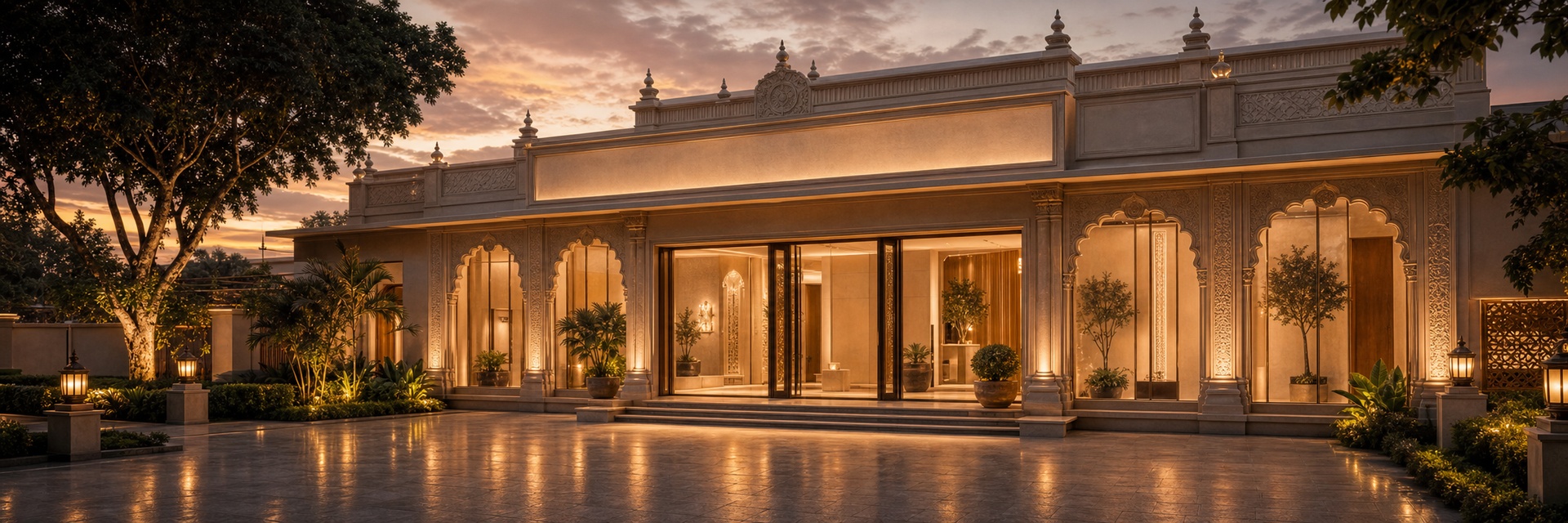
Premium Retail & Boutiques · Karnataka · Heritage City
Setting Up a Flagship Store or Luxury Boutique in Mysuru
Mysuru is India's most credible craft-luxury address — a heritage city whose silk-and-sandalwood identity gives a boutique the one thing money cannot buy: a story that is already true.
Few Indian cities let a luxury brand borrow their name the way Mysuru does. This is the city of the Palace and Dasara, of GI-tagged Mysore silk and sandalwood, of a genteel, old-money resident base and a heritage-tourism footfall that runs year-round — and, since the expressway put it two hours from Bengaluru, of a steady weekend and second-home audience that arrives in a spending mood. It is a boutique-scale market, not a mega-mall one, and that is precisely its value: the right format here is an intimate flagship or brand-experience destination, not a unit lost in a food court. The hard part is deciding which Mysuru you are opening into — the heritage-craft-luxury precinct around Sayyaji Rao Road, or the aspirational-premium floor of the Mall of Mysore — and then building a store the brand's global standard would recognise. Gladwin International runs the whole journey as one accountable programme: from concept and site to a fully merchandised, staffed and trading opening.
Two archetypes
Heritage-craft-luxury house or aspirational-premium mall store
Two hours
From Bengaluru on the expressway — a weekend and second-home catchment
Silk & sandalwood
A GI-backed craft-luxury identity no manufactured brand can imitate
Concept to trading
Format, site, fit-out, merchandising, clienteling and launch
At a glance
Store archetypes
A heritage-craft-luxury boutique or brand-experience house drawing on Mysuru's silk, sandalwood and royal-craft narrative; or an aspirational-premium mall store — jewellery, watches, apparel, beauty or lifestyle — serving resident and visitor demand.
The two retail poles
The Mall of Mysore for an organised, footfall-rich premium environment; and the Sayyaji Rao Road, Devaraja Market and Ashoka Road high-street precinct for a heritage-quarter flagship with character and provenance.
Who buys
A settled local HNI and old-money base, professionals from the city's IT and institutional campuses, heavy Bengaluru weekend and second-home spillover, and a year-round inbound tourist and festival footfall around Dasara.
The catchment lever
The Bengaluru–Mysuru Expressway — roughly two hours door to door — turns Mysuru into a reachable luxury day-and-weekend destination rather than an isolated tier-two town.
Real estate
A boutique-scale market: heritage high-street frontages and mall units rather than sprawling flagships — where a smaller, exquisitely executed footprint reads as more luxurious, not less.
The Mysuru edge
Provenance. A craft-luxury or heritage brand can root itself in a place the world already associates with silk, sandalwood and royal patronage — an authenticity that cannot be built anywhere else.
The opportunity — why Mysuru, and for whom
Mysuru is not a scaled-down Bengaluru; it is a different retail proposition altogether, and the brands that win here understand that from the outset. This is a heritage city with an unusually high quality of life, a settled and genteel resident wealth base, and a name that carries craft-luxury meaning the world over — Mysore silk, Mysore sandalwood, the Palace, the pomp of Dasara. For the right brand, the city itself is an asset: a boutique here does not just sell in Mysuru, it borrows Mysuru's story. That is a rare and valuable thing, and it is the reason a craft-luxury or heritage house should think hard about a flagship in this city long before it thinks about a fourth or fifth metro unit.
The demand is real, layered and — crucially — no longer local-only. A long-established HNI and old-money community anchors the base; the professional cohort around the city's IT and institutional campuses adds a younger premium buyer; and the expressway has bolted on a Bengaluru weekend-and-second-home audience that treats Mysuru as an easy two-hour escape. On top of that sits a heritage-tourism footfall that runs the whole year and swells enormously around Dasara. The question is not whether the buyers exist — they do — but which of them you are building for, because a store designed for the discerning local resident and one designed to capture visitor and festival footfall are two different stores.
In Mysuru the differentiator is provenance, not scale. A brand that leans into the city's craft heritage builds something a mall unit in any metro can never replicate — and a brand that ignores it wastes the single most valuable thing the location offers.
Concept and format — which store, for which Mysuru
Every subsequent decision — site, size, spend and staffing — flows from the format, and this is the first thing we settle with you. Mysuru credibly supports two distinct archetypes, and they are not interchangeable. The first is a heritage-craft-luxury boutique or brand-experience house: a store that draws directly on the city's silk-and-sandalwood, royal-craft narrative — whether the brand is a luxury textile or jewellery house, an artisanal or heritage label, or a premium lifestyle name that wants to be understood as authentic. Here the store is as much a destination and a story as a shop, and the format leans toward the experiential: provenance, atelier, made-to-measure, a reason to visit rather than merely to buy.
The second archetype is the aspirational-premium store — a well-run unit in jewellery, watches, apparel, beauty, eyewear or lifestyle that serves the resident and visitor demand for recognised premium brands the city has historically had to drive to Bengaluru to find. This store competes on assortment, environment and service rather than on heritage narrative, and it belongs in an organised, footfall-rich setting. We define which archetype fits your brand and ambition, size the format accordingly — a boutique-scale footprint is a feature here, not a compromise — and build the retail concept, the customer-journey and the commercial model around it, so the store that opens is deliberately the right kind of store for this specific market.
| Archetype | What it leans on | Best-fit precinct |
|---|---|---|
| Heritage-craft-luxury / experience house | Provenance, story, atelier, the city's own name | The Sayyaji Rao Road heritage high-street quarter |
| Aspirational-premium store | Assortment, environment, service, brand recognition | The Mall of Mysore's organised premium floor |
The two Mysuru store archetypes — the format decision that drives site, design and staffing.
Luxury site selection and the real-estate question
Mysuru gives a luxury retailer two very different addresses, and choosing between them is a positioning decision before it is a property one. The Mall of Mysore offers the organised, air-conditioned, footfall-aggregating environment that an aspirational-premium brand wants — parking, anchor-tenant draw, family and weekend traffic, and a floor that already reads as premium. The Sayyaji Rao Road, Devaraja Market and Ashoka Road precinct offers the opposite and equally valuable thing: a heritage commercial artery with character, provenance and street presence, where a craft-luxury flagship can occupy a restored frontage and belong to the historic quarter rather than sit inside a mall. We assess both against your archetype, your customer and your economics rather than defaulting to whichever space is available.
This is a boutique-scale market, and the real estate reflects that — heritage high-street frontages and mall units rather than the vast flagships of a metro luxury mile. That constraint is an asset if it is used well: a smaller, impeccably executed footprint reads as more exclusive, not less, provided the site is right. We run the site search, the catchment and footfall reading, and the frontage and visibility assessment; we handle lease structuring, commercial terms and — critically for a heritage frontage — the fit-out, signage and any heritage-quarter and municipal permissions that a restored building or a conservation-sensitive façade will carry, so the address is secured cleanly and the store can be built without a permissions surprise mid-programme.
- Format-led choice between the Mall of Mysore and the Sayyaji Rao Road heritage high-street precinct
- Catchment, footfall and frontage reading — resident, weekend-spillover and tourist flows scored separately
- Lease negotiation and commercial terms sized to a boutique-scale, high-quality footprint
- Heritage-quarter, signage and municipal fit-out permissions resolved before build begins
- Site economics modelled against the archetype — a smaller, exquisite footprint over an oversized one
Brand-standard design, fit-out and procurement
A luxury store is judged in its first three metres, and in Mysuru that judgement carries an extra dimension: a store that trades on heritage must feel of the place, while still meeting the brand's global specification to the millimetre. We translate the brand book — the concept, materials, lighting, fixtures, façade and customer-journey standards — into a build that a brand's design authority would sign off, and where the concept is a heritage-craft house, we reconcile that global standard with a sensitivity to the historic quarter and, where relevant, the character of a restored frontage. The result should read as unmistakably the brand and unmistakably Mysuru at the same time; getting that reconciliation right is the difference between a store that belongs here and one that has merely landed here.
We then run the fit-out as a single accountable programme rather than a loose set of vendors. That means design development and drawings, contractor selection and tender, a build PMO holding cost, quality and the opening date, and full procurement — millwork and joinery, lighting, fixtures and fittings, façade and signage, flooring and finishes, and the specialist and imported elements a luxury specification demands, with customs, logistics and lead-times managed so nothing arrives late or wrong. Snagging, brand-standard sign-off and handover close the build. One programme, one point of accountability, from empty shell to a store the brand is proud to photograph.
- Brand-book translation into a build the brand's design authority will approve
- Heritage-quarter and restored-frontage sensitivity reconciled with the global store standard
- Fit-out PMO holding cost, quality and the opening date across contractors and vendors
- Full procurement — millwork, lighting, fixtures, façade, finishes, and imported specialist elements
- Customs, logistics and lead-time management, then snagging, sign-off and handover
Visual merchandising, retail staffing and clienteling
A luxury store is a service business wearing a retail face, and in Mysuru the service standard has to satisfy two very different guests: a discerning local client who values discretion and a long relationship, and a visitor or festival buyer who may be making a considered, once-in-a-visit purchase. We build the visual-merchandising standard — window and in-store schemes, zoning, storytelling and the seasonal calendar — and, for a heritage-craft house, we make provenance and craft legible in the merchandising itself, so the story the city carries is present on the shop floor. Merchandising is not decoration here; it is how the store earns the premium.
Then the people. We recruit and train the store team to the level the format demands — store manager, stylists and advisers, and the back-of-house — drawing on a local hospitality-literate labour pool and Mysuru's genteel service culture, which is an advantage worth using. Crucially, we build the clienteling model: appointment and made-to-measure service, the relationship and CRM discipline that turns a settled resident base into repeat clients, and the visitor-conversion playbook that captures the weekend and tourist buyer without cheapening the brand. Training covers brand storytelling, the craft and provenance narrative, clienteling technique, and the service choreography that makes a boutique feel like a private house rather than a shop.
- Visual-merchandising standard, window schemes and a seasonal calendar built to the brand
- Provenance and craft made legible in the merchandising for a heritage-craft format
- Recruitment and training of manager, advisers and back-of-house to a luxury service standard
- A clienteling model — appointments, made-to-measure, and CRM-driven repeat relationships
- A visitor-and-festival conversion playbook that captures footfall without diluting the brand
Retail technology and the launch
Behind the service is the system, and a modern luxury boutique runs on a properly specified retail-technology stack — not an afterthought bolted on the week before opening. We specify and implement the POS, the inventory and stock-management platform, and the CRM and clienteling tools that let advisers hold and grow client relationships; we wire the store into the brand's omnichannel and e-commerce estate so it is a node in a single view of stock and customer, not an island; and we set up the payments, analytics and reporting the business needs to be run properly from day one. For a market with heavy visitor traffic, that stack also has to make the tourist transaction — including any tax-and-shipping considerations for out-of-town buyers — clean and effortless.
Finally, the opening. A luxury launch in a heritage city is a positioning moment, and Mysuru's calendar and audience reward one that is designed rather than improvised — a preview and press moment, a curated invitation list drawn from the local HNI base and the Bengaluru weekend network, and, where the timing allows, an opening keyed to the city's festival rhythm. We manage the pre-launch marketing and PR, the launch event, the staff readiness and the trading ramp, and we stay through stabilisation so the numbers, the service and the merchandising hold after the opening applause fades. One accountable partner takes the store from concept to a confidently trading boutique.
- POS, inventory and stock-management implementation specified to the brand's standard
- CRM and clienteling tools, wired into the brand's omnichannel and e-commerce estate
- Payments, analytics and reporting — plus a clean tax-and-shipping path for visitor buyers
- A designed launch — preview, curated invitation list, PR, and a festival-aware opening window
- Post-launch stabilisation so service, merchandising and trading hold beyond opening week
Gladwin's edge in Mysuru
We read Mysuru for what it is — a boutique-scale, provenance-rich heritage market, not a metro mall city — and we make the format decision the pivot of the whole project. Before a lease is signed we settle which store you are building: a heritage-craft-luxury house that leans on the city's silk-and-sandalwood name, or an aspirational-premium store serving resident and visitor demand. Then we choose between the Mall of Mysore and the Sayyaji Rao Road heritage precinct on positioning, secure the site cleanly with its heritage-quarter and signage permissions resolved, and build a store that is unmistakably the brand and unmistakably of this place at the same time.
Our differentiator is single accountability across the whole lifecycle. Concept and format, luxury site selection, brand-standard design and fit-out PMO, procurement and import, visual merchandising, recruitment, clienteling and training, the POS-inventory-CRM stack, and a designed launch keyed to Mysuru's audience and festival calendar — all run as one programme, held to one opening date, by one partner. The store opens built to brand standard, staffed to a luxury service level, and rooted in the one city whose name a craft-luxury brand can genuinely borrow.
Planning a flagship store or luxury boutique in Mysuru?
We take single accountability from a brand and a site to a fully staffed opening — retail concept and format, brand-standard store design and fit-out, procurement, PMO, visual merchandising, recruitment and training, and the launch. The team is recruited through our executive search practice and trained for opening.
Speak with a partnerSetting up a flagship store or luxury boutique in Mysuru — FAQs
Because Mysuru offers something Bengaluru cannot: provenance. This is the city of Mysore silk, sandalwood, the Palace and Dasara, and a craft-luxury or heritage brand can root itself here in a way a metro mall unit never can. On top of the borrowed story sits real demand — a settled local HNI base, a professional cohort, a year-round tourist footfall, and a Bengaluru weekend-and-second-home audience the expressway has put two hours away. It is a boutique-scale market, and used well, that intimacy reads as more luxurious, not less.
One of two archetypes, and the choice drives everything else. A heritage-craft-luxury boutique or brand-experience house leans on the city's silk, sandalwood and royal-craft narrative and belongs in the Sayyaji Rao Road heritage quarter — it is a destination and a story as much as a shop. An aspirational-premium store — jewellery, watches, apparel, beauty, lifestyle — competes on assortment, environment and service and belongs in the organised, footfall-rich environment of the Mall of Mysore. We define which fits your brand before we look at sites.
It is a positioning decision, not just a property one. The Mall of Mysore gives an aspirational-premium brand organised footfall, parking, anchor draw and a floor that already reads premium. The Sayyaji Rao Road, Devaraja Market and Ashoka Road precinct gives a craft-luxury flagship character, provenance and street presence in the historic commercial quarter. We score both against your archetype, customer and economics, and handle the lease, terms and — for a heritage frontage — the conservation-quarter and signage permissions.
Yes — that reconciliation is exactly the work. We translate the brand book, materials, lighting, fixtures and customer-journey standards into a build a brand's design authority will sign off, while respecting the historic quarter and, where relevant, the character of a restored frontage. The aim is a store that is unmistakably the brand and unmistakably Mysuru at once. We run the fit-out as one PMO — design, contractor, procurement, imports, snagging and handover — held to cost, quality and the opening date.
With a deliberate clienteling model plus a visitor-conversion playbook. For the settled resident and old-money base we build appointment and made-to-measure service and the CRM discipline that turns them into long-term repeat clients. For the weekend-spillover and festival buyer we build a conversion approach — and a clean transaction path, including tax-and-shipping for out-of-town buyers — that captures the footfall without cheapening the brand. The team is recruited and trained to a luxury service standard drawn from Mysuru's genuine service culture.
It is single accountability end to end: retail concept and format, luxury site selection, lease, brand-standard design and fit-out PMO, procurement and import, visual merchandising, recruitment, clienteling and training, and the POS, inventory, CRM and omnichannel technology stack. We then manage a designed launch — preview, curated invitation list, PR, and a festival-aware opening window — and stay through stabilisation so service, merchandising and trading hold after opening week. One partner, one programme, one opening date.
Explore the cluster
Premium retail & luxury boutiques across South India
Karnataka · Metro
Bengaluru
Bengaluru is South India's luxury-retail capital — a young, brand-fluent, HNI-dense market where a flagship can be built as an experience, not merely a shop.
Tamil Nadu · Kongu
Coimbatore
Coimbatore is one of India's wealthiest cities without a luxury address of its own — the clearest first-mover case for a flagship store or boutique in the South.
Tamil Nadu · Metro
Chennai
Chennai is India's most patient luxury buyer — an old-money market that rewards quality, discretion and relationship over noise, and punishes a store that mistakes footfall for intent.
Also explore our executive search practice for the leadership team, and the wider end-to-end automotive & retail practice.