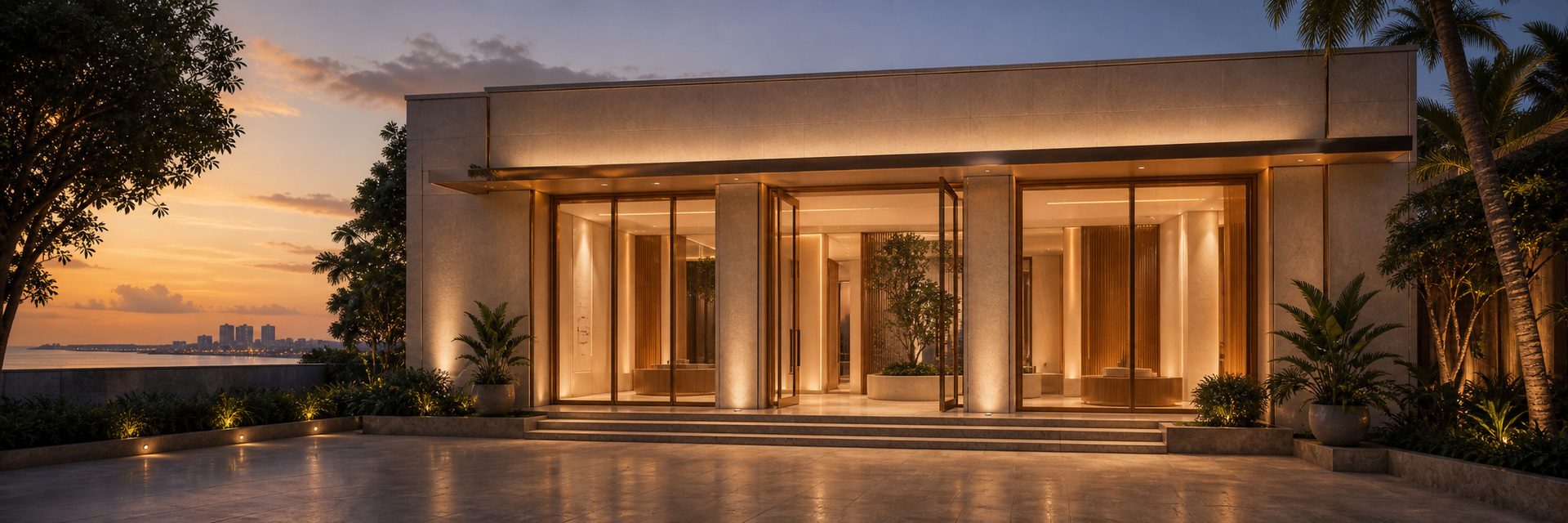
Premium Retail & Boutiques · Tamil Nadu · Metro
Setting Up a Flagship Store or Luxury Boutique in Chennai
Chennai is India's most patient luxury buyer — an old-money market that rewards quality, discretion and relationship over noise, and punishes a store that mistakes footfall for intent.
Few Indian cities own a retail heritage as deep as Chennai's. T Nagar turns over silk and gold at a density that ranks among the busiest retail districts anywhere in the world, and the city's high-net-worth families buy the way they always have — quietly, on advice, and for keeps. That is both the opportunity and the trap: the demand for international luxury is real and rising, but it will not be won with a mall unit and a launch party. The decision that governs everything is what you are actually building — an international-luxury boutique on a boutique high street, a heritage-couture flagship that anchors a house, or a brand experience centre that sells the world before it sells the product. Gladwin International runs the whole journey as one accountable programme: concept and format, the right address, a brand-standard store built to survive a coastal climate, visual merchandising and clienteling, the retail technology behind the counter, and a launch calibrated to a market that trusts slowly.
Old-money depth
A patient, quality-led buyer with generational purchasing habits
Silk & gold heritage
T Nagar among the world's highest-turnover retail districts
Large NRI catchment
Southern Tamil Nadu plus a global Chennai diaspora
Turnkey
Concept and site to a fully staffed, launched store
At a glance
Format decision
An international-luxury boutique (single-brand, mall or high street), a heritage-couture flagship anchoring a house of silk or fine jewellery, or a brand experience centre — resolved before any site is signed.
The boutique high street
Khader Nawaz Khan Road in Nungambakkam — Chennai's established luxury and designer high street, the natural home of a standalone boutique with its own frontage and address.
The premium malls
Express Avenue in Royapettah and Phoenix Marketcity / Palladium in Velachery — footfall, security, valet, climate control and adjacency to the brands a luxury buyer already knows.
The heritage engine
T Nagar (Ranganathan Street, Usman Road, Pondy Bazaar) — the silk-saree and gold-jewellery core; the reference point for a couture flagship, and the catchment a new luxury store quietly draws on.
The buyer
Conservative, relationship-led and quality-obsessed old money, plus a large southern-Tamil-Nadu and global-diaspora catchment that returns to Chennai to buy for weddings and occasions.
The build constraint
A hot, humid, salt-laden coastal climate and a heavy northeast monsoon (October–December) — fit-out, materials, storefront and stock protection must all be specified for it.
The opportunity — why Chennai, and for whom
Chennai is not a market you convert with spectacle. Its wealth is old, its taste is settled, and its buying is done on trust — a customer's grandmother bought from the same jeweller, and the relationship, not the promotion, is what closed the sale. This is a city that has run one of the highest-turnover retail districts on earth for decades without ever feeling flashy, where a family will spend on silk and gold at scale and never advertise the fact. For a luxury house that understands this, Chennai is one of the most durable customers in India: slow to win, but loyal for a generation once won.
The catchment is far larger than the city. Chennai is the retail capital of the entire southern belt — buyers travel in from across Tamil Nadu, and a vast Chennai diaspora in Singapore, the Gulf, the United States and beyond returns home to buy for weddings, festivals and milestones, treating the city as the place where serious purchases are made. The right buyer here is affluent, informed and unhurried, and increasingly fluent in international brands from travel — but they will judge a new store on whether it feels considered and permanent, not on how loudly it opens. The strategic question is therefore not whether there is money in Chennai. It is which of that money you are building for, and in what format you intend to meet it.
In Chennai the sale is a relationship, not a transaction. A store designed for walk-in impulse will underperform; a store built to be advised in, remembered and returned to is what this market actually rewards.
The concept and format — boutique, flagship, or experience centre
Everything downstream — the site, the size, the fit-out budget, the staffing and the technology — flows from the format decision, and this is the first thing we settle with you. An international-luxury boutique is a single-brand statement of a global house: tightly curated, brand-standard down to the last fixture, and dependent on the right address and adjacency. A heritage-couture flagship is a different animal — a large, layered space that anchors a house of silk, jewellery or bespoke tailoring, built to hold deep inventory, private consultation and the theatre of a Chennai wedding purchase. A brand experience centre sells the universe before the product: it is the format for a house entering the market, or for categories where the story, the craft and the personalisation matter more than the shelf.
We resolve the format against your brand, your economics and your ambition, and we are explicit about the fork that defines this city — an international-luxury boutique behaves nothing like a heritage-couture flagship. The boutique wins on precision, restraint and global consistency; the flagship wins on depth, ceremony and the trust a Chennai family places in a house it can see the whole of. Getting this right first means the store you build is the store the market wants, sized and sited for the way Chennai actually buys — rather than an internationally beautiful box that the city admires and walks past.
| Format | What it is | Best for |
|---|---|---|
| International-luxury boutique | Single-brand, brand-standard, tightly curated | A global house seeking a precise, consistent Chennai address |
| Heritage-couture flagship | Large, layered, deep-inventory, consultation-led | A house of silk, jewellery or bespoke tailoring anchoring the market |
| Brand experience centre | Story-, craft- and personalisation-led space | A brand entering the market or selling an experience over a shelf |
The three formats — indicative; the right one depends on your brand, category and market-entry ambition.
Brand-standard design, a coastal fit-out and procurement
A luxury store is a brand instrument, and it must be built to the house's global standard without compromise — the lighting temperature, the material palette, the fixture geometry, the acoustic feel and the customer choreography all carry the brand, and a fit-out that drifts from the standard quietly devalues everything on the shelves. We translate the international design intent into a buildable Chennai scheme, run the fit-out as a governed project through a single PMO, and hold the finish to the brand's own tolerance rather than the local contractor's habit. Where a heritage-couture flagship is the format, we design the depth the market expects — private consultation rooms, deep saree and jewellery storage, alteration and try-on space, and the ceremony a Chennai wedding purchase deserves.
Then there is Chennai's climate, which a fit-out ignores at its peril. The city is hot, humid and coastal, with a heavy northeast monsoon from October to December and salt-laden air that attacks metal, veneer, glazing and mechanicals. We specify for it: humidity control and conditioned reserves for stock that reacts to moisture, monsoon-grade storefront glazing, drainage and entrance detailing, corrosion-resistant fixtures and hardware, and dehumidified back-of-house for textiles, leather and packaging. On procurement, we source the fit-out, fixtures, lighting, technology and opening consumables against the brand's specification — reconciling imported brand-standard elements with a capable local fabrication and joinery base, and Chennai's genuinely strong artisanal and textile-craft supply chain — so quality holds and the capital plan is not surprised at the border or at final account.
Visual merchandising, staffing and clienteling
Chennai has real visual-merchandising and retail-display talent — a city with a deep textile-retail and display tradition produces people who understand how to stage silk, stone and craft — and we build the VM function to the brand's global guidelines while drawing on that local strength. The windows, the zoning, the storytelling and the seasonal calendar are all designed to the house standard, but tuned to how this market reads a store: considered, uncluttered and permanent, not promotional. For a heritage flagship, the merchandising is a different craft again — the theatre of unfolding a saree, presenting a jewellery set, and staging the occasion the customer is buying for.
But in Chennai the decisive investment is people and clienteling, because this is a relationship market above all. The sale is advised, remembered and repeated — a customer buys from a person, returns to that person, and brings the family. We recruit and train a floor that can hold that relationship: the store manager, the personal-shopping and clienteling advisors, the couture and bespoke specialists, and the back-of-house team — and we build the clienteling discipline itself, the appointment and private-viewing model, the customer memory, the after-sale and alterations service, and the outreach that keeps the diaspora buyer connected when they are away. In a city where trust closes the sale, the clienteling team is not a soft cost; it is the store's most important asset.
- Visual-merchandising function built to brand global guidelines, tuned to Chennai's considered, understated read
- Store manager, clienteling and personal-shopping advisors, and couture / bespoke specialists recruited and trained
- Clienteling model — appointments, private viewings, customer memory, after-sale and alterations service
- Diaspora-outreach discipline so the NRI buyer stays connected between visits
- Service standards and ceremony matched to how this market expects to be advised, not sold to
Retail technology and the launch
A luxury store runs on quiet, reliable systems, and we specify and stand them up before the doors open: the point-of-sale and payments stack, real-time inventory and stock-transfer across any wider network, and — most important in this market — a CRM and clienteling platform that carries the customer memory the relationship depends on, so a returning buyer or their advisor is recognised, their history is known, and the after-sale never drops. Where the format demands it, we integrate omnichannel and appointment-booking, made-to-order and alteration tracking, and the reporting a house needs to read the store honestly. In a coastal, monsoon-exposed building, we also make the connectivity, power and data infrastructure resilient enough that the technology does not fail on the wettest, busiest days of the year.
Finally, the launch — and in Chennai this is a matter of judgement, not volume. This is a market that trusts slowly and reads a loud opening with suspicion, so we calibrate the launch to the city: a considered, relationship-led opening built around the existing HNI network and the clienteling book, private previews and quiet outreach to the families and the diaspora who will actually buy, and a soft-then-formal sequence that lets the store settle before it is judged. We take single accountability from the concept and the site through design, fit-out, procurement, merchandising, staffing and technology to a fully staffed store trading on day one — and, where you want it, beyond the opening into the first seasons of operation.
Gladwin's edge in Chennai
We treat a Chennai luxury store as the concept, address and relationship problem it actually is. Before a lease is signed we settle the format — an international-luxury boutique, a heritage-couture flagship, or a brand experience centre — and we are explicit about how differently each behaves in this market. Then we resolve the address on its merits: Khader Nawaz Khan Road for a standalone boutique with its own frontage, Express Avenue or Phoenix / Palladium for controlled footfall and international adjacency, and the T Nagar corridors where a heritage flagship belongs — each mapped against where the city's wealth actually lives and how it actually buys.
Our differentiator is that we build for Chennai as it is, not as a brand deck imagines it. We hold the fit-out to the house's global standard while specifying it for a hot, humid, salt-laden coast and a heavy monsoon; we source against the brand specification using both imported elements and Chennai's genuine craft and textile supply base; and we invest where this market rewards it — in clienteling, service and customer memory, the relationship discipline that closes the sale here. We take single accountability from concept to a launched, fully staffed store, calibrated to a buyer who trusts slowly and stays for a generation.
Planning a flagship store or luxury boutique in Chennai?
We take single accountability from a brand and a site to a fully staffed opening — retail concept and format, brand-standard store design and fit-out, procurement, PMO, visual merchandising, recruitment and training, and the launch. The team is recruited through our executive search practice and trained for opening.
Speak with a partnerSetting up a flagship store or luxury boutique in Chennai — FAQs
It depends on your brand and format. Khader Nawaz Khan Road is Chennai's established boutique high street — the right home for a standalone international-luxury or designer flagship that wants its own frontage, door and address, with the trade-offs of parking, security and kerb-appeal upkeep. Express Avenue and Phoenix Marketcity's Palladium wing offer controlled footfall, climate control against the coastal heat and monsoon, valet, security and adjacency to the international brands a luxury buyer already trusts. We map both against your catchment, co-tenancy, frontage and lease terms before you commit — and weigh the T Nagar corridors where a heritage flagship belongs.
It matters more than any other decision. An international-luxury boutique is a tightly curated, brand-standard single-brand statement that wins on precision, restraint and global consistency, and depends on the right address and adjacency. A heritage-couture flagship is a large, layered, deep-inventory space that anchors a house of silk, jewellery or bespoke tailoring — it wins on depth, private consultation and the ceremony a Chennai wedding purchase expects. The format drives the site, the size, the fit-out, the staffing and the technology, so we resolve it before anything else.
Because Chennai is hot, humid and coastal, with a heavy northeast monsoon from October to December and salt-laden air that attacks metal, veneer, glazing and mechanicals. We specify the fit-out for it — humidity control and conditioned reserves for moisture-sensitive stock, monsoon-grade storefront glazing and drainage, corrosion-resistant fixtures and hardware, and dehumidified back-of-house for textiles, leather and packaging — and we make the power, data and connectivity resilient enough that the technology holds on the wettest, busiest days of the year.
Far from it. Chennai is the retail capital of the southern belt, drawing affluent buyers from across Tamil Nadu, and it has a very large global diaspora — in Singapore, the Gulf, the United States and beyond — that returns home to buy for weddings, festivals and milestones. Serious purchases are made in Chennai. We build the clienteling and outreach model to hold both the resident HNI base and the NRI buyer who is away for much of the year but buys deeply when home.
By investing where this market actually rewards it — in people and clienteling rather than noise. The sale here is advised, remembered and repeated: a customer buys from a person, returns to them, and brings the family. We recruit and train a floor that can hold that relationship, build the clienteling discipline — appointments, private viewings, customer memory, after-sale and alterations — and calibrate a quiet, relationship-led launch built around the existing HNI network, rather than a loud opening this city reads with suspicion.
The whole store, under single accountability. Concept and format, luxury site selection and lease, brand-standard store design translated into a buildable coastal scheme, fit-out delivered through one PMO to the house's own tolerance, procurement of fixtures, lighting, technology and opening stock, visual merchandising, recruitment and clienteling training, the POS, inventory and CRM technology, and a calibrated launch — through to a fully staffed store trading on day one, and, where you want it, into the first seasons of operation.
Explore the cluster
Premium retail & luxury boutiques across South India
Karnataka · Metro
Bengaluru
Bengaluru is South India's luxury-retail capital — a young, brand-fluent, HNI-dense market where a flagship can be built as an experience, not merely a shop.
Telangana · Metro
Hyderabad
Hyderabad spends on luxury the way few Indian cities do — Nizami old money and pharma-and-IT new wealth, both with a deep appetite for couture, jewellery and the big occasion.
Tamil Nadu · Kongu
Coimbatore
Coimbatore is one of India's wealthiest cities without a luxury address of its own — the clearest first-mover case for a flagship store or boutique in the South.
Also explore our executive search practice for the leadership team, and the wider end-to-end automotive & retail practice.