Prepared for boards, nomination committees & search advisers

File No. COO-036

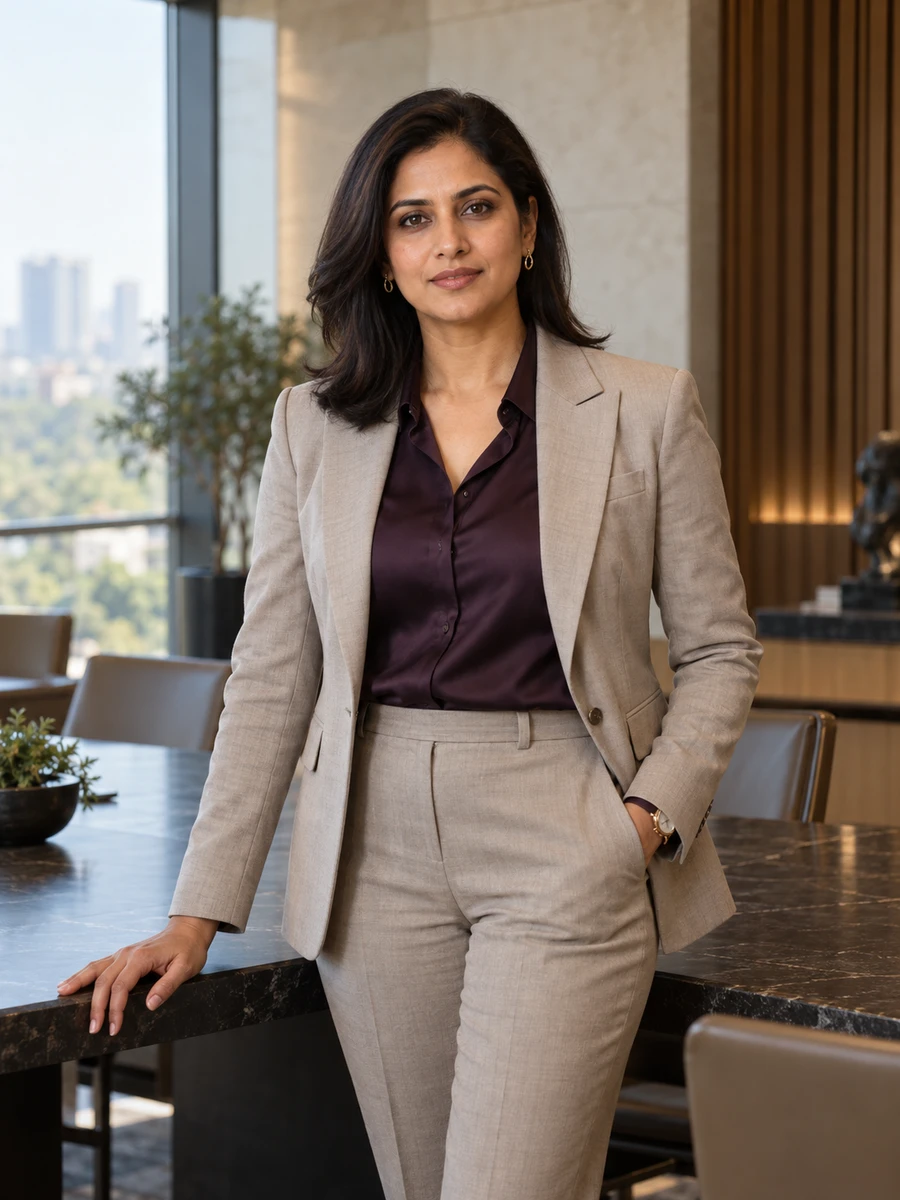
Portrait of Fariha Zeshvani
Fariha Zeshvani

Fariha Zeshvani

Follow the felt into the work it must do next

SubjectFariha Zeshvani
PositionChief Operating Officer
BaseIndia
LanguagesHindi, Urdu, English
StatusI would explore a first outside contribution where practical manufacturing judgement could complement a board's existing strengths.

Summary

I had supported a dispatch plan for 32 rolls of technical felt. Eight could not meet the customer's agreed continuous-length requirement because they contained joins. This happened in 2017, after I became plant manager at Vazqeshi Technical Felts. The plan had treated total length and roll count as sufficient descriptions of what we could supply. Reworking the affected group cost ₹41 lakh. The figures in the dispatch account were not the main problem; the problem was the conclusion I had allowed them to support about the customer's next operation.

Follow the felt into the work it must do next

I lead operations at Vazqeshi Technical Felts, based in Bhilwara with a second factory in Ajmer. Our enterprise employs 560 people and makes nonwoven felts for industrial cushioning and machine-contact applications. Company revenue was ₹204 crore and operating profit ₹16.8 crore for FY ending March 2026. My responsibility covers 400 operations colleagues through five heads, ₹94 crore annual operating expense and ₹7.2 crore separately approved capital expenditure. I report to CEO Rohit Nevthuli; quality head Mehul Qazravi reports to him independently.

My first major mistake as a plant manager concerned a dispatch group of 32 rolls in 2017. Eight did not meet the customer's agreed continuous-length requirement because of joins. I had supported the dispatch plan using the number of rolls and their total length as if those measures established usability. They did not. Reworking the affected group cost ₹41 lakh. The case still matters because the quantity account was internally tidy while the customer's next operation required a different description of what we had prepared.

Later decisions examined which edge trim could return to a reviewed recipe, why kilograms per hour do not describe the same area capacity across different product weights, which machines a pooled spare could support and whether an otherwise accepted roll would fit a customer's unwinder. These are operating questions that need technical and quality colleagues, not reasons for the COO to take over their authority. My job is to make the assumptions visible in the plan and to retain the costs and unfinished work when a convenient summary needs correction.

Eight rolls could not supply the uninterrupted length we had agreed

The 32-roll dispatch group contained eight rolls whose joins conflicted with the customer's continuous-length requirement. I owned the planning assumption and retained ₹41 lakh of rework cost. A correct total did not make every roll suitable for the intended operation.

A 600-kilogram hourly assumption described two different area capacities

At 400 grams per square metre, the assumption yields 1,500 square metres per hour; at 800 grams it yields 750. Both are gross planning calculations before trim, downtime and acceptance. We deferred an ₹11.4 crore line proposal while funding a ₹92 lakh operating trial and planning programme.

A shared spare covered four machines, not the whole six-machine group

The pooled motor arrangement was compatible with four machines; two required different interfaces. A ₹1.2 crore specific-spares programme addressed that gap without claiming that holding additional stock removed every installation, maintenance or recovery risk.

Current focus

I am making the production promise more specific about the conditions under which material becomes usable. That includes the continuous length inside a roll, the reviewed destination for recovered trim and the actual resource represented by an area-capacity calculation. I want operations, quality and commercial colleagues to agree on that account before a delivery or investment proposal becomes settled. A programme can improve the questions we ask while its benefits remain to be demonstrated; its approved budget should not be presented as the result.

Conversations I welcome

I would explore a first outside contribution where practical manufacturing judgement could complement a board's existing strengths. I have neither an outside appointment nor a personal holding in Vazqeshi. My fictional preparation has not yet reached IICA databank registration, and no assessment pass or exemption is claimed. An initial estimate of 23 days would need to be reconciled with executive duties, consent and the actual role before any appointment discussion progressed.

Exhibit ATrack record

ItemMeasureFigure
01Operations colleaguesFive heads across Bhilwara and Ajmer; 560 company employees400
02Annual operating delegation₹7.2 crore capital separately approved₹94 crore
03Manufacturing experienceProduction engineering entry in July 200620 years

Exhibit BStatement of approach

The roll is not the end of the operating story. A customer may need an uninterrupted length, a particular winding arrangement or a material recipe that cannot accept every returned fibre. I once counted a complete dispatch group without asking whether its joins allowed the next operation to run as agreed. Since then I have wanted the factory account to follow the material beyond the quantity we can conveniently report, including the limits of a capacity estimate and the equipment a spare can really support.

Signed — Fariha Zeshvani

Exhibit CSelected matters

Matter 01Ref. COO-036-M01

Reworking eight rolls after I confused total length with continuous length

In 2017 I supported a dispatch plan for 32 rolls of technical felt. Eight contained joins that conflicted with the customer's agreed continuous-length requirement. The planning account showed the roll count and total length, and I had treated those measures as sufficient evidence that the group was ready for its intended use. The customer's next operation required an uninterrupted length that the affected rolls could not provide. That condition should have been visible before the plan became a delivery commitment.

We held the affected group and reworked the material, incurring ₹41 lakh. I owned the assumption in the plan rather than describe the issue only as a final dispatch-check failure. Quality and technical colleagues retained the decision about acceptance and the rework required. My responsibility was to make the customer condition part of the operating account and to ensure that the revised promise followed what could actually be supplied. The correction did not recover the cost or make the earlier representation accurate.

The difficulty was that familiar quantities had made the proposal appear complete. A roll count is useful for handling and transport; total length can support other planning questions. Neither necessarily describes the uninterrupted segments within each roll. We needed to explain which requirement the dispatch account was intended to satisfy and what evidence supported that conclusion. I did not respond by rejecting those quantities altogether, but by refusing to let them answer a question they did not resolve.

The result was a reworked group and a changed planning review, not a measured claim about every later delivery. The incident continues to shape how I examine production promises. Before approving a convenient summary, I want to know what the customer will do next and which condition inside the material could prevent that operation from working as agreed. That is an operating responsibility I cannot transfer entirely to the last person who sees the roll.

Matter 02Ref. COO-036-M02

Keeping eighteen tonnes outside the return recipe instead of counting all trim as available

A 2022 review considered a 60-tonne group of recovered edge trim for return to production. Technical and quality assessment identified 42 tonnes compatible with the recipes under review; eighteen tonnes remained segregated. The initial operating discussion had treated the full recovered quantity as available input. That would have moved too quickly from the fact that material had been collected to a conclusion about where it could be used. I asked the team to preserve the reviewed destination and the excluded portion in the planning account.

We funded a ₹76 lakh separation programme to make those distinctions workable in handling and production planning. The programme was not a declaration that all trim could enter all products, and the 42 tonnes did not establish any finished product's recycled-content percentage. The denominator for that claim would be different and would need its own evidence. Nor did the approved programme itself demonstrate an environmental saving. Those conclusions could not be borrowed from a recovery figure simply because they sounded like a natural continuation of the story.

The practical trade-off was to retain material outside the proposed use while making the compatible portion easier to manage. A larger apparent available quantity would have been attractive to the production plan, but only if its assumptions were true. Qualified colleagues retained recipe and acceptance authority. Operations had to support separation, records and the resulting constraints rather than ask those colleagues to approve a general return merely to make the material balance look better.

The case changed the language used in our operating discussion. Collected, reviewed as compatible and consumed in an accepted product were different states. We did not collapse them into one recovery achievement. My contribution was to connect the physical flow with the evidence required for its next use, including the eighteen tonnes still outside it. A credible circular-material proposal needs that unfinished account as much as it needs a description of the portion that can move forward.

Matter 03Ref. COO-036-M03

Reopening an area-capacity proposal built from one mass-throughput assumption

In 2023 a line-investment discussion used 600 kilograms per hour as its capacity assumption while commercial demand was expressed in square metres. The product mix included material at 400 and 800 grams per square metre. At the stated mass rate, the gross area calculations were 1,500 and 750 square metres per hour respectively. Treating the mass figure as one common area promise would have hidden a twofold difference before considering trim, downtime and acceptance. I asked that the investment account retain the mix rather than average away its consequence.

We deferred the ₹11.4 crore line proposal and funded a ₹92 lakh operating trial and planning programme. The programme was intended to test the assumptions and improve the demand-to-capacity account. Its approval did not establish an achieved rate or prove that the larger line would never be needed. The mass figure was an assumption for the comparison, not a demonstrated equipment output, and the arithmetic described gross material area rather than accepted customer supply.

Operations, technical and commercial colleagues needed to agree on the units used in the decision. Orders could not be assessed only in kilograms if their promised use was in area, and an area figure could not ignore the weight of the material being produced. The relevant operating losses and acceptance conditions also needed to remain visible. I did not treat the simple division as a complete capacity study; it was a way to expose an inconsistency before a more substantial commitment was made.

The outcome was a deferred investment and a funded programme of operating work, not a saving equal to the full line price. The larger proposal remained available for reconsideration after the relevant evidence. My lesson was to examine the unit in which a production claim is expressed and the unit in which the enterprise has made its customer promise. A number can be correct on its own terms and still be inadequate for the decision it is being asked to support.

Matter 04Ref. COO-036-M04

Funding the two machines left outside a pooled spare arrangement

A 2024 operating review described a pooled spare motor as support for a six-machine group. Engineering assessment established compatibility with four machines, while two required different interfaces. The shared item name and the existence of stock had made the coverage appear broader than it was. I asked that the resilience account identify the actual machines supported and the unresolved needs, rather than retain a six-machine claim because the arrangement was convenient to describe.

We approved a ₹1.2 crore specific-spares programme to address the uncovered requirements. Specialist colleagues retained authority over selection, installation and the conditions for safe return to service. The capital and inventory decision could support their work, but it did not replace it. Holding a compatible spare also would not establish that a future interruption could be resolved immediately, because people, diagnosis, installation and other operating conditions could still affect recovery.

The trade-off was to commit resources to less interchangeable support than the original pooled description implied. A single shared arrangement looked efficient in the stock account. Its value depended on actual compatibility, however, not on how many machines appeared beside it in a presentation. The review therefore had to preserve both the four-machine coverage and the two-machine gap. Neither fact should erase the other: the pool was useful within its limits, but the limits mattered to the claim being made about the factory.

The outcome was an approved programme and a more accurate support account. It was not proof of zero downtime or universal resilience. I would bring the same distinction into a board discussion about operating continuity. Directors should ask what assets and circumstances a mitigation actually covers, what remains outside it and which specialist decisions are still required. A reassuring stock figure becomes useful only when it is connected to the equipment and recovery process it is meant to support.
Matter 05Ref. COO-036-M05

Changing winding presentation without pretending the accepted felt had failed

In 2025, twelve rolls of otherwise accepted technical felt were held because their winding-core arrangement did not fit the customer's agreed unwinder interface. The material's accepted properties were not the issue identified in this review. Its presentation prevented the next operation from using it as intended. I asked operations to treat that condition as part of the delivery promise rather than assume that material acceptance made every downstream detail someone else's responsibility.

We reworked the winding presentation at ₹29 lakh cost, with the relevant technical and quality checks retained. I did not describe the work as evidence that the felt formulation had been wrong or that every roll in the wider order was affected. The twelve-roll scope and the interface requirement were kept explicit. The cost belonged to correcting a preparation problem, not to an asserted gain in product performance or an unmeasured improvement in customer loyalty.

The incident required production and commercial colleagues to connect their descriptions of the order. A specification may describe the material while another part of the agreement describes how it must arrive for handling and use. Both can matter to the customer's ability to start work. Operations needed a practical account of the interface, and acceptance needed to be understood within the scope it actually covered. No colleague's valid assessment should be extended silently into a conclusion about conditions they had not assessed.

The result was corrected presentation for the affected rolls and a clearer review of the handoff to the customer's process. It did not justify a claim that every future interface would be trouble-free. My responsibility as COO was to ensure that the factory's completion point did not end the story too early. A product can meet one set of requirements while still failing to support the operation for which it was prepared; the operating account should be capable of saying both things accurately.

Exhibit DFormation

  • Bachelor of Engineering in Production EngineeringVevqashi Engineering College2006

Exhibit EReferences

Fariha made the product-weight assumption visible before we treated one mass rate as a common area promise. The deferred line proposal remained a decision to learn from, rather than a saving claimed before the work was done.
Rohit NevthuliCEO, Vazqeshi Technical Felts; fictional colleague
She kept the eighteen segregated tonnes in the operating account. The reviewed destination for the other trim did not become pressure to approve a use we had not assessed.
Mehul QazraviQuality Head, Vazqeshi Technical Felts; fictional colleague

Exhibit FPublished views

CorrespondenceNext steps

An invitation

Contact

I would explore a first outside contribution where practical manufacturing judgement could complement a board's existing strengths. I have neither an outside appointment nor a personal holding in Vazqeshi. My fictional preparation has not yet reached IICA databank registration, and no assessment pass or exemption is claimed. An initial estimate of 23 days would need to be reconciled with executive duties, consent and the actual role before any appointment discussion progressed.

Open to
  • Board appointments
  • Advisory roles
  • Speaking invitations

office@farihazeshvani.example