Section · The person behind the perspective
I knew the purchase amount before I understood the remaining work
The tables cost ₹48 lakh to buy. I endorsed a ₹60 lakh management budget for the lot, accepting a restoration basis that had not been grounded well enough in inspection. The actual specified costs became ₹22 lakh for restoration and ₹8 lakh for freight, alongside the purchase. That made ₹78 lakh for 240 tables and an ₹18 lakh overrun. I had allowed the acquisition price to anchor a decision whose remaining work deserved more scrutiny.
The two per-unit figures described different things. ₹20,000 was purchase cost; ₹32,500 was the specified lot cost divided across the 240 units. Neither figure by itself established retail profit. The case does not prescribe a statutory inventory-valuation treatment or claim technical acceptance from a financial calculation. Operations director Vikram Deqzuri retained responsibility for refurbishment and acceptance. My error was in the management budget I endorsed before the cost of that work was understood adequately.
I grew up in Panjim and completed commerce at the fictional Tevqezri Commerce College in May 1985. That July I joined Veqzermi Household Goods as a junior cost accountant. The company employed fifty-five people and recorded ₹8.6 crore revenue for FY ending March 1986. I worked among six accounts colleagues, with no direct reports or spending authority. The role taught me to follow the activity behind a number before deciding what the number could usefully explain.
In July 1993 I became finance manager. Veqzermi employed 180 people and recorded ₹49 crore revenue for FY ending March 1994. I led eight colleagues with ₹62 lakh annual function expense under the finance head. Management responsibility required me to explain financial distinctions to people making product and operating decisions. A technically correct allocation could still be unhelpful if the reader assumed it represented cash that would change under the proposal being considered.
I moved to Zhequrvi in September 2003 as financial controller. Its 120-person business recorded ₹34 crore revenue for FY ending March 2004. Nine finance colleagues worked within ₹1.1 crore annual expense under the CFO. Refurbished furniture brought variation in acquisition condition, work required and eventual customer proposition. I learned from operating colleagues while keeping financial control distinct from their responsibility to assess and release a product. The purchase was only one stage in the commercial account.
Finance leadership followed in April 2013. The company employed 210 people and recorded ₹76 crore revenue for FY ending March 2014. I led fifteen colleagues through three leads with ₹2.4 crore annual function expense under the CEO. The role broadened my exposure to enterprise choices while retaining the need to describe the specific consequences of each proposal. It also prepared me to challenge an attractive financial headline without assuming that the narrow calculation settled every operating or commercial question.
I became CFO in January 2020. Today twenty-three colleagues work through three heads within ₹3.9 crore annual function expense under CEO Ira Nevqelmi. The founding family owns 36%, a regional growth fund 52% and employees 12%, including my 0.8%. I have no statutory seat. The board retains material capital decisions. My function provides an account that helps those owners decide; it does not replace the operating assessment or grant finance authority over every commitment in the business.
The warehouse proposal illustrates the distinction. ₹1.32 crore was allocated annually to a location, but ₹54 lakh was avoidable in the first-year scenario. After ₹18 lakh transition cost, the model indicated ₹36 lakh potential before further service effects not yet modelled. The CEO deferred closure pending service assessment. I would not turn the revised scenario into an achieved saving, or treat the financial calculation as proof that closing the location was the right enterprise decision.
A proposed fixed future buyback required a different question. If all 1,000 eligible items returned at ₹9,000 each, the outflow would be ₹90 lakh. Assumed gross resale at ₹6,000 each would recover ₹60 lakh before transport and refurbishment. That ₹30 lakh difference was a scenario, not a forecast return rate, present-value estimate or completed loss. The board rejected the fixed promise and funded ₹24 lakh of assessment for condition-based quotations instead.
My own ownership interest belongs in the account when employee liquidity is discussed. A proposed ₹4.2 crore company-funded programme would have used enterprise cash. I disclosed my 0.8% holding when the board considered an alternative feasibility review for voluntary private owner-to-owner transactions. No buyer, price or completed transfer was promised. For an outside role, I would bring the same attention to whose cash changes and which assumptions remain open. Fictional registration in June 2026 and assessment in September are complete; I would still need company-specific induction, qualified eligibility review and realistic time alongside my executive duties.
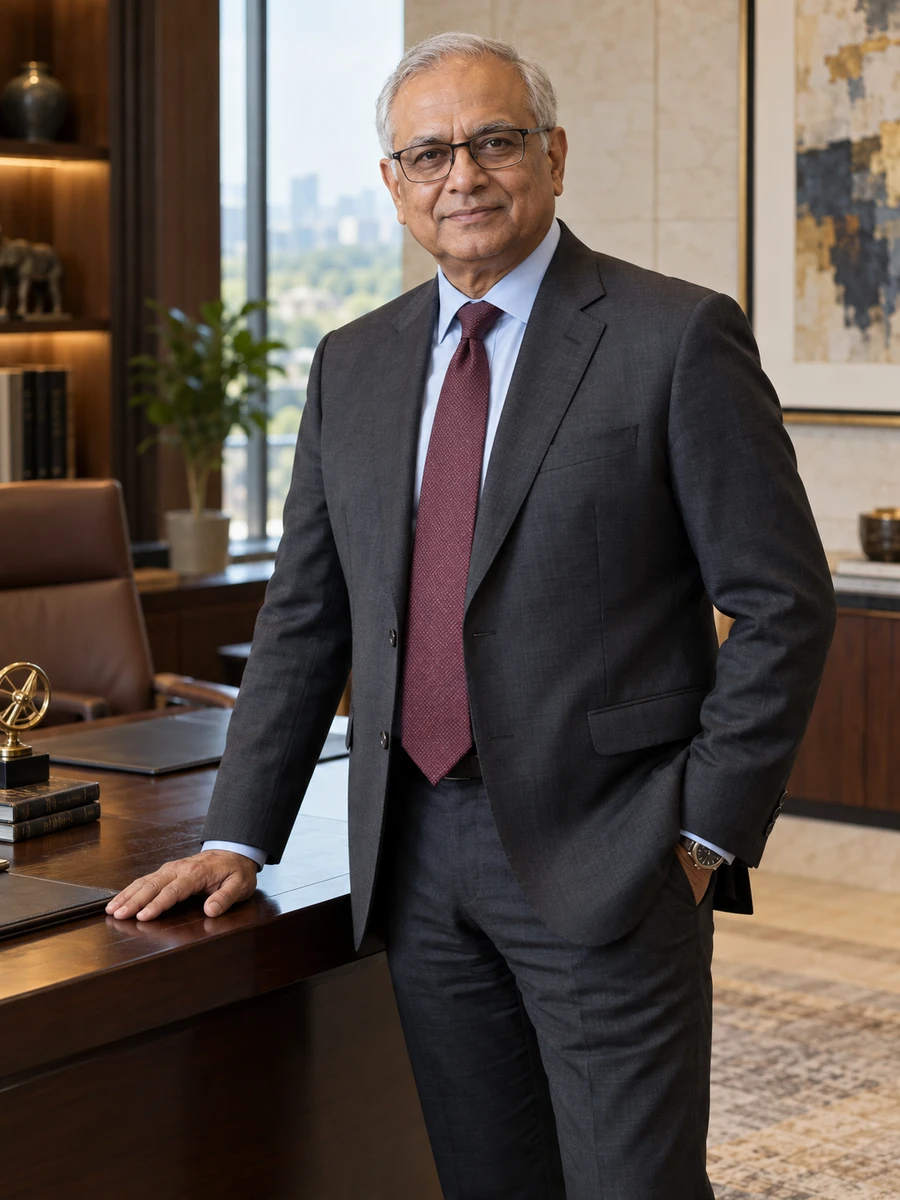
In my own words
The cheapest purchase is not necessarily the least costly item to make ready, and an expense allocated to a location is not necessarily cash the enterprise can avoid. I want the financial account to follow the proposed choice closely enough that management can see which amount changes, which assumption remains uncertain and whose responsibility the decision actually is.
Sanjay Tezqevmi
Education
Formation
- Bachelor of CommerceTevqezri Commerce College1985
Working languagesEnglish · Hindi · Konkani