Arman Qezlavi

Chief Operating Officer / India

ArmanQezlavi

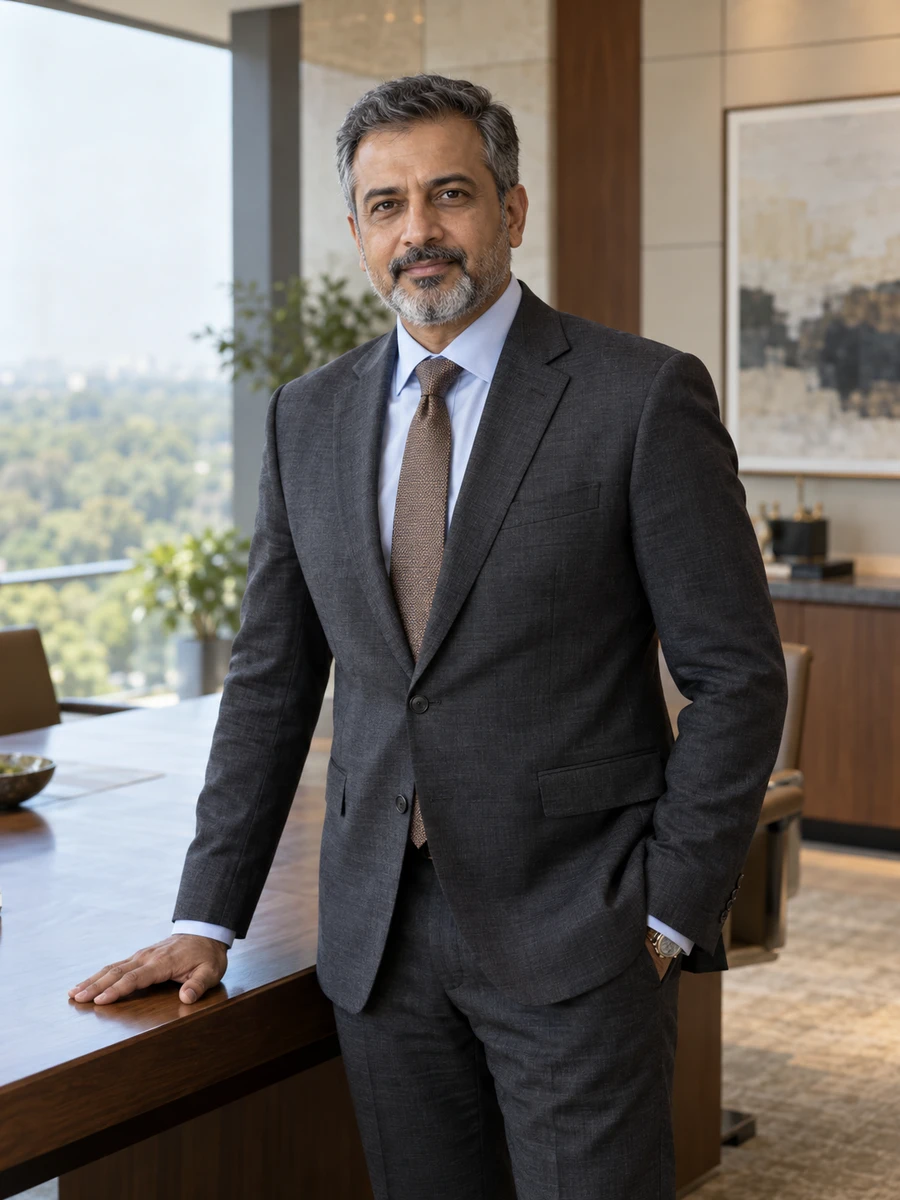
Portrait of Arman Qezlavi

An occupied asset still has a promise to meet

I grew up in Lucknow in a Muslim family and completed a commerce degree at Qavnuthi Commerce College in June 1994.

Open to
  • Board appointments
  • Speaking invitations

I lead the operations of an equipment lessor by connecting the financial life of an asset with the service conditions it must meet at the customer's site.

I am COO of Qevthari Commercial Leasing in Vadodara. We own commercial refrigeration assets placed with enterprise customers, including modular cold rooms and display cabinets. I lead 210 operations colleagues across six depots and report to the CEO. Our ₹310 crore net leased-asset value describes company capital employed; it is not a lending book or a measure of my personal authority.

My career began in maintenance-service coordination after a commerce degree. I learned that the availability of a unit in a depot did not settle whether it could be installed, serviced or returned on the terms a customer expected. Joining the lessor in 2007 added the financial consequence of keeping an asset through several placements. The job was no longer only to complete a visit. It was to make the promised use credible across the asset's working life.

The cases here concern off-hire dates, site readiness, replacement reserves, return-condition evidence and the energy burden of a purchase choice. I have accepted more capital tied up outside active leases and withdrawn proposed charges the records did not support. I also changed my earlier preference for maximising the number of units on rent. A complete operating account should explain the service behind the income and the limits of the evidence, rather than turn every occupied asset into proof that the business is working well.

The collection date was not always the rental end

A review of 73 return notices found 49 meeting the agreed off-hire conditions before our later collection. We corrected ₹16.4 lakh in charges for that group. The other 24 notices required further work and were not treated as completed returns.

Capacity held for a service obligation

Forty-eight replacement units required ₹9.6 crore of capital in 2025. Holding them outside ordinary placements reduced the headline utilisation rate. Later callout results remained mixed; buying reserve assets did not establish that every replacement promise could be met.

A charge needs evidence of the condition change

Of ₹31 lakh initially proposed across 37 returns, ₹22 lakh was supported after review and ₹9 lakh was withdrawn. Those were proposed charges, not cash recovered or refunded. The company accepted the unsupported amount rather than infer customer responsibility from the repair bill alone.

Current focus

I am making the asset account more useful across placement, service and return. That includes distinguishing physical availability from site suitability, reserve capacity from idle investment and an observed condition from the responsibility for it. Technical assessments, contractual treatment and accounting decisions remain with the relevant qualified owners.

Conversations I welcome

I am interested in one outside board contribution where asset services and capital discipline need to be considered together. I have no statutory seat. My fictional databank registration and assessment are complete, but suitability, independence and twenty-six provisional days of capacity still require a specific appointment review.
01

Asset-service obligations and capital use

Explore the decision record

02

Site readiness and qualified installation decisions

Explore the decision record

03

Replacement capacity planning

Explore the decision record

04

Return-condition evidence and commercial treatment

Explore the decision record

210

Operations colleagues through five heads

₹54 crore FY 2026–27 operations expense; capital approved separately

32 years

Service coordination to asset operations

Five continuous appointments beginning July 1994

1,500 placed units

Company portfolio context

210 customers and six depots; ₹310 crore net leased-asset value

I believe

I want our operating account to follow the asset through the promise the customer has actually bought. A unit on rent can look productive while its site is unsuitable, its replacement is unavailable or its return is waiting for our collection route. I ask what the contract and the physical arrangement require before treating a fleet measure as a complete explanation. That sometimes means accepting a lower utilisation figure, a higher purchase price or a charge we cannot support.

— Arman Qezlavi

The work

Decisions that moved the needle.

  1. 01

    Ending rent on the agreed event rather than our collection route

    A 2022 review examined 73 customer return notices for refrigeration units. Our billing feed used the collection date as the rental end because that event was easy to record. The relevant contracts and operating evidence did not support using it in every case. Forty-nine notices had met their agreed off-hire conditions before our vehicles arrived. Twenty-four still required work, such as making the unit accessible or completing the specified preparation. A notice alone did not establish that all obligations had ended. Commercial colleagues preferred to retain the collection date. The company still owned an asset at the customer's site and could not place it elsewhere until it was recovered. I understood that economic consequence, but our own routing delay could not silently replace the event agreed with the customer. I asked the commercial and legal owners to assess the terms while operations established when the relevant conditions had actually been met. Finance checked the resulting account corrections. We corrected ₹16.4 lakh in charges across the 49 supported cases. The other 24 remained in an explained follow-up process and were not counted as completed returns. Operations retained responsibility for arranging collection, including the cost of improving routes where delay was ours. We changed the handover to billing so that an assessed off-hire event and physical collection could be recorded separately when the agreement required it. The change did not authorise employees to stop rent whenever a customer sent an email. The immediate consequence was lower charges for the affected group and a less convenient operating record. The company still needed to recover and prepare its assets for another placement. I did not call the correction a saving or infer that every late collection had involved overcharging. The case changed my view of a familiar measure: the easiest event for operations to capture was not necessarily the event finance should use. The customer terms and the physical sequence both needed a place in the account.

  2. 02

    Holding nine placements until the premises could support them

    In 2023, a programme proposed placing equipment at 28 customer sites. The commercial plan treated signed acceptance and depot availability as sufficient grounds to confirm installation dates. Qualified site checks showed that nine locations still needed changes to access, utilities or the agreed installation arrangements. The other nineteen had adequate preparation for their scheduled work. The findings did not mean the nine customers were unsuitable; they meant that the physical conditions were not yet ready for the proposed timetable. Sales wanted to dispatch the equipment and complete the remaining work on arrival. That would preserve the announced dates and reduce units waiting at our depots. I asked the engineers and customer representatives what an installation crew could actually complete under those conditions. Sending an asset to a site would not create the missing access or utilities, and it could add storage and handling problems. I recommended holding the nine placements until the responsible parties had completed and checked the preparation. The company accepted ₹39 lakh in additional coordination, rescheduling and related operating costs. Customers and their qualified contractors retained responsibility for their premises work; our engineers retained the equipment-suitability assessment. We did not direct unqualified staff to improvise an electrical or technical solution. The nineteen supported placements proceeded through their normal process, while each held site had a revised plan explaining the outstanding condition and its owner. The timetable changed openly rather than through repeated promises of imminent completion. The result was a more selective deployment decision, with nine delays and actual company expense. This account does not claim that the checks certified food safety or prevented a quantified customer loss. Product handling and premises duties remained with the appropriate customer owners. My contribution was to ensure that the technical findings changed the operating commitment. I would involve the site assessment earlier in the commercial sequence, before a signed order and a depot count create an expectation that the installation question has already been answered.

  3. 03

    Buying replacement capacity and retaining its unsuccessful callouts

    I had long favoured maximising the proportion of equipment on rent. A 2025 review showed that this preference left insufficient compatible reserve units for some replacement commitments. The commercial team could promise assistance, but the operating plan sometimes depended on another customer returning suitable equipment at the right time. That was not a dependable source of capacity. We proposed 48 dedicated replacement units at ₹9.6 crore capital cost, with locations and specifications selected against the obligations the fleet was expected to support. CFO Sanjay Zevquli challenged the effect on capital productivity. These units would earn less ordinary placement income and make the headline utilisation rate look worse. He also asked whether better routing or a supplier arrangement could meet the need without buying as much equipment. Those alternatives were assessed, but they did not support the same defined availability in the relevant locations. I recommended the reserve investment with its ongoing holding and service requirements visible. The company approved the capital through its normal investment process. Operations established dispatch ownership, compatibility checks and a review of the commitments the reserve was intended to serve. We did not treat forty-eight units as forty-eight interchangeable answers to every problem. During the following twelve-month review, 43 of 62 recorded replacement callouts met the agreed delivery condition; nineteen did not. The unsuccessful cases included constraints that stock alone could not resolve, and they remained in the account for action by the responsible owners. The decision bought a defined capability, not evidence of universal service performance. I did not attribute a revenue gain or avoided product loss to every successful dispatch. The company had tied up more capital and accepted a lower ordinary utilisation figure, while still needing to improve the unsuccessful cases. My own earlier preference had made it too easy to regard any unplaced unit as wasted investment. The correction was to evaluate the asset against its explained purpose and actual service result, rather than defend either full utilisation or reserve ownership as an end in itself.

  4. 04

    Withdrawing return charges that the condition record could not support

    In 2024, a review of 37 returned units examined ₹31 lakh in proposed customer charges for damage or condition issues. Repair work was needed across the group, but the repair estimates did not establish that every cost belonged to the customer. For some units the placement record, service history or return evidence was insufficient to distinguish an attributable change from wear or an earlier condition. The company needed to assess that gap before turning a workshop requirement into a commercial claim. Depot managers argued that withdrawing charges would make the asset account look worse and could encourage customers to contest every return. I agreed that a consistent process mattered, but consistency could not mean assuming responsibility wherever our own evidence was incomplete. Qualified technical colleagues examined the condition, and commercial and legal owners considered the relevant terms. I required the operating record to distinguish what was observed from what the company could support charging to a particular customer. The review supported ₹22 lakh in proposed charges across eighteen returns. The remaining ₹9 lakh across nineteen returns was withdrawn. These were proposed amounts, not a statement that ₹22 lakh had already been collected or ₹9 lakh refunded. We also retained the necessary asset work; withdrawing a customer charge did not make a repair unnecessary. The company accepted the unsupported cost allocation and improved the condition record for future placements and returns, with technical assessments still performed by qualified people. The decision was neither an accusation against customers nor a claim that every contested amount should be waived. It established that an observed defect and responsibility for its cost were separate questions. The immediate trade-off was a weaker recovery position on the unsupported group and more disciplined evidence work thereafter. I would have reviewed the quality of the placement record earlier, because a return inspection cannot recreate with confidence what the company failed to document before the asset left its depot.

  5. 05

    Paying more for equipment when the customer would carry the energy bill

    A 2024 purchase compared two offers for 26 commercial display cabinets. The lower-capital proposal cost ₹91 lakh; the alternative cost ₹1.04 crore. Qualified comparative testing under the specified conditions showed lower energy use for the second option. That mattered because customers would pay the operating electricity bill while the lessor paid the initial asset price. A purchase process focused only on our capital outlay could therefore prefer a cheaper asset partly by moving a continuing cost to the user. Procurement favoured the ₹91 lakh offer and correctly noted that a test did not establish every site's eventual electricity expense. Customer loading, ambient conditions, maintenance and tariff would affect the result. I did not want to replace a narrow capital comparison with an equally narrow savings promise. We asked the engineers to state the test conditions and limitations, and commercial colleagues examined whether the intended placements made the difference relevant. Finance reviewed the capital comparison and the proposed lease economics. The company approved the ₹1.04 crore option, accepting a ₹13 lakh capital premium. We preserved the assessed performance description in the customer proposition without promising a fixed reduction in every bill. The choice did not change the customer's responsibility for its premises, loading or product handling. Nor did it give operations authority to certify performance outside the conditions the technical team had examined. The commercial offer had to explain the asset honestly, including what had and had not been measured. The immediate result was a more expensive purchase supported by a broader account of use. This case claims no realised customer saving or company payback period, because the purchase comparison alone did not establish those outcomes. I would use the same reasoning again, but not assume that the higher-priced unit must always be preferable. The useful decision is to consider who bears each cost over the placement, obtain qualified evidence and let the actual use case determine whether the premium is justified.

Others say

Word from the boardroom.

Arman kept the failed replacement callouts in the account after the reserve investment was approved. He gave us a clearer basis for improving the service instead of treating the capital purchase as proof that the commitment had been fulfilled.
Anita QemqaviCEO, Qevthari Commercial Leasing; fictional colleague
He explained why some assets should remain outside ordinary placements and accepted the capital challenge that followed. The proposal was more useful because it retained the alternatives and the conditions stock alone would not resolve.
Sanjay ZevquliCFO, Qevthari Commercial Leasing; fictional colleague

An invitation

Contact

I am interested in one outside board contribution where asset services and capital discipline need to be considered together. I have no statutory seat. My fictional databank registration and assessment are complete, but suitability, independence and twenty-six provisional days of capacity still require a specific appointment review.

Open to
  • Board appointments
  • Speaking invitations

office@armanqezlavi.example