The person behind the perspective
Learning what an asset must do between placements
I grew up in Lucknow in a Muslim family and completed a commerce degree at Qavnuthi Commerce College in June 1994. I speak Hindi, Urdu and English, with working Gujarati developed after moving to Vadodara. I did not train as a refrigeration engineer. My early work was in coordinating service, explaining commitments and making sure the people qualified to perform technical work had the conditions needed to do it. That distinction remains part of my operating approach: responsibility for the service does not mean personal authority to certify every technical question within it.
In July 1994 I joined Temzavi Maintenance Services as a service coordinator. The fictional company employed 49 people and recorded ₹7.6 crore revenue in FY 1995. I worked in a five-person coordination group under the service manager, with no direct reports or spending delegation. A booking could look complete while access, parts or customer preparation remained unresolved. I learned to ask what the visit required before making the date sound certain. The technician's work and the customer's operating constraints both deserved a place in the explanation.
I became regional service manager in April 2001. Temzavi then employed 140 people with ₹24 crore FY 2002 revenue. I led 26 colleagues through three supervisors within ₹3.1 crore annual operating expense and reported to the head of operations. The remit required balancing visits, parts and travel across several customers. I began to see why a busy schedule could still be an ineffective service plan. The useful question was whether the activity matched the obligation, not simply whether every colleague and vehicle had been assigned somewhere.
In September 2007 I joined Qevthari Commercial Leasing in Vadodara as head of service operations. The lessor had 170 employees and 320 placed units, with ₹28 crore FY 2008 income and ₹48 crore net leased-asset value. Sixty-two operations colleagues worked through three leads within ₹8.4 crore annual expense, and I reported to the CEO. Owning assets through repeated placements changed my horizon. A return condition, a service choice or an installation mismatch could affect the next customer as well as the current lease. I needed to connect the service record with the asset's continuing economic life.
The operating director appointment followed in June 2014. The appointment expanded my executive operating remit without adding a seat on the company board. The company had 270 employees and 890 placed units, with ₹83 crore FY 2015 income and ₹185 crore net leased-asset value. I led 140 operations colleagues through four heads within ₹31 crore annual expense. I initially favoured keeping as much equipment on rent as possible. That preference made sense as a response to capital tied up in assets, but it gave too little weight to the replacement capacity required by the service terms attached to some placements.
I became COO in February 2021. Today I lead 210 colleagues through five heads, within ₹54 crore approved FY 2026–27 operations expense. The separate ₹42 crore fleet-capital programme follows company approval. We have 360 employees, six depots and 1,500 units placed with 210 enterprise customers. FY 2026 income was ₹142 crore and net leased-asset value ₹310 crore. Anita Qemqavi is CEO and Sanjay Zevquli is CFO. I hold no personal or vehicle allocation in the company and no statutory seat.
The return-date review challenged the assumption that rental charges should follow our collection event. Among 73 notices, 49 had met the agreed off-hire conditions before our later collection. We corrected ₹16.4 lakh for those cases while retaining the other 24 for further work. The decision followed the assessed contracts and evidence; it was not a universal rule that any email ends a rental. I wanted our own routing delay separated from the customer's remaining obligations, rather than allow one convenient date to settle both.
Other cases required an equally specific account. We funded 48 reserve units with ₹9.6 crore capital, accepted that their presence reduced headline utilisation and retained the later replacement failures in the report. We withdrew ₹9 lakh of proposed return charges that the evidence did not support. A purchase decision accepted a capital premium for a qualified comparative energy result without promising every customer the same bill reduction. These were choices about the service and the asset together, not claims that operations could resolve technical, contractual or accounting questions alone.
My fictional IICA databank registration began in January 2026 and the proficiency assessment was passed in June 2026; no exemption is claimed. I have presented operating matters to directors but have not served as one. I provisionally reserve twenty-six days for a suitable first outside contribution, subject to employer consent and conflicts. I would bring questions about whether capital, service promises and operating evidence describe the same business. I would also need to learn the receiving company's context and the discipline of collective oversight, rather than assume that a familiar asset measure supplies the answer everywhere.
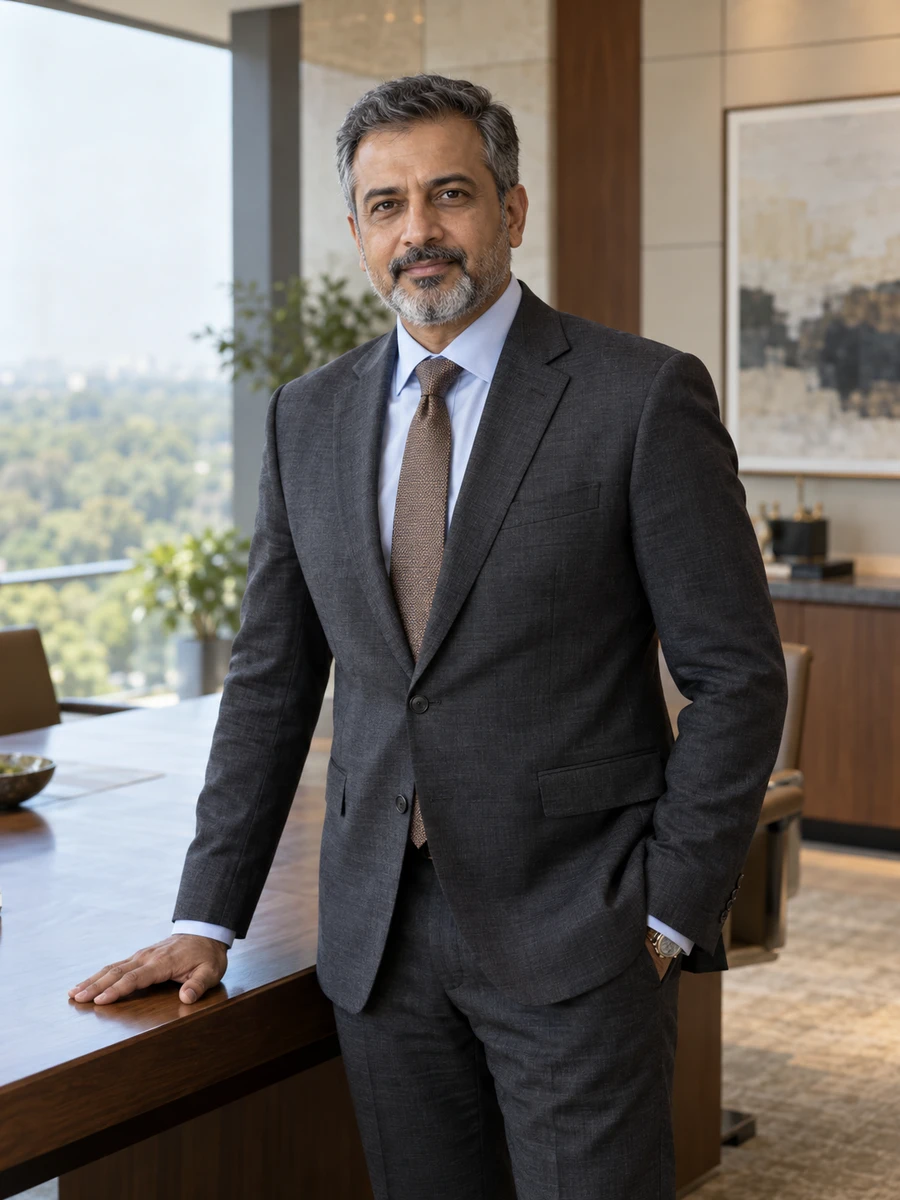
In my own words
I want our operating account to follow the asset through the promise the customer has actually bought. A unit on rent can look productive while its site is unsuitable, its replacement is unavailable or its return is waiting for our collection route. I ask what the contract and the physical arrangement require before treating a fleet measure as a complete explanation. That sometimes means accepting a lower utilisation figure, a higher purchase price or a charge we cannot support.
Arman Qezlavi
Education
Formation
- Bachelor of CommerceQavnuthi Commerce College1994
Working languagesHindi · Urdu · English · Gujarati — working