Sheet 02 · The person behind the perspective
I approved the collection, not only the individual quotations
I grew up in Ajmer, where many business conversations depended on somebody knowing who could actually answer the next question. Studying commerce and then marketing gave me a more formal vocabulary, but it did not remove that practical lesson. I completed my commerce degree in May 1996 and the marketing MBA in April 1998, both at the fictional Raqvemti School of Commerce. I began work the following month. My twenty-eight-year career has followed the distance between a persuasive introduction and the evidence a buyer needs to make a responsible decision.
At Dezqorvi Industrial Supplies, I started as a marketing assistant under a regional marketing manager. The invented employer had eighty employees and ₹21 crore FY 1999 revenue. I had no team or delegated expenditure. The work involved preparing material and following up the questions that came back from industrial buyers. A brochure could be clear to the people who wrote it and still leave a customer unsure whether it applied to their particular use. I learned to record that uncertainty instead of treating every request for explanation as an objection to be overcome.
In February 2004 I became a customer-insight manager, leading seven colleagues with ₹68 lakh annual function expenditure. The employer then had 170 people and ₹68 crore FY 2005 revenue. Interviews brought me closer to the choices behind a marketing account: whom we invited, who agreed to speak and which part of the conversation survived into the presentation. A customer quotation could be authentic while the selection around it was selective in a way the reader could not see. That lesson later became uncomfortably personal when I approved a campaign that favoured only the positive interviews.
I moved to Veqrathi in September 2010 as head of industrial marketing. It was a smaller biomass-fuel business than the current enterprise, with 146 employees and ₹84 crore FY 2011 revenue. I led eleven marketing colleagues and ₹2.2 crore annual expenditure. The work required me to distinguish a brand proposition from technical suitability. Buyers needed to understand which product and conditions were being discussed, while qualified product, quality and operating owners retained their actual assessments. Marketing could help people ask the right question; it could not make a fuel suitable for a particular installation by simplifying the answer.
In April 2016 I became director of customer programmes, a functional designation without a statutory seat. Sixteen colleagues worked within my ₹4.1 crore annual envelope, while the company had 242 employees and ₹162 crore FY 2017 revenue. I wanted customer evidence to carry more weight in the brand story. In 2019 we invited thirty-six customers to interviews. Eighteen participated: twelve described favourable experiences and six offered a mixed account. I approved a campaign using the twelve positive interviews because the quotations were accurate and permissioned. Vikram asked what a reader would infer about the experiences we had left out.
The correction did not require us to invent dissatisfaction or force every publication into an artificial balance. It required an honest account of the selection. The revised material used six permitted stories, three favourable and three mixed, and explained their illustrative purpose. That selection still did not represent the whole customer population. The ₹41 lakh programme cost included ₹9 lakh of corrective work. I retained my approval and the omitted experience in the case instead of presenting the later edit as evidence that our first editorial decision had been careful enough.
I became CMO in January 2021 and now report to Nasreen Devqerthi. Twenty-six marketing employees work through four leads, with five agency personnel separately. My ₹5.8 crore annual authority is distinct from the enterprise's ₹268 crore revenue. The latter comprises ₹216 crore fuel sales and ₹52 crore handling and supply-service revenue. I have no equity holding or statutory appointment. The company is a manufacturer and distributor, not a power generator. Product release, safe handling, equipment suitability and actual customer operating decisions stay with qualified owners, while commercial colleagues retain prices and sales acceptance.
My later cases examine the conditions a buyer encounters before that acceptance decision. A resource library can be useful without requiring a person to identify as a lead. A shared brand can make different grades appear interchangeable if the descriptions do not preserve the distinction. A campaign involving several distributors can inflate its apparent audience when the same buying organisation appears in several records. Translation can change the meaning of a product explanation even when the design looks consistent. These questions require marketing leadership because our own measures, incentives and production choices can create the misunderstanding.
I work in English, Hindi and Marwari. Databank registration is still on my preparation list; neither a completed assessment nor an exemption forms part of this record. A provisional twenty-day allowance for a first outside contribution would need to include preparation and exceptional work, with current employment and relationships reviewed against a specific opportunity. I would bring questions about how an industrial proposition is understood and how its marketing evidence was selected. I would also need to learn the prospective enterprise's product and commercial responsibilities before assuming that a familiar campaign pattern carried the same consequences there.
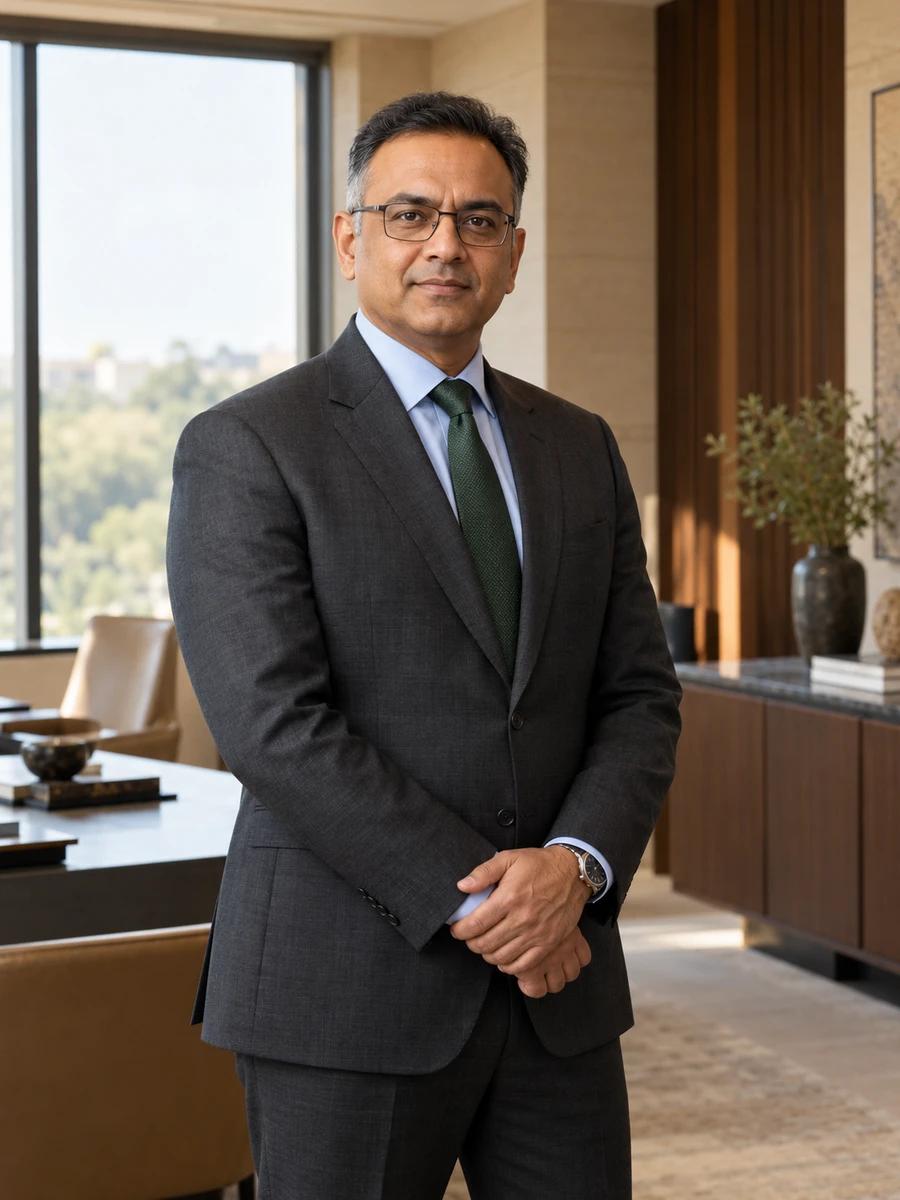
In my own words
I want the buyer to understand how a marketing account was made. A permitted customer quote can still be a selected story, a useful download need not be a sales enquiry, and a familiar brand does not make every product grade interchangeable. My responsibility is to make those distinctions usable before the buyer relies on a simpler conclusion.
Arun Tezqevri
Education
Formation
- Bachelor of CommerceRaqvemti School of Commerce1996
- Master of Business Administration in MarketingRaqvemti School of Commerce1998
Working languagesEnglish · Hindi · Marwari