Sheet 02 · The person behind the perspective
The questions after purchase shaped the way I explain the choice
My first business education was a service conversation after the purchase had already been made. I joined Orisawa Services in Osaka in April 1992, following a business degree at Norihama College. The company supported workplace equipment, and I worked on the communication that accompanied that support. An office could have selected suitable equipment and still be uncertain about whom to call, what a visit involved or which person inside its own organisation should receive an update. Those questions were ordinary, but they determined whether the service felt usable.
I was an individual contributor in a nine-person regional team. I had no employees reporting to me and no delegated budget. The service manager retained the decisions about the work itself. My task was to prepare explanations and follow the questions that those explanations created. I learned that a clear sentence was not always a complete answer. Sometimes the communication exposed an unresolved responsibility between teams. Improving the wording helped only after the relevant colleagues had agreed what would actually happen.
In April 1999 I moved into customer research. By the end of that appointment in March 2005, I led seven employees through two direct reports with JPY60 million annual research authority. We listened to customers describing the equipment service in their own terms. Their account did not always follow our internal division between a sale, an installation and a later visit. I began organising research around the sequence the customer experienced. That changed the questions I asked of colleagues: which decision was the customer trying to make, and what did they need from us before they could make it?
The head-of-customer-programmes appointment in April 2005 gave me responsibility for applying that understanding. My team grew to sixteen employees through three reports, with JPY240 million annual authority by March 2011. Orisawa's wider business had 1,100 employees and JPY26.4 billion revenue that year; those were company measures, separate from my programme resources. I worked across service, sales and communications rather than taking over their respective responsibilities. The most useful programmes gave customers a recognisable route through those functions. They also made it harder for a department to consider its own task complete while leaving the next person unclear about what followed.
I joined Mizuhane Energy in April 2011 because the same practical question had acquired a longer horizon. A commercial-rooftop solar decision involved a customer's premises, use of electricity and relationship with specialist colleagues over time. I was not arriving as an engineer. I brought experience of how people interpreted a service proposition and where understanding failed between the initial explanation and ordinary use. As head of customer development, I learned the energy business alongside the technical team while keeping the limits of my own expertise visible.
That learning changed my treatment of the annual illustration. Solar generation varies with conditions, while a customer's electricity use follows its own pattern. An attractive yearly total could conceal the question that mattered to a particular business. I wanted the discussion to include working hours and closures, with the underlying assessment supplied by the appropriate specialists. By March 2017 I led twelve employees through three reports with JPY180 million annual authority. I could decide how customer research and explanation were organised; I could not substitute a marketing model for technical assessment of a roof or system.
From April 2017 I led commercial experience. The remit connected the proposition with the customer's route into a proposal and through the early service relationship. By March 2022, twenty-one employees through four reports worked within JPY620 million annual authority. The company's minority growth investment in 2021 added pressure to explain a broader business coherently. I argued that growth should not depend on removing the questions that made individual decisions different. A common introduction was useful, but the operating circumstances still deserved a place in the conversation.
I became CMO in April 2022. I now report to Kenji Sorihama and lead twenty-seven employees through four direct reports, with nine agency personnel separately. My JPY1.15 billion marketing authority for the year ending March 2027 excludes project capital and contract pricing. Emi Narusawa leads engineering, including assessment, modelling, design, installation and maintenance. Our collaboration is most productive when an appealing account can be challenged before it becomes a customer's expectation. I want the team to be able to explain the basis of a statement, rather than depend on my seniority to settle the discussion.
The cases on this website describe choices within that remit. We replaced one prominent savings illustration with hypothetical use patterns, changed the basis of partner marketing support and reorganised handover material around named responsibilities. In another programme, I accepted a six-week campaign delay and the loss of a media reservation because the illustrated business patterns omitted weekend closure. These were decisions about what the customer could reasonably understand from the account. They did not transfer engineering or commercial authority to marketing.
I have presented the executive marketing account to the board since becoming CMO, without holding a director appointment. A future board contribution would require a wider understanding of the prospective business and collective responsibilities beyond my function. I could bring questions about customer assumptions and the incentives inside an apparently successful activity measure. I would also need to learn where another director's knowledge should lead. The service work that began my career remains a useful discipline here: understand what the next person actually needs from the conversation before deciding that my own part of it is complete.
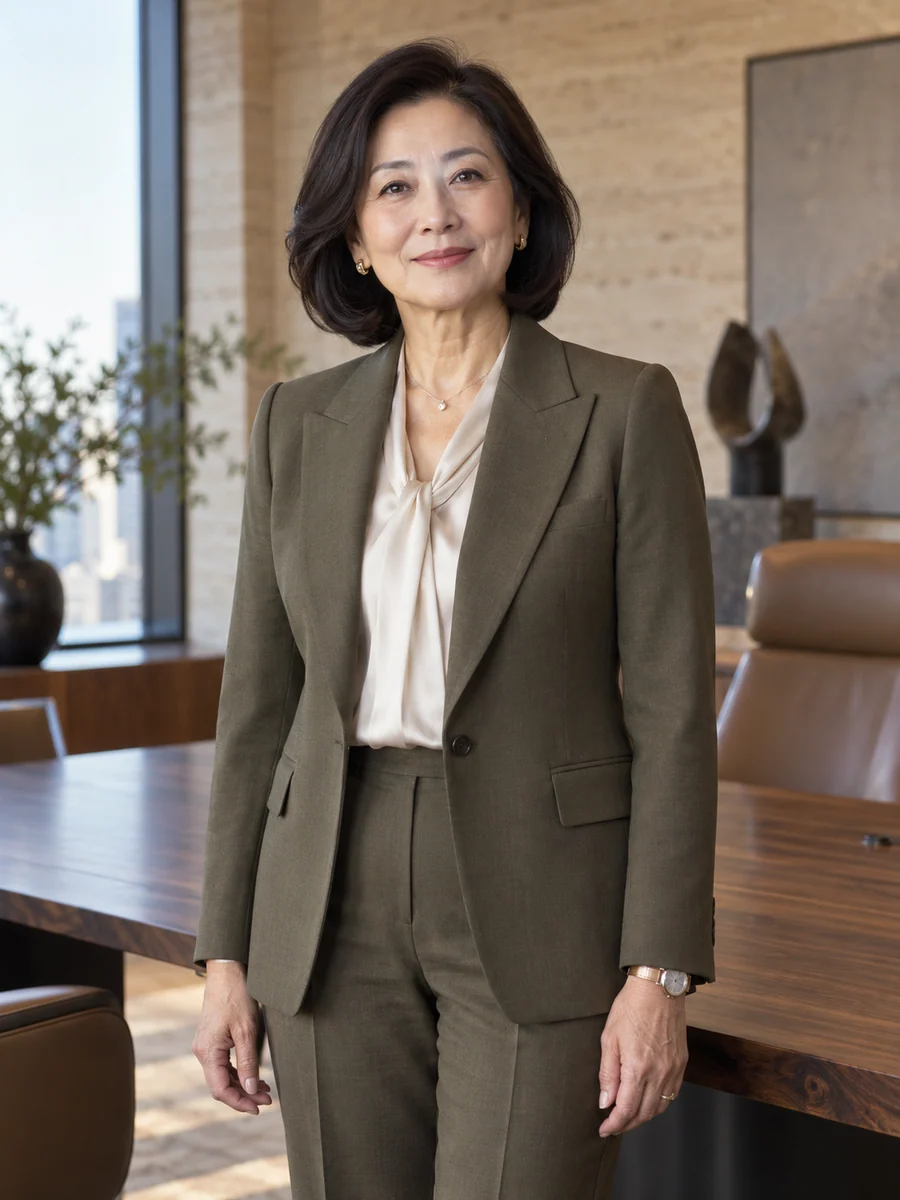
In my own words
A customer will live through opening hours, closures, maintenance questions and changes of responsibility long after the first presentation. I try to make those ordinary conditions part of the choice while there is still time to discuss them.
Haruka Mizunari
Education
Formation
- Degree in businessNorihama College1992
Working languagesJapanese · English