Chief Executive Officer India
The test conditions came before the conclusion
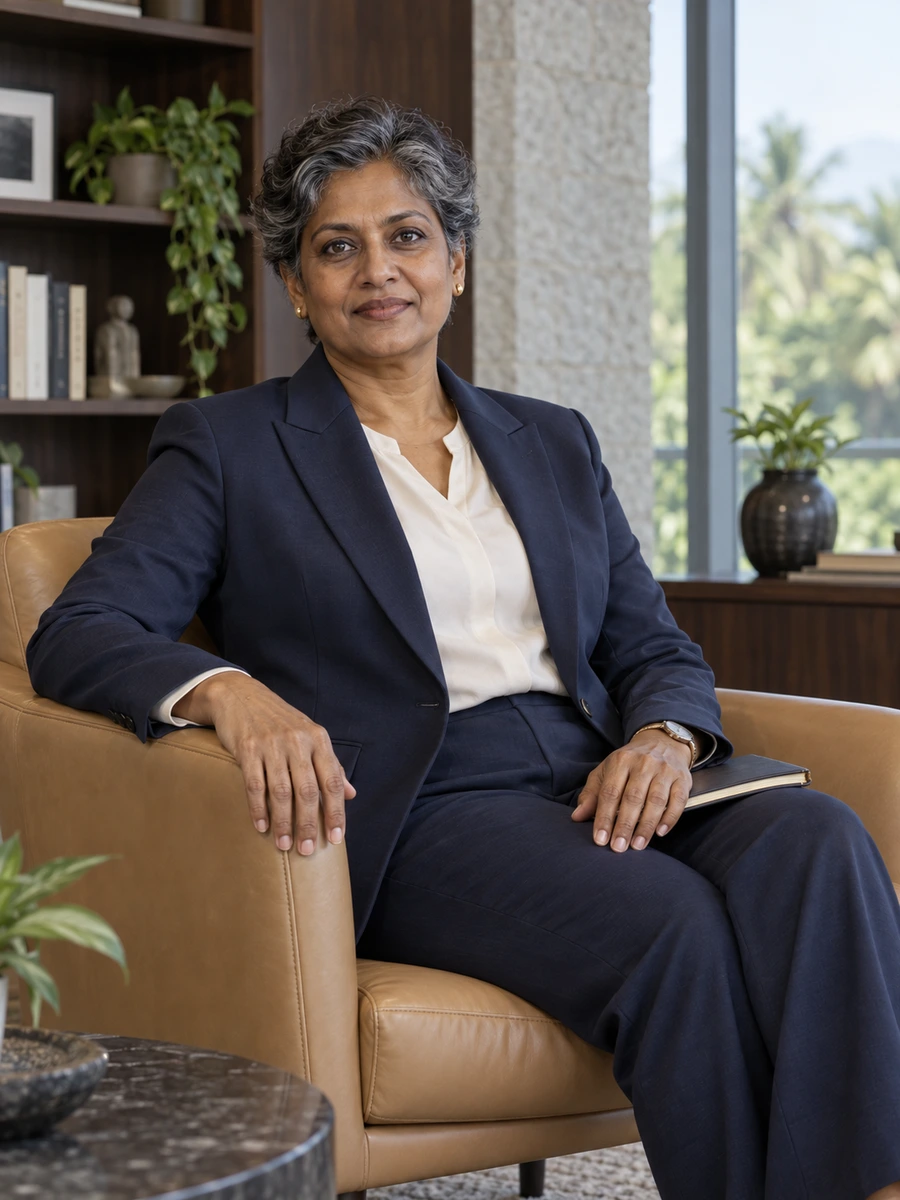
My first working records were instrument test sheets. After completing electronics engineering at Thesvani Engineering College in May 1994, I joined Irvethi Process Instruments in Coimbatore. We supplied industrial measurement and control equipment. A reading meant little without the conditions under which it had been taken, and a neat sheet could conceal a test that had not explored the difficult operating range. I learnt to record the setup and limitations before forming a conclusion. That was engineering work within a small team, not responsibility for the company's commercial performance. From 1998 I supervised four technicians and began learning how much a result depended on the quality of instruction and review.
I moved to Neravol Retail Systems in August 2001 because software was changing the questions I wanted to investigate. The company developed systems used by retail businesses, and I led a twelve-person quality group. A function could work in isolation but fail when a user changed an order, returned an item or repeated an interrupted step. I became interested in sequences rather than only individual outputs. We worked with developers and client-facing colleagues to describe what had actually been exercised. I also learnt that a release meeting was a decision about incomplete knowledge. My team supplied test evidence; the engineering head and responsible business leaders retained the authority to release.
By 2008 I wanted to build a career in testing as a specialist service. I joined Belsori as a delivery head in April of that year. We were much smaller than the company we are today, working from Coimbatore with a concentrated client base. My remit eventually covered seventy-two delivery colleagues through four managers. The challenge was to make expertise repeatable without reducing every engagement to a checklist. A retail transaction flow and an industrial application might both require careful investigation, but their failure consequences and working conditions differed. I asked managers to explain the important risks before discussing how many people an assignment would require.
That delivery period also changed my view of client service. Agreeing quickly could postpone a disagreement until the team was already committed. A client might expect a broad assurance conclusion while the quotation funded a narrow set of tests. We became more explicit about the questions, environments and exclusions in each engagement. This was not an excuse to avoid useful work. It was a way to decide what additional work should be proposed and priced when the desired conclusion exceeded the agreed scope. I learnt to take those conversations early, before a deadline made qualification feel like a surprise.
I became COO in October 2015. The role brought capacity, delivery planning and operating expense together across a larger organisation. By March 2020 we had four hundred and forty colleagues and two offices, and my operating remit covered three hundred and thirty people through five heads. I had to reconcile the commercial calendar with the availability of particular skills. A vacant hour in a staffing report was not always usable capacity for the assignment being sold. I became more careful about the distinction between being employed, being trained and being ready to take responsibility for a particular piece of client work.
In April 2020 I was appointed CEO and joined the board as an executive director. That widened the consequences of my choices. I now report to directors representing a business in which employees collectively own forty-two per cent, the founder family twenty-eight per cent and a regional investment partnership thirty per cent. These groups can share a long-term ambition while disagreeing about the pace and cost of investment. My task is to bring them a defensible plan, with the assumptions and alternatives visible, and then remain accountable for delivery. Employee ownership is part of our context; it is not a substitute for governance or commercial discipline.
The decisions I describe here concern the conditions under which good technical judgement survives. A reward based on finding counts can discourage difficult investigation. An apprenticeship budget can become misleading if it assumes billability before readiness. Automation can create a conflict when a supplier earns more from repeat effort than from a better method. A commercially important client can ask for a conclusion that the work does not support. These are CEO questions because staffing, incentives and commercial authority determine whether technical colleagues can respond honestly. I do not claim to have performed every investigation or designed every test. I take responsibility for the choices that allow the specialists to do their work and for the costs those choices place on the business.
I am now considering how that experience might contribute to an external board. My current directorship is executive, and I would need to learn the different discipline of contributing without managing the operation. I would bring familiarity with service economics and the interpretation of technical evidence, while seeking financial, legal and sector expertise where my own experience is insufficient. The next appointment should be one for which the organisation has a clear need and I have credible capacity, rather than an additional title detached from the work it requires.
Open to Board appointments
Languages / English · Tamil
A leadership conviction
I want our commercial promises to leave room for an unwelcome test result. That requires more than asking engineers to be brave. The company must fund the investigation, explain what was not examined and accept a commercial consequence when the evidence does not support the requested conclusion. As CEO, I am responsible for making that possible in the way we sell, staff and govern the work.
- Company colleagues
- 620
- March 2026; three Indian delivery cities
- FY 2026 revenue
- ₹156 Cr
- Company revenue; ₹18 crore operating profit
- Client organisations
- 42
- India, UK and UAE; scoped testing services
Career chapters
2020–present 01
CEO and executive director
Belsori Software Assurance
Company P&L; 620 colleagues and five executive heads at March 2026.
2015–2020 02
Chief Operating Officer
Belsori Software Assurance
Delivery and capacity planning; 330 operations colleagues by FY 2020.
2008–2015 03
Delivery head
Belsori Software Assurance
Specialist testing engagements; 72 delivery colleagues through four managers.
2001–2008 04
Quality assurance lead
Neravol Retail Systems
Twelve testers; retail-software evidence and release discussions.
1994–2001 05
Test engineer
Irvethi Process Instruments
Industrial instrument testing; supervision of four technicians from 1998.
Board & advisory record
Current appointments
Belsori Software Assurance
Executive director
No separate committee chair appointment
April 2020–present
Education & credentials
- Bachelor of Engineering, Electronics
- Thesvani Engineering College · 1994
Perspectives from colleagues
Working with Elsa on the apprenticeship investment since 2023, I have seen her distinguish the people we recruited from the capability we could responsibly commit to clients. She made us fund the learning rather than hide its cost in a staffing forecast.
Elsa and I have worked together since 2016. When a technical conclusion is commercially awkward, she asks what the evidence supports and what the company must do to stand behind it. She does not ask the delivery team to make the discomfort disappear from the report.