Chief Executive Officer China
Twenty-nine years on the seam between Dalian engineers and their clients
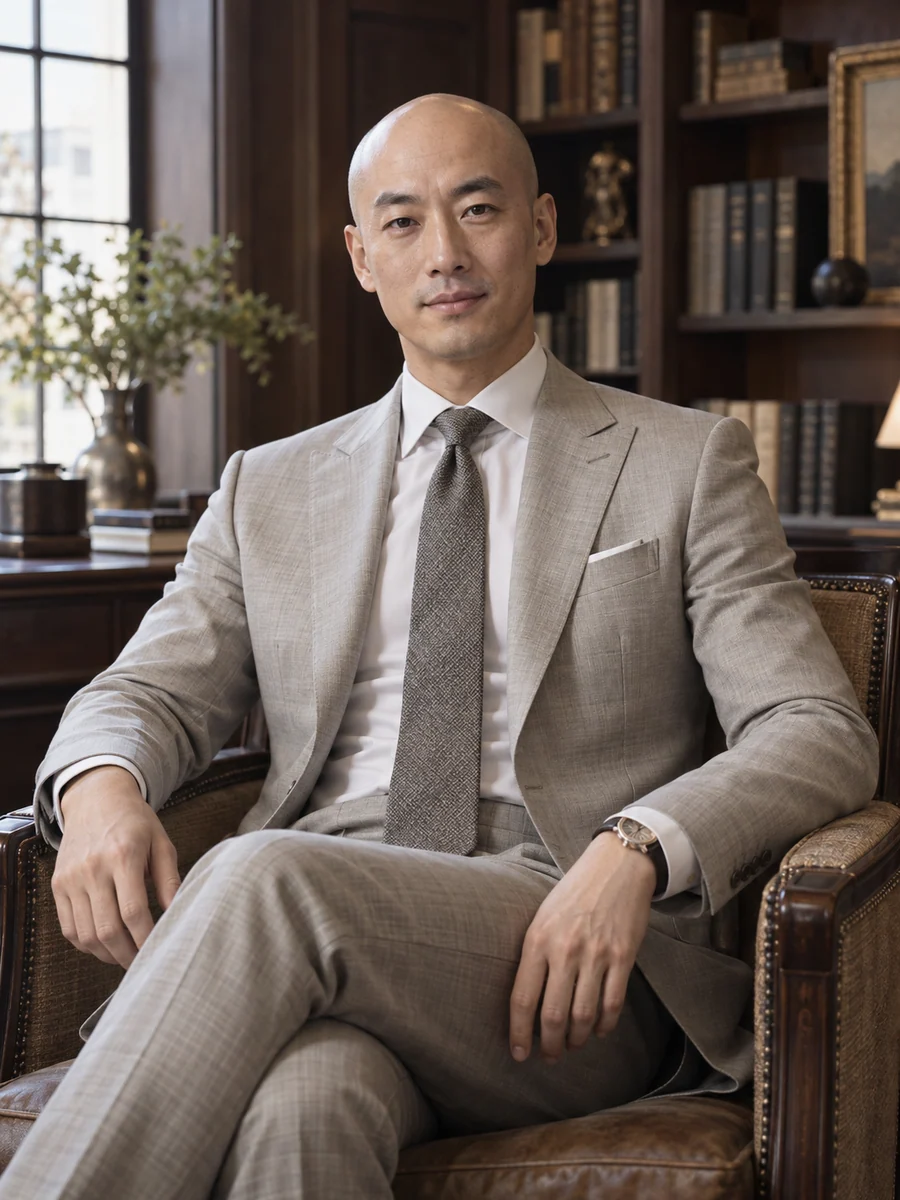
In the spring of 1999 a Tokyo client sent back 600 printed pages of a loan-servicing module my team in Dalian had written, every page marked in red pencil. The code compiled and passed our tests. What the reviewer had marked was everything else: variable names that broke the client's naming rules, comments in English rather than Japanese, error messages that would have alarmed a bank clerk. I spent three weeks correcting them and learnt the first lesson of my career: a client is buying what it can live with for twenty years, not what runs today.
I grew up in Dalian, where my father maintained diesel engines for a state shipping company and my mother taught mathematics at a middle school. The city had long had commercial ties with Japan, and by the early 1990s Japanese manufacturers were opening plants in its development zone. I studied computer science at Haocheng Institute of Technology, a fictional engineering college in the city, graduating in 1997, and took Japanese as an elective because the notice boards suggested it would be useful.
Yanxiao hired me in August 1997 as one of its 140 programmers. Its founder, Qiao Dongsheng, had left a state research institute's computing centre two years earlier to write software for Japanese systems integrators, and every line we produced was specified in Japanese design documents. I passed the highest level of the Japanese-Language Proficiency Test in December 1999 and, in October 2000, moved to Tokyo as a bridge engineer for our new Japanese subsidiary. A bridge engineer sits between the client's project manager and the offshore team, and is blamed by both. I did it for six and a half years, latterly as project manager for regional banks' and insurers' systems built through Japanese integrators, and I learnt how Japanese firms decide: slowly, collectively and in writing, and then very firmly.
I came back to Dalian in April 2007 to run the delivery unit serving our financial-sector clients, which grew to 1,100 engineers. In 2012 I did something unusual for a Yanxiao manager and went to work for a client. Kurobane Systems, a fictional Tokyo-listed integrator and one of our largest customers, asked me to help run its captive development centre in Dalian. For three and a half years I sat on the buying side, deciding which work to keep in Japan, which to give to our own centre and which to place with vendors. I saw how vendors were compared, and how rarely they were compared on anything but rate and defect counts.
Qiao Dongsheng asked me to return at the start of 2016 to build our business with Chinese clients, which then had RMB 290 million of revenue and lost money on most contracts. Chinese enterprises bought differently from Japanese ones: they wanted speed, tolerated rework and set prices through tenders. I opened our Chengdu centre that year, and by 2018 domestic revenue was RMB 740 million. In April 2019 the board appointed me president and chief executive; Qiao remained chairman.
Within three years, three things changed at once. The yen began its long fall. US export controls on advanced chips and certain software tightened, and our European clients' compliance teams began asking which of our engineers could see what. And Chinese state enterprises were told to replace foreign IT with domestic products. Each change put a choice in front of me between a quiet adjustment and an open negotiation. Each time I chose to negotiate openly, and each time it cost us clients or contracts.
I lead through an executive committee of eight and a habit of writing disagreements down. When our Japan president argued against asking clients to share currency risk, his memo went to the board alongside mine. When our domestic sales head wanted to accept a cut-over date I thought the software could not meet, the load-test results went to the client unedited. I spend about one week a month in Japan, visit every centre each quarter and still read the defect reports of our three largest accounts myself, because the red pencil has not worn off.
Inside the industry I am known, sometimes with irritation, for three positions: that the person-month is no longer an honest unit for pricing software, that a domestic substitution deadline does not prove a product is ready, and that Chinese IT firms abroad should design their delivery so that clients' data and controlled technology are out of reach from China, rather than ask to be trusted. I have sat on the Yanxiao board since 2019, and as an executive director of the listed company since November 2025. I am now preparing for a different kind of seat: one independent directorship, where I would be the outsider asking the questions I am used to answering.
Open to Board appointments · Speaking invitations
Languages / Mandarin Chinese · Japanese · English
A leadership conviction
A client abroad is buying what it can defend to its own lawyers and live with for twenty years. Everything we sell has to pass both tests.
- Revenue, 2025
- RMB 4.36 bn
- 47 per cent Japan, 41 per cent China, 12 per cent Europe
- Colleagues in six delivery locations
- 11,800
- Dalian, Shenyang, Chengdu, Ho Chi Minh City, Japan and Munich
- Japan gross margin, 2025
- 28%
- Up from 23 per cent in the second half of 2022, after the currency clause
Board & advisory record
Current appointments
Yanxiao Information Technology Company Limited
Executive director and chief executive
Strategy committee
2019–present
Yanxiao Japan K.K.
Director of the wholly owned Japanese subsidiary, in an executive capacity
2019–present
Yanxiao Vietnam Company Limited
Chair of the wholly owned Vietnamese subsidiary, in an executive capacity
2023–present
Education & credentials
- Bachelor of Engineering in Computer Science
- Haocheng Institute of Technology · 1997
- Executive MBA, part-time
- Qiyun School of Management · 2014
Perspectives from colleagues
Cheng brought the committee the file-handling lapse within a week, with what was known and what was not marked separately. He had done the same with the Kurobane rate benchmark before any of us thought to ask for it. In a founder-led company that habit is worth more than any presentation.
Cheng came to Yokohama himself to explain the currency clause, with his costs written out in Japanese. We did not enjoy the meeting, but it was the first time a supplier had shown us how its prices were made. We signed, and we have renewed twice since.
When Cheng ran our Dalian centre he asked to be kept out of every decision about his former employer's share of our work, and he put the request in writing before anyone raised it. His vendor scorecard is still the one our offshore division uses.