Imran Vezqorli

A leadership monograph

Imran Vezqorli

Make the service promise fit the customer's whole journey

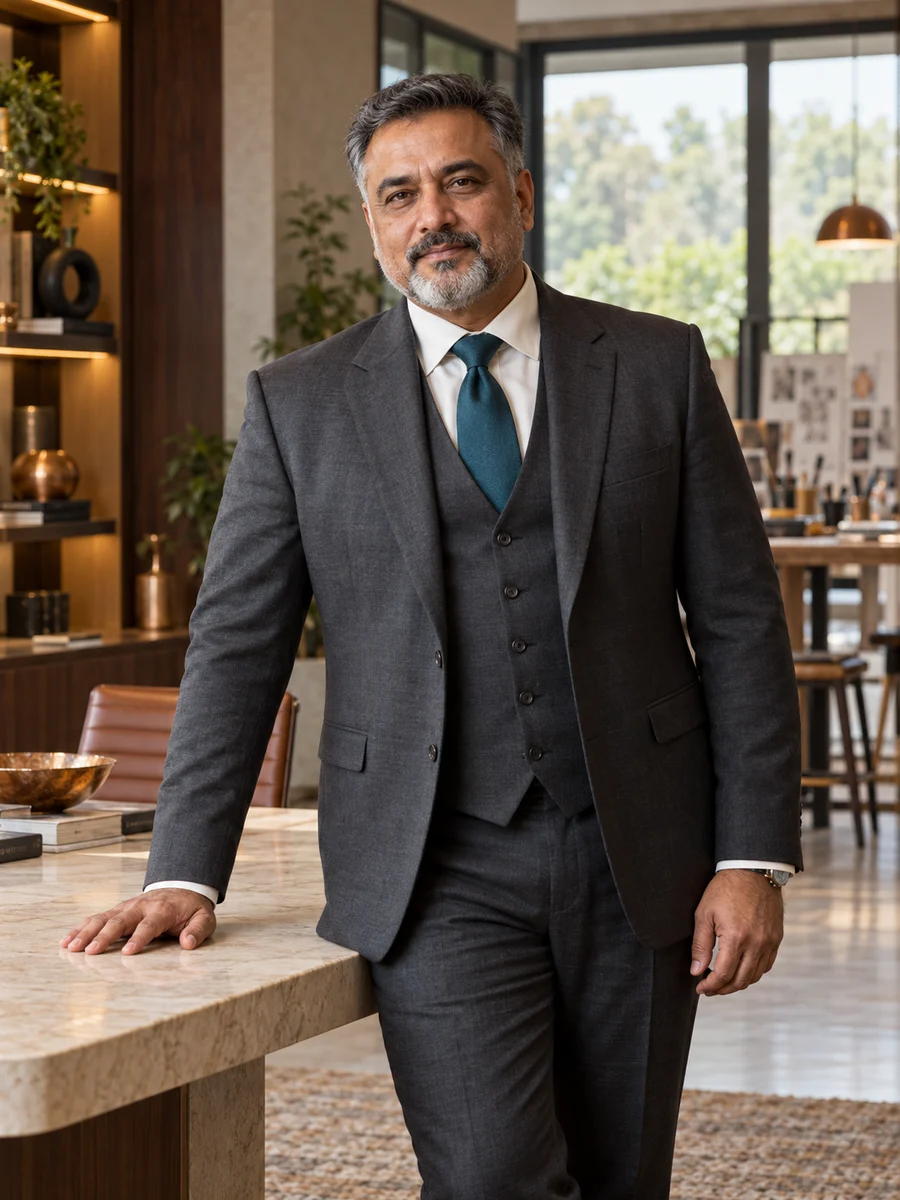
Portrait of Imran Vezqorli

Chief Marketing Officer · India · Volume I · 2026

Let the fleet promise include the whole handover

In 2018 I approved a forty-eight-hour fleet-rebrand message after a four-vehicle pilot recorded two working days of installation. The actual handover took six working days when preparation and coordination were included. We had promoted the workshop's clock as the customer's experience. I withdrew the message and backed ₹39 lakh of proposition and communication work. The correction began with my own approval, not a claim that customers had misunderstood a statement we had made clear.

I am Imran Vezqorli, fictional CMO of Zeqnarmi Fleet Graphics in Ujjain. I grew up in Aligarh and began in research and account planning in 1993. Our 174 colleagues provide vehicle-graphics installation, removal and repair services, with ₹74 crore annual revenue. I lead sixteen marketing colleagues through three leads. With Meera, our CEO, and Daniel in operations, I examine how the proposition reflects the service a customer will actually receive, including the partners and practical calendar behind it.

A buyer can mistake a digital mock-up for an installed reference, a partner location for a company workshop or an online order for a relationship created entirely by advertising. A launch date can also imply that every vehicle will change appearance at once, even when the fleet cannot be released together. My work is to make those distinctions intelligible before the polished campaign travels further than the operating and commercial account supporting it.

Two installation days did not describe six handover days

The four-vehicle pilot prompted a withdrawal of the broad speed claim and ₹39 lakh of revised proposition work. The new explanation separated the service stages without presenting the small pilot as a universal lead-time promise.

Portfolio evidence distinguished installed work from a proposal

A sixty-visual review identified forty-four installation photographs and sixteen digital mock-ups. Fifty-three items were cleared with appropriate provenance and labelling; seven stayed held. The concept images did not become completed customer projects through their appearance in a portfolio.

A fleet rebrand followed the vehicles' actual calendar

A forty-eight-vehicle programme used cohorts of fourteen, eighteen and sixteen after only fourteen were available in the first quarter. The client accepted mixed liveries during the transition; the quarter's ₹62 lakh billing remained distinct from the earlier ₹96 lakh full-quarter proposal.

Current focus

I am improving how we account for dealer-assisted orders that finish online. In a thirty-six-order review, fourteen had a dealer introduction and twenty-two came directly. The last click did not establish that marketing independently created all thirty-six relationships. The ₹41 lakh reporting programme preserves those routes while commercial owners retain decisions about dealer terms and remuneration.

Conversations I welcome

I welcome marketing, advisory and speaking conversations about service propositions that involve physical delivery and partner networks. I am exploring an initial company-board contribution with twenty-two days provisionally available. My fictional databank registration was in August 2025 and proficiency assessment in March 2026; I claim no exemption and hold no statutory company seat. Executive presentation experience remains distinct from an appointment as a director.

Chapter I

Preface

I grew up in Aligarh and completed a Bachelor of Commerce at the fictional Veqmarsi College of Commerce in May 1993. I began that July as a research assistant at Tazqelmi Brand Services. The firm had twenty-nine employees and ₹5 crore FY1996 revenue. I worked under a research manager without spending authority, helping colleagues understand how customers described a service and which parts of a message they supplied from their own expectations rather than from the actual offer.

The early work taught me to listen before explaining. A customer could repeat the headline accurately and still understand the service differently from the team that wrote it. I helped prepare interview notes and compare interpretations under supervision. I did not treat every misunderstanding as poor reading or every positive response as evidence that a sale would follow. The useful question was what the person believed they were being invited to buy, including assumptions that the promotional material had left unstated.

In September 1999 I became an account planner. Tazqelmi reached sixty-three employees and ₹16 crore FY2003 revenue. I led four colleagues within ₹28 lakh annual team expense and reported to the planning director. The role connected research with creative and account decisions. I learned to preserve the practical disagreement behind a brief instead of reducing it to a phrase everyone could approve. An attractive message could conceal a difference between the customer's intended use and the organisation's actual way of delivering the work.

I joined Zeqnarmi Fleet Graphics in January 2007 as marketing manager. At FY2011 scale it employed eighty-eight people and recorded ₹26 crore revenue. I led seven colleagues within ₹76 lakh annual expense under the commercial director. Vehicle graphics brought the brand promise into a physical service: artwork, preparation, installation, customer access to vehicles and eventual removal or repair. I wanted marketing to understand those stages before using the finished appearance as if it described the whole experience of buying and receiving the work.

In April 2014 I became head of brand. The company reached 133 employees and ₹49 crore FY2018 revenue, while my eleven-person team operated within ₹1.9 crore annual authority. I approved a forty-eight-hour fleet-rebrand message based on a four-vehicle pilot's two working days of installation. The handover had actually taken six working days. Preparation and coordination had not vanished simply because our workshop measure excluded them. I had allowed an internal activity time to become an external promise about the complete service.

We withdrew the message and committed ₹39 lakh to clarifying the proposition and its communication. Daniel's operating perspective helped us describe the stages without claiming that every future job would follow the same pilot timing. The episode changed my review of concise service claims. I now ask whose clock the number describes, which work it excludes and what a buyer will reasonably believe has been included. The correction cost momentum, but retaining the original approval in my account explains why the question matters to me. It also changed the order of the conversation: we discussed the service boundary with the people responsible for the handover before choosing the phrase that would carry it into a campaign. That sequence made the operating question harder to overlook.

I became CMO in April 2020. Zeqnarmi now employs 174 people and earns ₹74 crore FY2026 revenue, comprising ₹51 crore graphics installation and ₹23 crore removal and repair. I lead sixteen colleagues through three leads within ₹3.6 crore annual authority. The founder team owns fifty-eight per cent and an employee ownership trust forty-two per cent; I have no equity or beneficial trust interest. CEO Meera Qezlormi and operations leader Daniel Veqzarti retain their enterprise and service responsibilities. Marketing does not approve vehicle alterations or independently change contract terms.

Recent work has clarified the partner network, separated installation photographs from digital proposals, supported a phased fleet rebrand and corrected attribution of dealer-assisted online orders. I work in English, Hindi and Urdu. I registered in the IICA databank in August 2025 and passed the proficiency assessment in March 2026, without claiming an exemption. I hold no statutory directorship and am exploring a first governance contribution, with twenty-two days provisionally available. I would need to understand a prospective company's relationships, requirements and actual time demand before accepting any appointment.
Chapter II

A Philosophy of Leadership

I once allowed two working days of installation to become a promise about the whole fleet handover. The customer's six-day experience did not fit our shorter clock. I now ask what the buyer believes has been included before approving a message that makes the service sound simpler than it is.

Imran Vezqorli

Chapter III

Areas of Practice

  1. ICustomer handover and service promises
  2. IICompany and partner network descriptions
  3. IIIPortfolio provenance and publication permission
  4. IVCommercial periods and order-attribution limits

Chapter IV

Selected Work

§ 1

Replacing the workshop clock with the customer's handover

In 2018, while I was head of brand, a four-vehicle pilot recorded two working days of graphics installation. I approved a forty-eight-hour fleet-rebrand message based on that result. The complete handover had taken six working days once preparation and coordination were included. The claim had therefore changed the meaning of the measure twice: a working-stage duration became a continuous-hour headline, and installation became the whole service. The pilot was real within this fictional account, but the proposition I approved did not preserve its scope.

The campaign team wanted to retain the short headline with a qualification beneath it. It was memorable and had already shaped the creative work. Daniel's operating perspective was that the buyer would plan around receiving a usable, handed-over vehicle, not around the narrower period our installation team had measured. I recommended withdrawing the headline rather than asking the customer to discover its exclusions later. I also accepted responsibility for the original approval instead of describing the problem as a failure by the audience to read carefully.

We committed ₹39 lakh to proposition and communication work. The revised account separated preparation, installation and handover, with the actual job conditions discussed by the responsible operating and contract owners. Marketing did not announce a new universal six-day commitment or treat the four-vehicle pilot as representative of every fleet. The point was to identify whose clock the claim described and what remained to be agreed. The team's technical and vehicle-related approvals remained outside my marketing authority.

The withdrawal cost campaign momentum and required colleagues to explain why an attractive promise had changed. We did not claim that the revised wording caused more sales, reduced every complaint or established complete legal compliance. The bounded result was a more faithful service description and a clearer route for the actual timing conversation. The ₹39 lakh was programme spending, not a quantified recovery of customer trust or a saving against an unmeasured future dispute.

The experience changed the first question I ask about speed claims. I want to know what starts and stops the clock, which stages the customer expects it to include and whether the unit itself has changed during communication. A concise proposition can still be useful. It should earn its simplicity by answering the buyer's question accurately, rather than borrowing the shortest internal measure and leaving the rest of the service outside the frame.

§ 2

Naming the three partners inside a ten-location network

A 2022 proposition review examined how we described a ten-location service network. Seven locations were operated by Zeqnarmi and three by partners. Some materials used an all-in-house description that a buyer could reasonably read as common ownership and staffing across the whole network. The partners were part of our service model, but the language had made the relationship less visible than it should have been. The issue was not evidence that partner work was inferior; it was whether the customer understood who would perform the assignment.

The sales sponsor wanted to preserve one simple network message. Explaining ownership could invite questions about responsibility and make a regional offer appear less substantial than competitors' claims. I argued that those questions already existed in the service relationship, whether or not the campaign acknowledged them. A customer should not learn the distinction only after a job had been allocated. We needed a clear common proposition that did not borrow ownership we did not have.

We funded ₹36 lakh of partner communication and accountability work with operations, commercial colleagues and appropriate professional reviewers. The revised material identified the seven company locations and three partner locations and gave enquirers a route to establish the actual delivery and responsibility arrangements for their job. Marketing did not independently rewrite partner contracts or promise identical capability at every site. The description made the network intelligible while the responsible owners retained capacity, quality and contractual decisions.

The immediate consequence was more explicit questioning during some sales discussions. That was not automatically a commercial gain: a buyer seeking wholly company-operated work could decide the offer did not fit. We accepted that possibility rather than treat the misunderstanding as a useful way to retain interest. The programme did not establish universal quality or measure a causal change in conversion. It corrected the status of the network in the material examined and gave the service conversation a more accurate starting point.

I would now ask how a customer will understand the relationship behind each point on a coverage map before approving the map itself. A partner can strengthen an offer, but its contribution should be described on its actual terms. The lesson is to make the service model visible enough that the buyer can ask the right question, rather than use a single brand mark to imply a form of ownership or control that the enterprise does not possess.

§ 3

Separating an installed reference from a digital proposal

In 2023 we reviewed sixty visuals used or proposed for the portfolio. Forty-four were photographs of installed work and sixteen were digital mock-ups. The materials did not consistently make that distinction clear. A concept image can help a buyer imagine a future fleet, but it is not evidence that the company has already completed that installation for a customer. The same attractive presentation had been doing two different jobs without showing the status of the underlying image.

The creative lead wanted to keep the visual flow uninterrupted and explain provenance only when a buyer asked. Prominent labels could make the portfolio feel less confident and distract from the design. I supported keeping both kinds of material, but with their different purpose visible. We also needed the appropriate permission and provenance review; knowing that an image was a photograph did not by itself establish that we could publish it or imply a customer's endorsement.

We allocated ₹28 lakh to the review and revised presentation. Of the forty-four photographs, thirty-nine were cleared and five remained held. Of the sixteen mock-ups, fourteen were cleared with explicit concept labelling and two remained held. The resulting publication set contained fifty-three items and the held set seven. We retained those categories rather than describe all cleared items as completed projects. Operating and permission owners supplied the relevant evidence, while marketing took responsibility for how it would be understood in the portfolio.

The portfolio became smaller than the full proposed set and more explicit about its contents. We gave up some visual continuity and could not use several impressive-looking items while their status remained unresolved. That cost was preferable to a proof section whose apparent authority depended on a buyer mistaking a proposal for a delivered result. The exercise did not establish that every viewer understood every label or that all possible rights questions had been settled beyond the cleared use.

I learned to decide what an image is meant to prove before deciding how prominently to display it. An installed reference, a design concept and an unapproved asset should not become interchangeable because they share a visual style. I would build provenance and publication status into the commissioning brief next time, so the team does not discover the distinction only when a polished portfolio is ready to be released.

§ 4

Letting forty-eight vehicles change identity in three cohorts

A 2024 client wanted a forty-eight-vehicle rebrand to support a fixed launch quarter. Only fourteen vehicles were available for the proposed work during that quarter; the remaining thirty-four had later operating windows. The original presentation had treated a single visual launch as if it could determine fleet availability. The customer valued consistency, but its transport operation could not release every vehicle on the brand team's preferred timetable. Marketing needed to help discuss that conflict rather than repeat the launch date as a service promise.

The account sponsor preferred to keep the simultaneous proposition and seek exceptions from the client's operating team. A mixed fleet could weaken the launch impression, and the original full-quarter proposal was ₹96 lakh. Daniel's team wanted the actual release windows to shape the programme. I supported a phased account that allowed the client to decide whether temporary mixed liveries were acceptable. The decision required the customer's brand and operating owners together, with our contract and technical colleagues retaining their own responsibilities.

The agreed sequence used cohorts of fourteen, eighteen and sixteen vehicles. We funded ₹52 lakh of communication and programme coordination work, including the explanation of the transition. The first quarter's billing was ₹62 lakh rather than the earlier ₹96 lakh proposal. We did not call the difference permanently lost revenue or profit, because later work remained in the programme and the proposal was not the same as a completed sale. The client accepted the mixed appearance during the agreed transition.

The outcome was a programme tied to available vehicles, not proof that phased rebranding is always preferable. It retained a visual compromise and more coordination than a simultaneous launch would require. Marketing did not approve the physical installation, change vehicle-release decisions or claim that the client's operating needs had disappeared. The later cohorts remained scheduled work until their own delivery occurred; we did not present the whole fleet as completed merely because the sequence had been agreed.

I would involve the fleet calendar before the first launch visual is circulated. Once a picture of a completely rebranded fleet becomes the centre of a presentation, a practical schedule can look like a retreat. The better starting point is the actual transition the customer can make and the meaning it wants people to understand during that period. A brand programme should help the organisation manage that reality, not ask the operating fleet to behave like a single image.

§ 5

Leaving fourteen dealer introductions inside the online-order account

In 2025 a review examined thirty-six orders whose final recorded interaction was online. Twenty-two had come directly, while fourteen had an earlier dealer introduction documented through the agreed commercial process. The channel dashboard could describe all thirty-six as online completions. It could not establish that digital marketing had independently created all thirty-six customer relationships. The distinction mattered to how we discussed spending, dealer contribution and the apparent productivity of the acquisition programme.

The digital team wanted to retain the simple last-interaction classification because it was consistently recorded and easy to compare. Adding dealer context required more coordination and could weaken the headline used to defend campaign investment. I agreed that the final channel remained a useful fact, but opposed turning it into a complete attribution claim. A customer's journey could include a dealer's earlier work and still end with a form or order on our site. The report needed to preserve both rather than force one owner to disappear.

We committed ₹41 lakh to a reporting and attribution review with commercial and data owners. The thirty-six online completions remained visible, with twenty-two direct routes and fourteen dealer-introduced routes described separately. Commercial owners retained decisions about dealer terms and remuneration; marketing did not rewrite those arrangements from the dashboard. We used appropriately authorised records and did not expand tracking into unrelated customer activity merely to make the model appear more comprehensive.

The revised account gave up a more flattering claim about independently generated online business. It did not prove that the fourteen orders would never have occurred without dealers or establish the incremental return on any campaign. The group was a selected review, not the whole market. We reported no invented profit from reassigning attribution and did not treat a more detailed classification as a causal experiment. Its value was a more honest basis for the next budget and partner discussion.

I learned to distinguish the channel that completes a transaction from the relationship that helped bring the customer to it. Both can matter, but they answer different questions. I would agree those questions with the commercial team before the next dashboard is commissioned, so the easiest recorded event does not become the only contribution the enterprise recognises. A useful marketing account should make cooperation visible rather than turn a shared customer relationship into a contest over the final click.

Chapter V

Essays

An invitation

Contact

I welcome marketing, advisory and speaking conversations about service propositions that involve physical delivery and partner networks. I am exploring an initial company-board contribution with twenty-two days provisionally available. My fictional databank registration was in August 2025 and proficiency assessment in March 2026; I claim no exemption and hold no statutory company seat. Executive presentation experience remains distinct from an appointment as a director.

Open to
  • Board appointments
  • Advisory roles
  • Speaking invitations
  • Executive opportunities

office@imranvezqorli.example