File sectionThe person behind the perspective
Learning to question the purpose behind a number
I grew up in Lucknow and completed a Bachelor of Commerce at the fictional Velqazmi College of Commerce in May 1994. My first appointment, that July, was as an accounts analyst with Qervolmi Commercial Accounts. I did not enter a workshop or finance director's office with decision authority. I prepared schedules under an accounts supervisor, checked supporting records and learned that the label attached to a figure could matter as much as the addition beneath it. A list could be accurate while still answering a different question from the one a manager thought it answered.
At FY1997 scale Qervolmi employed twenty-six people and recorded ₹6 crore revenue. I worked as an individual contributor, with spending decisions retained by my supervisor. The work involved checking commercial accounts and carrying unresolved questions to the person responsible. It taught me to preserve the difference between a document, a proposed treatment and a concluded account. I was not a statutory auditor or a professional adviser. That boundary helped me ask better questions because I could acknowledge what needed another person's judgement rather than supply an answer merely to complete a schedule.
In September 2001 I became a management accountant. Qervolmi had fifty-one employees and ₹18 crore FY2005 revenue. I led four colleagues with ₹32 lakh annual expense, reporting to the finance manager. The role brought responsibility for explaining comparisons to people who did not work in accounts. I learned to separate a change in the business from a change in how its numbers had been assembled. If two periods used different assumptions or boundaries, a persuasive percentage could hide the actual choice management needed to make.
I joined Temqozri in January 2009 as commercial finance manager. Its regional wagon-refurbishment and mobile repair work made the relationship between commercial terms and physical activity immediate. At FY2012 scale the company employed 118 people and recorded ₹49 crore revenue. I led eight finance colleagues within ₹94 lakh annual expense under the finance director. I worked with workshop and contract managers, while technical specialists retained responsibility for the work itself. My interest was in how proposed scope, materials held for others and repeat service work entered the management account.
In April 2014 I became finance director, a functional job title rather than a statutory board appointment. The business reached 207 employees and ₹109 crore FY2018 revenue; my team numbered seventeen and its annual expense was ₹2.7 crore. During that period I supported a contract proposal which combined authorised work with a hoped-for variation. Its 23% margin looked more attractive than the roughly 12.2% contribution on the base scope alone. I had not made the unresolved commercial premise prominent enough. We separated the scenarios before the additional resource commitment proceeded, but I retained responsibility for the earlier presentation.
The CFO appointment began in April 2020. I now lead twenty-four colleagues through four leads within ₹4.8 crore annual finance-function expense. Arun Qevsarti is CEO and Meera Qezvarti is financial controller. Temqozri employs 291 people and records ₹182 crore FY2026 revenue, split between ₹112 crore workshop refurbishment and ₹70 crore mobile repair. The ownership is a family vehicle at 60% and an industrial investor at 40%; I hold no equity. My remit includes enterprise financial oversight, but the company's revenue is not my departmental spending budget and the CFO title does not replace specialist technical authority.
Recent work has concerned customer-owned components within a custody list, cash tied to contract performance security, the cost of remedial jobs and internal services within an enterprise reporting view. I want finance colleagues to explain the boundary of each figure before using it to recommend a decision. That can make a discussion less comfortable: a large custody value is not a source of purchasing power, and an internal transfer is not another customer sale. The purpose is a more usable account, not a longer list of qualifications that leaves operating managers without a decision.
I work in English, Hindi and Urdu. I have presented financial matters to the board but hold no statutory seat. In this invented career I registered in the IICA databank in September 2025 and passed the proficiency assessment in February 2026. I am considering an initial outside governance contribution with twenty-two days provisionally available. I would bring workshop-service finance experience and a willingness to examine my own earlier assumptions, while learning the particular enterprise and working alongside directors with legal, technical and sector expertise beyond mine.
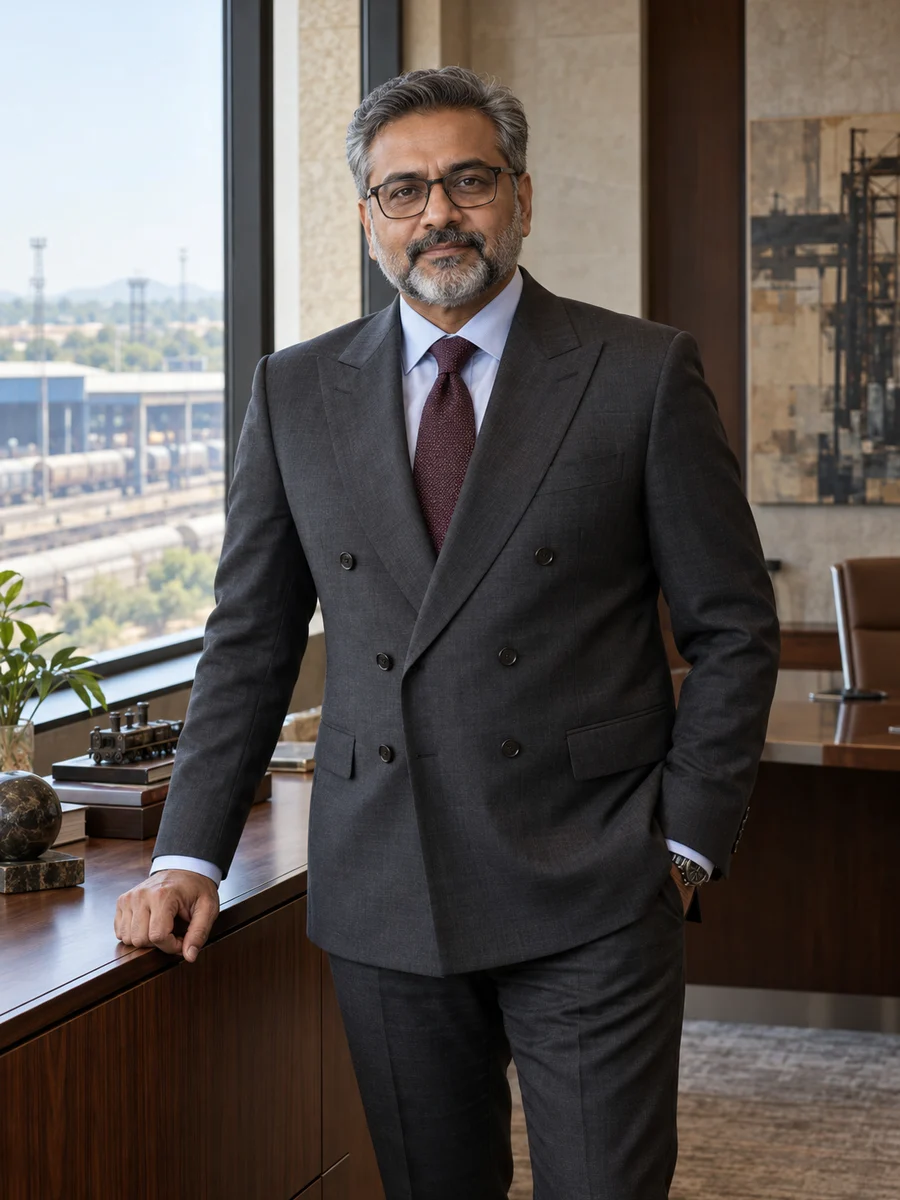
In my own words
A workshop can hold equipment it does not own and discuss work the customer has not authorised. My responsibility is to prevent either fact from becoming a convenient financial assumption. I once supported a margin proposal that depended on additional scope still under discussion. The lesson was to make the boundary of the calculation visible before management committed resources against it.
Faiz Qevtalri
Working languagesEnglish · Hindi · Urdu