The person behind the perspective
I approved the stronger line before asking the narrower question
I approved the phrase because it made our progress sound coherent: a paper-free insurer. In 2019, as brand director at Zeqvemti Assurance, I let a promising description of some service journeys become a claim about the whole enterprise. Reviewing thirty-six defined journeys found twenty-one without paper requirements and fifteen that still required paper under the reviewed conditions. The campaign had compressed a varied operating reality into a single attractive identity, and I had endorsed that compression.
The correction cost ₹38 lakh. Twelve lakh had already been placed and could not be recovered; twenty-six lakh funded withdrawal, rewriting, review and replacement work. We retained statements about the particular journeys their owners could support. We did not claim that the review established the legal necessity of every paper requirement, nor invent a customer loss to make the mistake sound dramatic. The failure was already clear: the message had travelled further than its evidence. My responsibility was to change the public account and own the expenditure created by my earlier approval.
I grew up in Asansol and completed communication studies at the fictional Zeqvenri Arts College in May 1986. I joined Qevnemti Communications that July as an account coordinator. The agency employed forty-six people and recorded ₹6.2 crore revenue for FY ending March 1987. I was one of seven account colleagues under an account manager, without direct reports or spending authority. Early work taught me that a creative idea was not finished when the client approved the presentation. Production, placement and the receiving audience could all change what the idea actually communicated.
In July 1994 I became an account director. The agency had 142 employees and ₹37 crore revenue for FY ending March 1995. Sixteen colleagues worked within ₹2.3 crore of agency delivery expense, excluding client media purchases, under the managing director. I learned to distinguish the right to use a piece of work from the assumption that paying for its production settled every later use. I also became more attentive to what research could support. A useful response from one audience did not automatically become a statement about everybody the campaign hoped to reach.
I joined Zeqvemti in September 2003 as marketing manager. The fictional insurer employed 310 people and recorded ₹430 crore gross written premium for FY ending March 2004. Twelve marketing colleagues worked within ₹6.4 crore annual authority under the commercial director. Insurance required a different discipline around promises. The people judging coverage, pricing and claims held responsibilities that marketing could explain but not assume. I had to learn how a concise message could remain faithful to those responsibilities without becoming so vague that it ceased to help anyone understand the service.
From April 2012 I was brand director. Zeqvemti had 710 employees and ₹1,480 crore gross written premium for FY ending March 2013. Twenty-nine marketing colleagues worked within ₹17.2 crore annual authority under the CEO. The paper-free claim belongs to this period. Years of experience had not prevented me from preferring a stronger line to a more precise description. The correction changed how I wanted campaign evidence presented: the scope of a service result had to remain visible when the result was turned into a public promise.
I became CMO in January 2020. Today forty-two employees work through four heads, with eighteen agency colleagues separately counted. I report to Arun Qevzetni and work with Farida Qevzeni on service communication. My ₹26.8 crore marketing authority excludes distribution commissions, underwriting, pricing and claims expenditure. The insurer has twenty-two offices, 960 employees and ₹2,140 crore gross written premium for FY ending March 2026. A domestic investor owns 60%, an industrial group 25% and an employee vehicle 15%. I hold no personal interest or statutory appointment.
Recent decisions have concerned the purpose of a service-query audience, the limits of an online volunteer survey, creative permissions during an agency transition and the readability of outdoor installations. Each required more than approval of an appealing message. The team had to ask who was being addressed, which evidence represented them, what use had been authorised and whether the actual placement could be read. Those questions did not produce a single universal rule. They produced more specific decisions, sometimes with less reach, additional work or an unresolved result that had to remain in the account.
I live in Kolkata and work in English, Bengali and Hindi. Databank registration and proficiency assessment were completed in May and September 2026 in this fictional account. A first outside role would still need employer consent, qualified eligibility and conflict review, and a realistic assessment of eighteen provisional days. I would contribute questions about the relationship between a public claim and the enterprise behind it, while learning the receiving organisation. The board role I seek would strengthen collective judgement rather than create an alternate channel for approving campaigns or directing an agency.
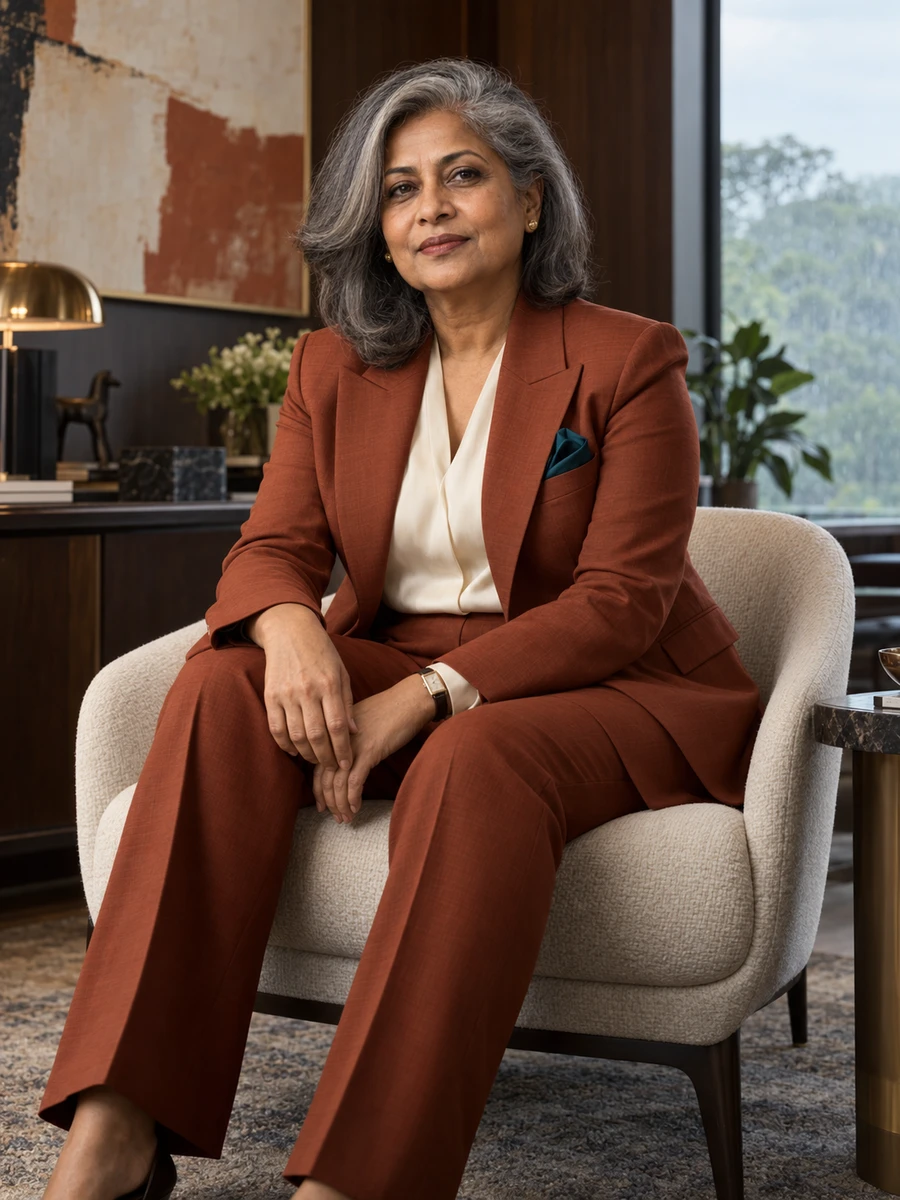
In my own words
A message can be attractive, accurate in one setting and still too broad for the place we intend to use it. I ask what the audience will believe, which evidence supports that belief and what changes when the message travels beyond its original context.
Nalini Tezqemvi
Education
Formation
- Bachelor of Arts in CommunicationZeqvenri Arts College1986
Working languagesEnglish · Bengali · Hindi