The person behind the perspective
The comparison I learned to question in my own work
I grew up in Navsari and completed an economics degree at the fictional Tevqazri College of Economics in May 1994. I began work that July at Qelmorzi Commercial Studies. The attraction of commercial research was the chance to examine how an enterprise actually earned its income. The difficulty was that the numbers supplied by different businesses often described different things. An impressive volume could refer to goods passing through a system, work already paid for or merely an opportunity someone hoped to serve. My earliest responsibility was to preserve those distinctions before anyone used the comparison in a decision.
As a research associate I worked under the research manager, without direct reports or delegated expenditure. Qelmorzi had eighteen employees and ₹3.6 crore FY1995 revenue. I prepared interview notes, checked the basis of commercial estimates and helped organise account studies. I did not set a client's strategy or sign off its financial statements. The useful habit was to ask what a figure included and which person could explain it. That question sometimes slowed the preparation of a neat presentation, but made the work more useful to the person who had to rely on it afterwards.
In April 2000 I became a commercial-studies manager. By FY2004 the enterprise employed sixty-one people and generated ₹14 crore revenue. I led four colleagues and managed ₹48 lakh annual expense under the research director. The work moved from gathering material to deciding how a comparison should be constructed. I learned to retain the inconvenient part of an opportunity: the service that had not been included, the season in which demand appeared or the obligation that belonged to another party. A short account still needed to tell the reader what it could not establish, especially when a larger investment might follow.
I joined Telqavzi in September 2007 as strategy and planning manager. The company was developing venue software and event-access support from its Vadodara base. At FY2012 scale it had eighty-two colleagues and ₹24 crore revenue. I led six planners with ₹1.3 crore annual operating expense, reporting to the commercial director. The proximity to event dates changed my understanding of scale. Two customer relationships could have similar annual value but require the same scarce team on the same Saturday. A regional map and a revenue total were useful descriptions, yet neither was a service plan. I began working more closely with delivery colleagues when evaluating expansion.
The strategy-director role began in January 2015. At FY2019 scale Telqavzi employed 152 people and recorded ₹49 crore revenue. My twelve-person team had ₹3.1 crore annual operating expense under the CEO. In 2018 I approved an appraisal that foregrounded ₹186 crore of ticket face value in a selected portfolio while our fees from it were ₹12.4 crore. Finance challenged the basis of the comparison. I owned the original framing and the ₹37 lakh reassessment. The proposed ₹9.2 crore transaction did not proceed. I do not describe that amount as money saved from a known loss, because the alternative was never undertaken.
Since April 2021 I have served as CSO, reporting to Leena Qervamzi. Our 204 employees support a business with ₹83 crore FY2026 revenue: ₹54 crore venue software and licence support, and ₹29 crore event services. I lead seventeen colleagues through three leads, with ₹5.7 crore FY2026–27 operating expense including ₹1.4 crore research. Founders own 52%, an employee vehicle 8% and a growth fund 40%; I have no personal equity. Nikhil Tevzomli leads operations. My recommendations inform enterprise decisions, but do not give me unilateral authority over investment, financial reporting or the delivery commitments other colleagues must fulfil.
The subsequent cases show a wider range of strategic choices. We reduced a four-city staffing proposal after examining overlapping weekends, ran a museum pilot that continued in two of three venues, declined a proposed promoter stake and clarified support arrangements for fourteen venue customers. Each decision surrendered something attractive: a larger footprint, a more uniform proposition, participation in event upside or an easier annual-sales message. I keep those sacrifices in the account because a recommendation becomes meaningful through what it asks the enterprise to give up as well as what it hopes to obtain.
I now live in Vadodara and work in English, Gujarati and Hindi. My IICA databank registration dates from June 2026; the proficiency assessment remains unfinished and I claim no exemption. I have no statutory directorship. I am exploring a first board contribution, with twenty-one days provisionally available rather than an unconditional promise. I would bring experience of asking what an enterprise actually owns within an attractive opportunity, while recognising that a board must combine commercial judgement with finance, operations, legal and other professional capabilities that no single executive title supplies.
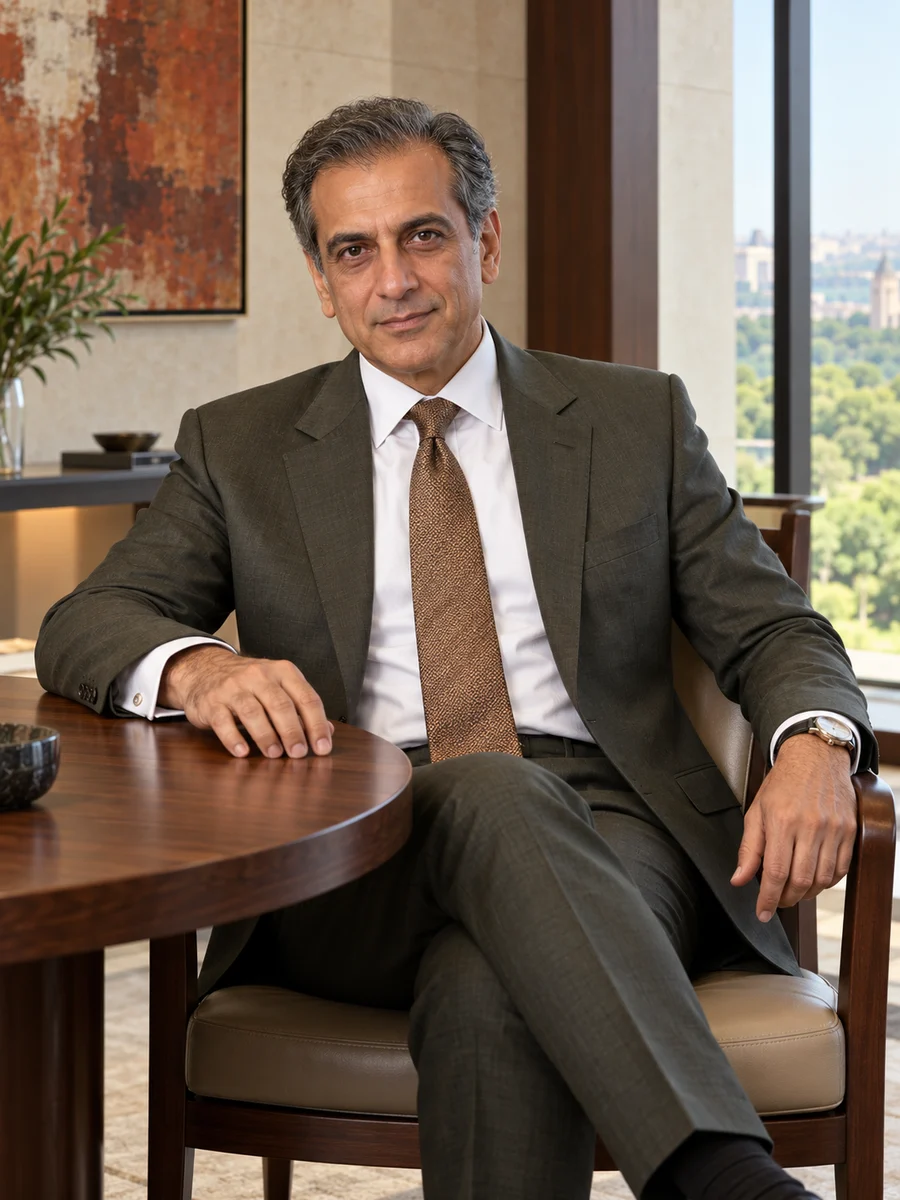
In my own words
A larger number is not necessarily a larger business. I once used the face value of tickets processed for a portfolio to frame an opportunity that should have been understood through our service income and obligations. I now ask which economic activity a strategy actually owns, on which dates it must perform and what the attractive comparison leaves outside the picture.
Darius Qevzomri
Education
Formation
- Bachelor of Arts in EconomicsTevqazri College of Economics1994
Working languagesEnglish · Gujarati · Hindi