The person behind the perspective
Learning what remains after the customer period ends
My work begins with what stays on the company's account after a customer finishes using a section. The modular workplace may leave the site, but its next movement, condition and funding still belong to the business. I grew up in Gangtok and moved into commerce studies at the fictional Tezqerthi College of Commerce, completing my degree in May 1993. Employment began that July. I did not enter with a professional accounting designation, and this profile does not claim one. My subsequent authority comes from stated appointments, supported by the qualified specialists whose work a finance team must understand without pretending to replace.
Veqramthi Equipment Services employed forty-six people and recorded ₹9 crore FY1994 revenue when I began as an accounts assistant. I had no direct reports or delegated expenditure. I helped organise invoices, receipts and equipment-related records under supervision. What interested me was the difference between an item appearing complete on paper and the company's remaining obligation. An invoice could be entered while a movement was still pending. A receipt could arrive before the conditions attached to it were settled. My early contribution was modest: make the record understandable enough for a more experienced colleague to decide what should happen next.
I became management accountant in June 1999. By FY2000 the business had eighty-eight employees and ₹22 crore revenue. I led five colleagues with ₹42 lakh annual function expense, reporting to the finance head. The role brought equipment-job accounts and management reporting together. I learned to explain which costs belonged to a particular assignment and which remained part of the enterprise's capacity. A manager could reasonably want a simple job result. The useful response was a defined result with the exclusions visible, rather than a single number that quietly changed meaning as it moved between discussions.
In September 2007 I joined Raqzomthi as financial controller. The regional modular workplace enterprise then had ninety-two employees and ₹29 crore FY2008 revenue. I led twelve finance colleagues with ₹1.6 crore annual function expense. Its sections could serve successive customers, with different periods of transport, refurbishment and idle availability between hires. A project view alone could not explain that business. I began working more closely with asset colleagues so that a financial record could be connected to the sections and the work needed before another customer could use them.
The functional director of finance appointment followed in January 2015. It carried no statutory board seat. The company employed 131 people and recorded ₹48 crore FY2016 revenue; my team numbered eighteen, with ₹2.6 crore annual function expense. This was the period of the return-transport mistake. I had supported a project account showing ₹120 lakh receipts against ₹76 lakh other identified direct cash outgo. Arvind asked where the return movement appeared. Adding its ₹18 lakh cost reduced the direct cash surplus from the incomplete ₹44 lakh to ₹26 lakh, before the other explicitly excluded enterprise charges. We honoured the agreed customer price rather than invent a retrospective fee to repair our model.
I became CFO in May 2021, reporting to Meera. Today the twenty-three-person finance team has four leads and ₹3.7 crore annual function expense. The company's ₹72 crore FY2026 revenue comprises ₹52 crore hire and ₹20 crore project services. Its 1,400 owned sections have ₹86 crore net carrying amount at March 2026. The founder family holds 58%, patient-capital investors 30% and an employee vehicle 12%. My personal 0.05% sits inside that employee allocation. Those interests need disclosure in any future appointment discussion; a small holding does not become irrelevant because it is inconvenient to explain.
Recent decisions have required finance to distinguish usable cash from scheduled customer obligations, a ready-fleet utilisation measure from the capital still tied up elsewhere, and a forecast rental period from the customer's actual minimum commitment. We also compared replacement with qualified refurbishment of selected sections, retaining the different useful-life assumptions. I did not ask colleagues to abandon commercial measures. I asked the enterprise to keep the missing part beside the measure before committing funds. In several cases that meant accepting less immediate expansion or a narrower specification.
No statutory appointment appears in my career, and IICA databank registration is a step I have not completed. Assessment preparation is unfinished, with no exemption claimed. Twenty-two days is a preliminary annual availability estimate that must include reading, meetings, travel and exceptional demands. I would bring experience of recurring asset use, disciplined descriptions of cash and an owned example of getting the account wrong. I would also bring a willingness to learn the collective responsibilities of a board role, rather than presenting finance leadership as proof that the transition has already been made.
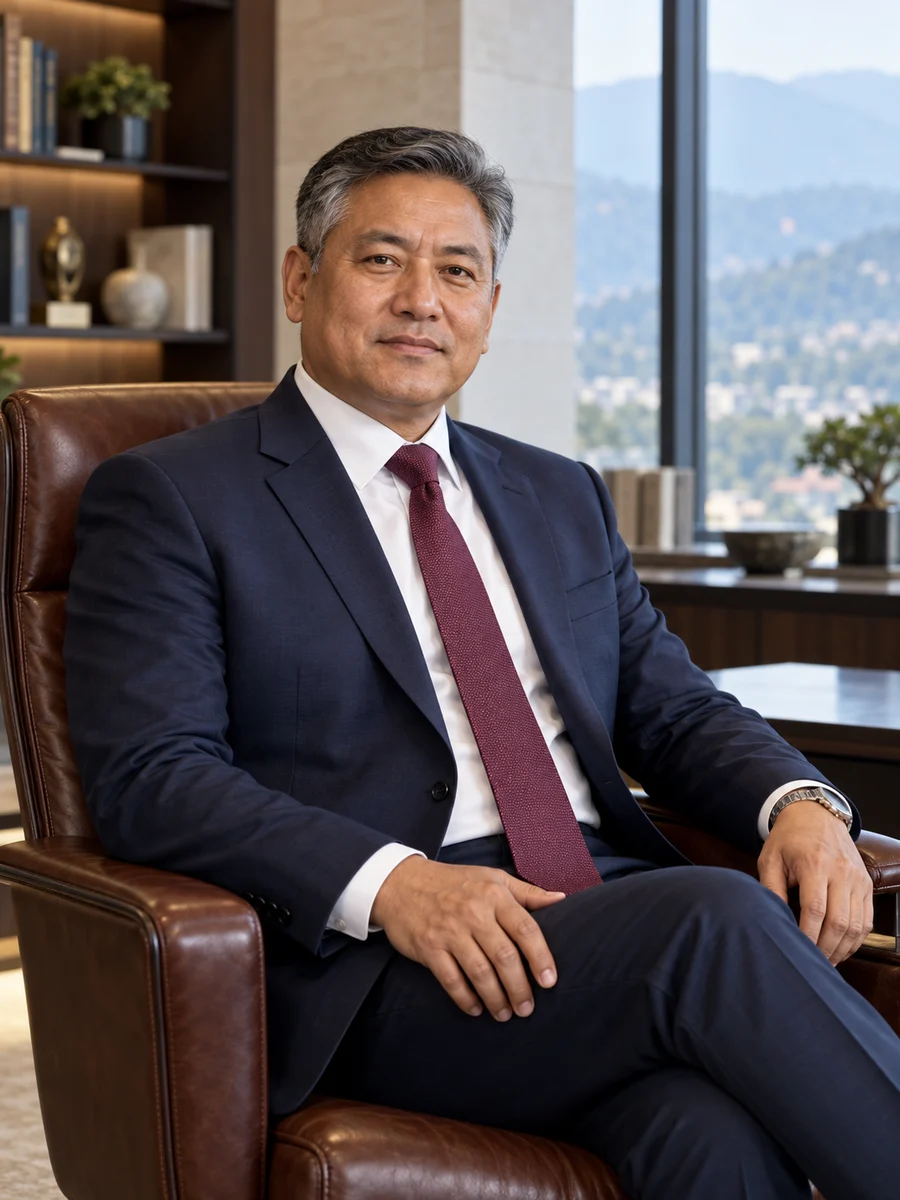
In my own words
I prefer a complete account of an ordinary hire to an impressive return that ends before the asset comes home. The customer period matters, but so do refurbishment, transport and the money we may have to return. Finance should make those commitments understandable while leaving engineering and contractual judgements with the people qualified to make them.
Sonam Deqzomri
Education
Formation
- Bachelor of CommerceTezqerthi College of Commerce1993
Working languagesEnglish · Nepali · Hindi