The person behind the perspective
Learning to see the undertaking behind the place
I lead a terminal business by asking what we have undertaken to provide before deciding how the place should earn. I grew up in Moradabad and studied commerce at the fictional Merzavthi Institute of Commerce, graduating in May 1994. My first employment began that July in facilities coordination. The work was less about a building considered in isolation than about the different undertakings taking place inside it. A contractor, an occupier and the person arriving at the door might describe the same interruption differently. I learned to find out whose decision was needed before assuming that a broadly worded service promise made everything our responsibility.
Treqzami Public Facilities employed fifty-five people and recorded ₹11 crore revenue in FY1995. I worked within a supervised team, without direct reports or delegated expenditure. My contribution was to arrange work information and follow up agreed actions, while experienced facilities and technical colleagues retained decisions. It was a practical education in how a service undertaking becomes a series of handovers. A completed task could still leave another party waiting. That did not make the completion false; it meant that the next responsibility needed to be identified and accepted.
In June 2000 I became contract services manager. The company then employed ninety people and recorded ₹24 crore FY2001 revenue. I led twelve colleagues with ₹1.1 crore annual function expense. Contract language entered the daily conversation more directly. It mattered whether a request was within an agreed service, needed the owner's authorisation or belonged to another provider. I did not want those distinctions used merely to send somebody away. I wanted them understood early enough to produce an answer that the organisation had authority and resources to carry out.
I joined Vezqamthi in September 2008 as regional manager. The terminal-services enterprise had 110 employees and ₹31 crore FY2009 revenue, while my remit involved thirty-eight colleagues and ₹8.2 crore of operating expenditure. A bus terminal brought together public access, transport operators, retail licensees and facilities work. The company did not own the passenger's entire journey simply because its name appeared on the place. Nor could it treat each commercial activity as an isolated business without considering what the combination did to the terminal.
The functional director of operations appointment came in January 2015. Four site and central managers reported to me under a ₹32 crore operating plan; the company employed 176 people and recorded ₹52 crore FY2016 revenue. The title did not carry a statutory directorship. I was responsible for joining up operating decisions across the enterprise, and in 2018 I made the retail-fitout approval described in the cases. I gave too much weight to the commercial frontage account. A review of passenger movement and access led to two of six kiosk frontages being relocated, with ₹1.7 crore correction expense including ₹40 lakh of licensee remedies.
Faisal's objection was uncomfortable because it concerned the question I had chosen to ask. The people presenting the retail case had not invented their commercial need. I had allowed that need to become the main way the space was understood. Supporting the correction meant changing an approved proposition, involving the relevant professional and contractual owners and retaining the cost in the account. It did not mean claiming that I could personally certify access or that the new arrangement proved a universal result for every user.
In April 2020 I became chief executive and took one executive statutory seat on Vezqamthi's board. Asha Qezvamri chairs separately. I now lead six executives in a 238-person enterprise, with ₹78 crore FY2026 revenue and the stated operating and capital plans. Domestic infrastructure investors hold 47%, a regional promoter 33% and an employee vehicle 20%. My personal 0.1% is included within the employee allocation. Ownership, executive responsibility and public contractual authority are different relationships; none should disappear into a convenient statement that we own the terminal.
The decisions since appointment reflect that distinction. We funded roof renewal ahead of another retail proposal, expanded staffed overnight assistance at a disclosed annual cost, moved part of a retail renewal programme towards direct licensee relationships and developed a referral arrangement for enquiries belonging to participating bus operators. Each choice left something unresolved or gave something up. Renewal expenditure did not establish a return; assistance did not certify personal security; direct relationships required more administration; a referral did not make us the merchant responsible for a bus fare.
I am considering what this experience could contribute outside the company. I have no outside statutory seat. Databank registration is recorded from September 2026, with assessment preparation unfinished and no exemption claimed. Eighteen days is an initial capacity estimate, including preparation and travel, that needs scrutiny against my executive responsibilities and the demands of a particular appointment. I would bring experience of a commercial enterprise operating within a public place, together with a clear account of the mistake that taught me to examine the place before accepting the commercial drawing.
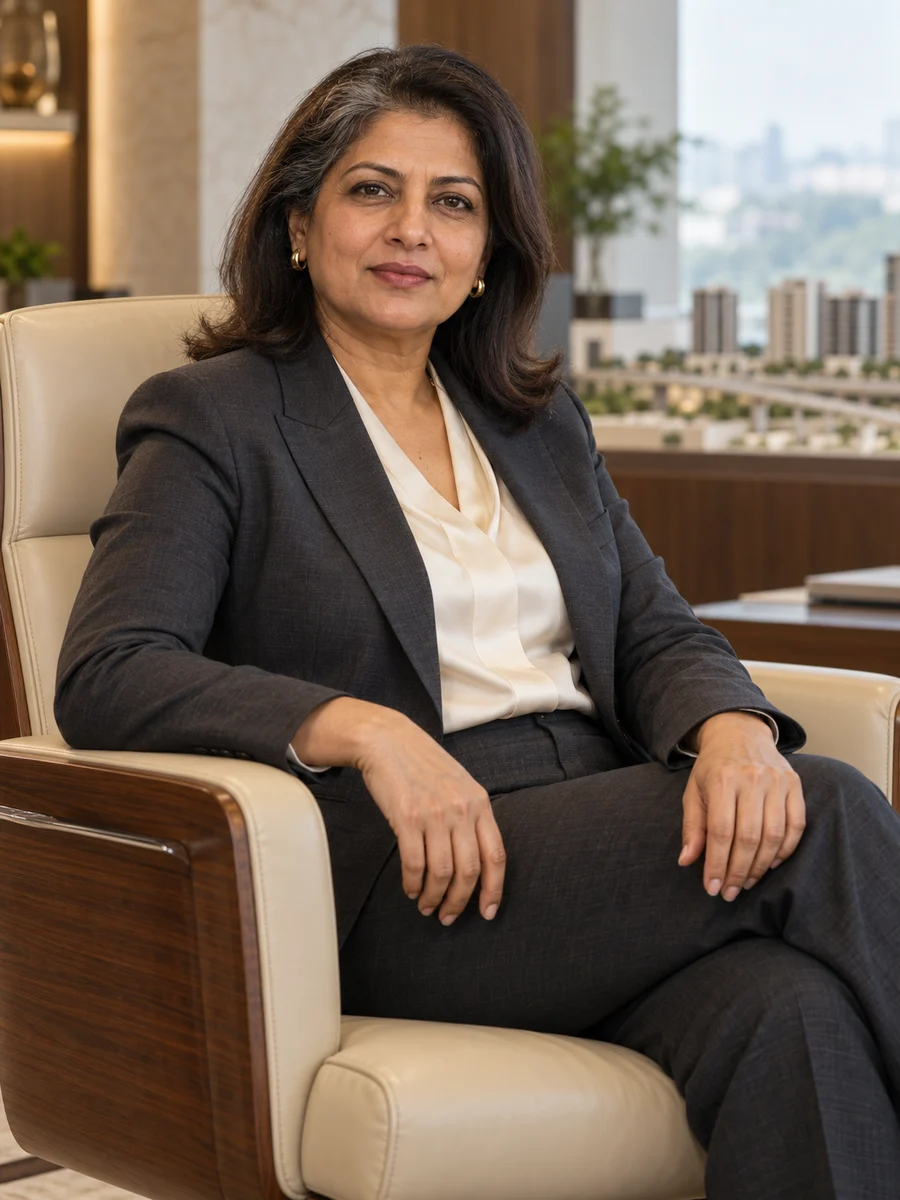
In my own words
I want the commercial discussion to begin with the place we have agreed to provide. Rentable frontage, advertising and other income matter, but they cannot define a terminal without the people travelling through it. I also want the boundaries to remain honest: our responsibility for a place does not make us the operator of every bus or the owner of every transaction inside it.
Nafisa Rehzavthi
Education
Formation
- Bachelor of CommerceMerzavthi Institute of Commerce1994
Working languagesEnglish · Hindi · Urdu