The person behind the perspective · 2026
I learned to question what the total was allowed to mean
I grew up in Ajmer and began work with a strong preference for a tidy commercial answer. A table that reconciled gave me confidence. Experience gradually taught me that arithmetic can be correct while the decision described by it is not. The most consequential questions in my career have often concerned what was being added together, what had to happen first, or whose time a proposal was quietly assuming.
After completing a Bachelor of Commerce at Teqvemzi Commerce College in May 1993, I joined Neqvemti Advisory that July. It was a small commercial advisory business, with 54 employees and ₹8.7 crore revenue in FY ending March 1994. I was one of six analysts reporting to an engagement manager. I had neither direct reports nor a delegated budget. My early work involved assembling management information, reconciling commercial assumptions and explaining why two apparently similar measures could answer different questions. I learned to show the source period beside a figure instead of relying on its position in a presentation.
In July 1999 I became an engagement lead. By FY ending March 2000 the advisory company had 212 employees and ₹74 crore revenue. My twenty-two-person team operated within ₹3.1 crore annual functional expense, while client expenditure remained outside my authority. I enjoyed turning a loosely stated ambition into a sequence of decisions, but I also saw the limit of an advisory assignment. A recommendation could be accepted before anyone had established how it would coexist with the client's other commitments. I wanted to understand what happened after the presentation ended.
That question brought me to Qevzenti General Insurance as planning manager in September 2007. The insurer then had 370 employees and ₹480 crore gross written premium for FY ending March 2008. I led nine planning colleagues with ₹2.2 crore annual functional expense. I had to learn the distinction between describing an insurance business and owning its professional judgements. Underwriting colleagues, actuaries, claims leaders and finance each brought responsibilities that a planning timetable could not absorb. An attractive commercial assumption was a proposition for their examination, not a substitute for it.
I became head of strategy in April 2015. At the start of that period the business employed 730 people and recorded ₹1,320 crore gross written premium for FY ending March 2016. My team of seventeen worked within ₹4.6 crore annual strategy expense. In 2018 I supported a combined proposal for three programmes with ₹41 crore proposed investment. Its stated annual future benefits totalled ₹36 crore. A review with finance and operating owners identified ₹9 crore counted twice. I had checked the individual cases and failed to test their coexistence. The correction reduced the whole proposal's nonduplicative estimate to ₹27 crore; it did not establish realised profit or the benefits of the two programmes eventually approved.
The mistake changed the way I presented choices. I began asking teams to identify the operating change beneath a claimed benefit, the condition that made it possible and the other programme that might be relying on it. That made some papers less impressive at first glance. It also gave directors a more useful disagreement: whether to fund a particular combination, rather than whether to trust an unexplained total. I remained accountable for the earlier paper and the ₹38 lakh review effort.
Since January 2021 I have been chief strategy officer, reporting to CEO Tara Zeqemvi. Qevzenti now has twenty offices and 980 employees, with ₹1,920 crore gross written premium for FY ending March 2026. I lead twenty-two strategy colleagues through three heads within ₹6.9 crore annual functional operating expense. These numbers describe my employer and remit; gross written premium is not accounting revenue, and coordinating an investment proposal is not the same as possessing the authority to approve it. Finance head Dev Qevzemti retains financial assessment, while specialist insurance decisions remain with their responsible owners.
Recent choices have made that boundary practical. We cut an eleven-initiative proposal to seven because the specialist calendar could not support the larger set. We separated acquisition-dependent growth from the base plan. A telematics idea received limited feasibility funding rather than full rollout approval. We also recommended stopping a broker-service platform project after changes in the operating model weakened its future case, while recognising expenditure already incurred and the cost of closing responsibly.
I own 0.2% of Qevzenti within its employee vehicle and hold no statutory seat. I have presented strategy proposals through the CEO, but that exposure does not establish experience as an independent director. My interest in a first outside appointment would require learning, employer consent, relationship review and a realistic assessment of available time. The contribution I would hope to make is disciplined choice: asking what must be true for a proposal to deserve commitment, and being prepared to withdraw my own recommendation when those conditions no longer hold.
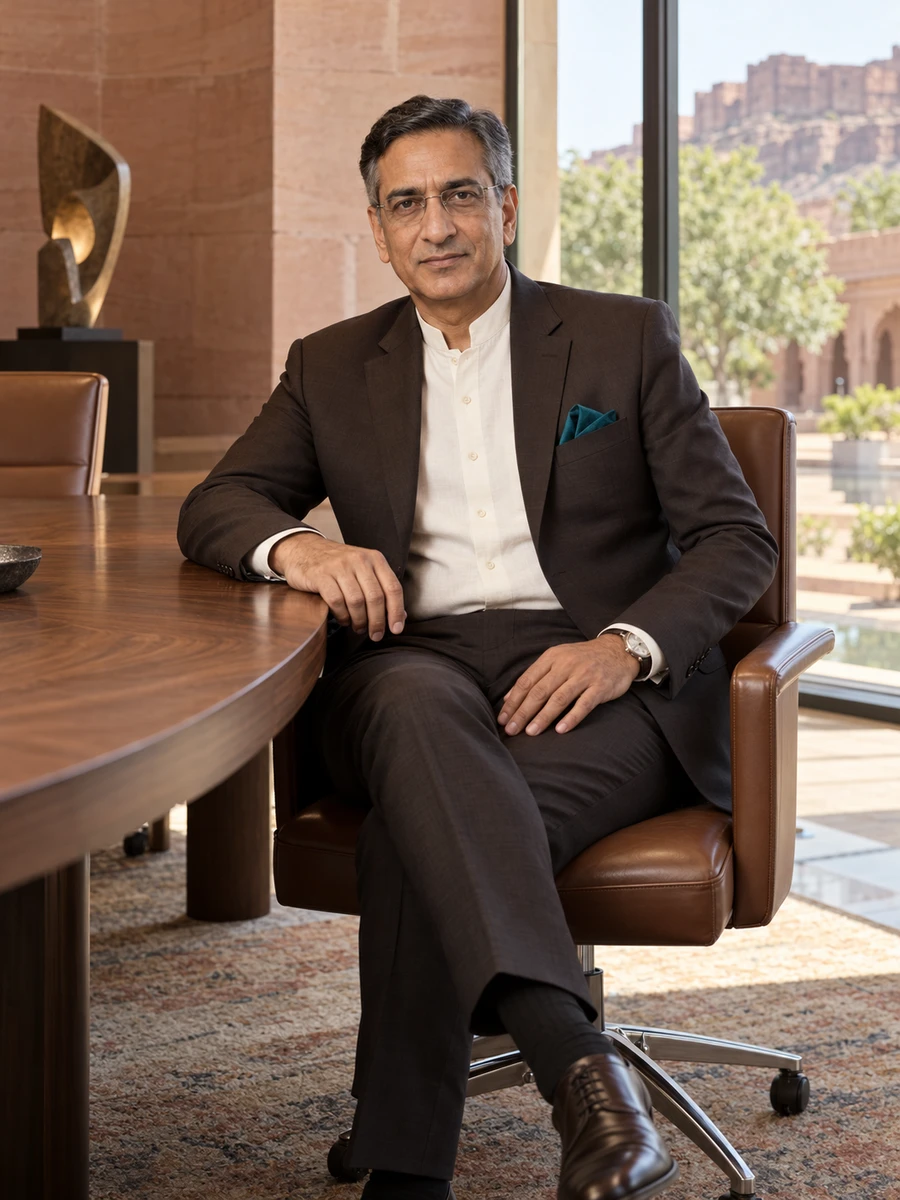
In my own words
I want the board to see the alternatives before it sees a preferred total. A proposal should make clear which benefits overlap, whose time is required, which assumptions remain conditional and what stopping would leave behind. My role is to improve the choice; professional assessment and approval stay with their proper owners.
Shahid Dezqemti
Education
Formation
- Bachelor of CommerceTeqvemzi Commerce College1993
Working languagesEnglish · Hindi · Urdu