The person behind the perspective
The brochure was printed before I reconsidered its promise
Nine thousand brochures were ready when we stopped the campaign. I had approved a forty-eight-hour statement for a reusable insulated container without making the conditions of the underlying constant-ambient trial visible enough. The technical result was narrower than the proposition I had allowed the buyer to see. We withdrew the material before circulation, wrote off ₹28 lakh and moved the launch by six weeks. No medicine shipment or patient incident is part of this example. The mistake was mine in the commercial interpretation, and it changed how I approach the connection between product evidence and a purchasing promise.
I was born in 1972 and grew up in Vijayawada, where I still live. I speak Telugu, Urdu, English and Hindi. After completing a Bachelor of Commerce at Mavqeli Commerce College in June 1993, I joined Nevthari Industrial Supplies in July as a catalogue coordinator. The business employed sixty people and recorded ₹12 crore revenue for FY ending March 1994. I worked in a six-person commercial team under the marketing manager, without direct reports or spending authority. My early work involved product descriptions and sales material rather than enterprise strategy, and it taught me to take the practical meaning of a specification seriously.
In May 1999 I became product marketing manager. Nevthari had grown to 170 employees and ₹46 crore revenue for FY 2000. I led eight colleagues through two leads with ₹1.6 crore annual marketing expense, reporting to the commercial director. Industrial customers did not all use a product in the same way, and a comparison that looked neat in a catalogue could become confusing in a buying discussion. I learned to ask what the purchaser was trying to carry, fit or operate before deciding which attribute deserved the largest type. Responsibility for colleagues and expenditure also made the cost of an unclear proposition more immediate.
I joined Tavqeshi Thermal Packaging in July 2007 as channel marketing head. The company then employed 130 people and recorded ₹39 crore revenue for FY 2008. My team comprised eleven people through two leads, with ₹3.2 crore annual expense under the CEO. Reusable packaging introduced a cycle that a one-time product sale did not capture: the container had to return, be inspected and be suitable for another use. I worked with distributors and product specialists to understand where a buyer's question belonged. A channel agreement could open a relationship, but it did not by itself create trained support or resolve a customer's particular transport requirement.
In April 2014 I became marketing director. Tavqeshi had 240 employees and ₹81 crore revenue for FY 2015. I led seventeen colleagues through three leads with ₹5.7 crore annual expense, reporting to the CEO. The 2018 brochure decision occurred in this role. My team wanted a concise proposition, and I allowed the duration to become detached from the conditions that made it meaningful. When the technical objection was raised, stopping the campaign meant accepting sunk expenditure and explaining a delay to colleagues expecting a launch. I learned that responsibility includes changing material I have already approved, not merely asking others to add a qualification after the headline has done its work.
I became CMO in February 2021. Today I lead 22 marketing colleagues through three leads, with ₹8.4 crore annual expense, reporting to Anita Qavqeri. Prakash Zevruthi leads technical work. Tavqeshi employs 340 people and serves 46 business customers; FY 2026 revenue of ₹126 crore and operating profit of ₹11.8 crore describe the whole enterprise. A regional industrial investor owns 55% and an employee trust 45%. I am a trust beneficiary without a direct holding. That interest belongs in a review of any outside role, alongside customer, distributor and supplier relationships.
My recent work has included a capacity comparison that confused external dimensions with useful payload, a cost proposition changed by twelve completed dispatches rather than twenty assumed ones, and a distributor map that needed to distinguish eleven trained businesses from eight still onboarding. We also stopped an environmental statement that mistook a return-inspection proportion for an emissions result. These decisions required different conversations with product, finance, sales and channel colleagues. None can be reduced to a general instruction to make the copy more cautious; the task was to make the actual commercial choice clearer.
I have presented marketing and channel matters to directors through the CEO but have not held a statutory appointment. The fictional record includes IICA registration in January 2026 and a proficiency-assessment pass in August, with no exemption claimed. I would consider one outside contribution with twenty-five provisional days, employer consent and a proper review of relationships and eligibility. My experience could help a board understand how a product promise becomes a customer commitment. I would also need to learn the receiving enterprise beyond marketing, including its finances, people and sector responsibilities, so that my contribution supported the whole board's judgement.
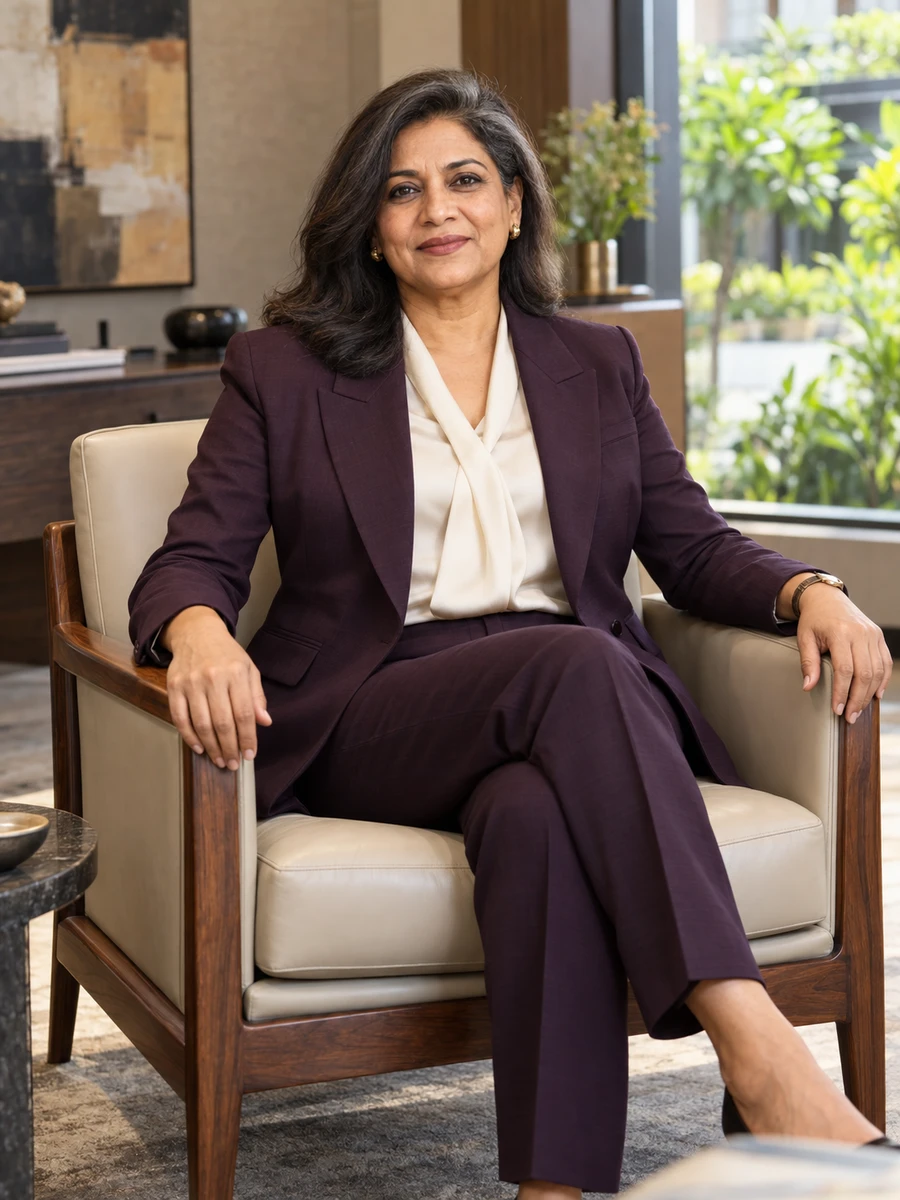
In my own words
The buyer should be able to carry our explanation into a procurement meeting without discovering that the useful qualification was left outside the headline. A duration belongs to tested conditions, a container has usable space as well as external dimensions, and a low purchase allocation can conceal the cost of getting an asset back. I want our proposition to survive those ordinary questions.
Rukhsana Zevqeshi
Education
Formation
- Bachelor of CommerceMavqeli Commerce College1993
Working languagesTelugu · Urdu · English · Hindi