Sheet 02 · The person behind the perspective
Learning what a guide can responsibly promise
I grew up in Kartarpur and completed a Bachelor of Design at the fictional Tevqerli Institute of Design in May 1992. My first job began that July at Qemvarti Digital Studio. I was drawn to work that connected an explanation with something a person could actually see or do. Early assignments taught me that an attractive presentation can still be difficult to use when its instructions assume knowledge the audience does not have. I learned to observe those assumptions before treating a more polished screen as the answer.
As a design assistant I reported to the studio director and held no delegated expenditure or people-management authority. Qemvarti had twenty-nine staff and ₹5.5 crore FY1994 revenue. My contribution involved preparing visual material, revising interactions and following the consequences of the choices made by more experienced colleagues. The work was not yet product leadership. It gave me a practical understanding of how a design passes between a client, a production team and the people expected to use it, and how easily the original purpose can disappear during that passage.
In April 2000 I became interaction-design lead. At FY2004 scale the studio employed sixty-eight people and recorded ₹19 crore revenue. I led six designers with ₹55 lakh annual expense under the creative director. I began taking responsibility for the relationship between an interaction and the promise attached to it. A useful review asked more than whether a person could find a button. It asked whether they understood what would happen after choosing it and whether the system had enough evidence to make that promise. Those questions later shaped my approach to visitor guides.
I joined Zelqavri in September 2008 as product manager, moving from individual studio assignments into a continuing product relationship with cultural venues. The foundation-owned business was based in Ajmer. At FY2012 scale it employed seventy-six people and recorded ₹21 crore revenue. I led eight colleagues with ₹1.4 crore annual operating expense, reporting to the product director. I learned to distinguish the digital supplier's responsibilities from those of curators, venue operators and front-of-house colleagues. Our guide could make their material easier to use, but it could not inherit their authority simply by displaying their words.
The product-director role followed in January 2015. At FY2018 scale the business had 113 colleagues and ₹39 crore revenue. I led fifteen people with ₹3.5 crore annual operating expense under the CEO. In 2017 I approved automatic proximity-triggered commentary. Nine of twenty-four walkthroughs began the wrong object's explanation. I accepted the mistake and supported ₹31 lakh of work to introduce visitor-confirmed identification. The lesson was uncomfortable because a small extra interaction had looked like a defect during design. In practice it provided a useful moment for the visitor to establish what the system did not know reliably.
I became CPO in April 2020. Today I lead twenty-three colleagues through three leads, with ₹5.3 crore FY2026–27 operating expense including ₹1.8 crore research and design. Zelqavri's 142 employees support ₹58 crore FY2026 revenue: ₹37 crore licence/support and ₹21 crore implementation. A regional cultural-services foundation owns the company wholly, and I have no equity. Maya Velqarmi retains enterprise authority as CEO. Arun Qezvanti leads field research. I work with both of them to make product decisions accountable to observed visitor use and to the limits of the material supplied by each venue.
Recent work has examined incomplete offline packs, route descriptions, reconstructed scenes and visitor questions outside reviewed content. The situations require different responses. A missing asset may need resumable delivery and a visible readiness state. A physical route needs current venue confirmation. A historical illustration needs an intelligible account of its interpretation. An unanswered question needs an honest boundary and a useful next step. I resist treating these as one general problem that can be solved by making the interface sound more confident. Product leadership includes deciding when the service should ask, qualify or stop.
I work in English, Punjabi and Hindi and remain based in Ajmer. I have presented product decisions to the company board but have not served as a statutory director. My exploration of board work is at an early stage, and I have not entered the IICA databank. Eighteen days is a provisional annual capacity estimate, not a promise to accept any appointment. I would bring long experience of public-facing digital products, foundation ownership and the boundaries between explanation and authority. I would also need colleagues with the financial, legal, operating and sector judgement that a board requires beyond my own expertise.
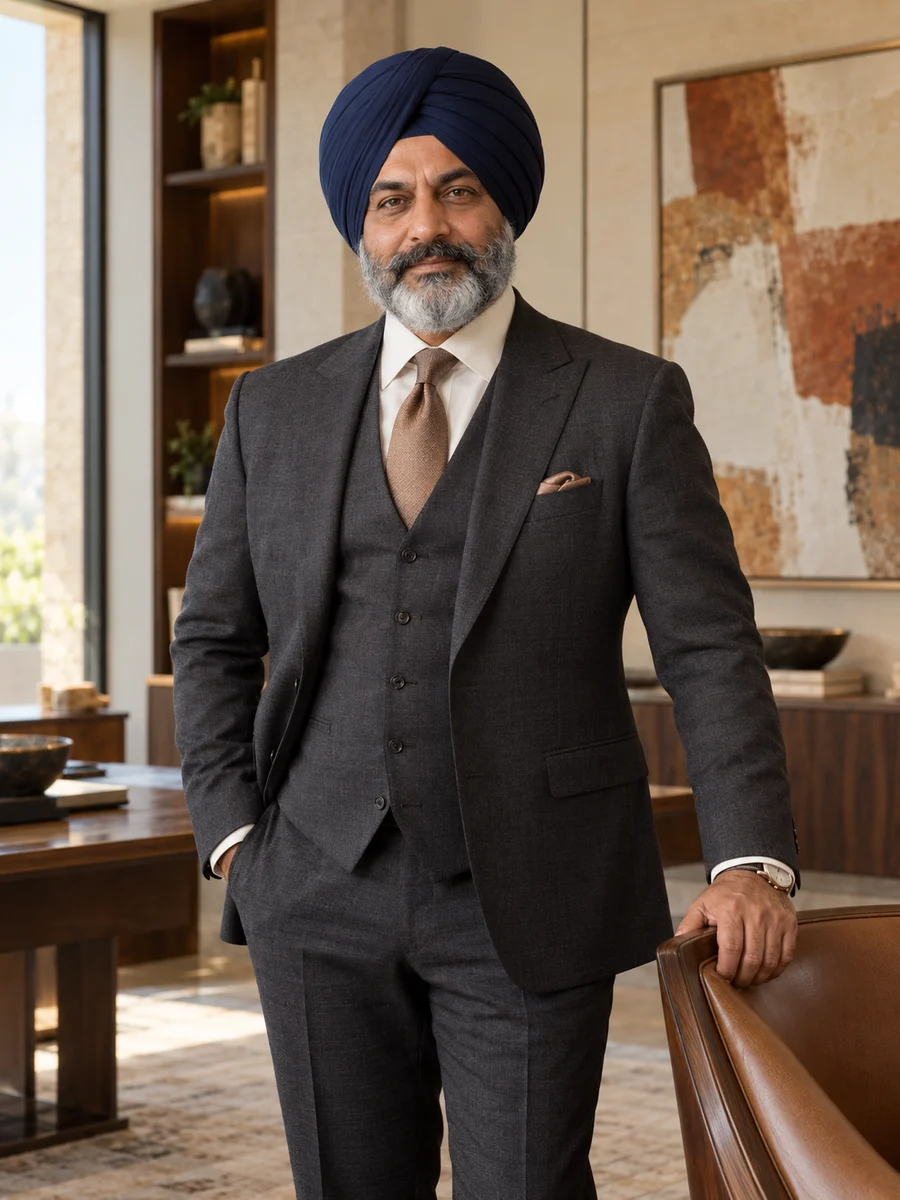
In my own words
A guide should help a visitor look more carefully, not make looking unnecessary. I once approved automatic playback that confidently described the wrong object in an adjacent room. The correction was not a stronger claim about our location technology. It was a product choice that let the visitor confirm the object before the interpretation began. I now ask what a guide knows, what the venue knows and what only the visitor can establish at that moment.
Harjit Qevnarzi
Working languagesEnglish · Punjabi · Hindi