Sheet 02 · The person behind the perspective
The household experience I learned to carry through a product change
I joined the fictional Tsumihana Broadcasting in April 1989, a month after completing information design at Kiyosane Institute. The first appointment was product analysis within an eleven-person group. I had no independent budget or management authority. The work interested me because a media package contained more than a list of available channels. People built habits and preferences around it, and a seemingly simple change in the offer could require them to repeat work they had already done. I learned to look at the transition as well as the initial choice.
Product management followed in July 1997. By 2004 I led twenty-four colleagues through three direct reports with JPY 160 million annual product expense. Tsumihana’s JPY 28 billion company revenue and 1100 employees described a wider institution, not my personal delegation. That year I approved reset logic for a package-migration journey. In a 120-profile test, thirty-eight customised favourites were reset while eighty-two default profiles were unaffected. The migration could look clean from the product’s configuration perspective and still discard choices the customer expected to keep.
Mirei Hatamori challenged my assumption that a fresh package justified a fresh preference state. We funded JPY 28 million to retain preferences through the change and identify mappings needing attention. In a later fifty-four-profile exercise, forty-nine mapped and five required manual review. I did not turn that result into a claim that every migration was solved. The five unresolved cases remained part of the work. I wanted the revised review to show those profiles plainly, so the correction could be assessed without asking colleagues to forget what the original approval had overlooked. The decision changed how I judged a package transition: the product team’s desire for a simpler starting state did not erase the customer’s prior investment in making the service useful.
I moved to the fictional Hoshinora Communications as product director in April 2005. By 2012 I led fifty-one colleagues through four direct reports with JPY 620 million annual function expense. The company reported JPY 92 billion revenue and 2600 employees. In 2013 a media-profile proposition exposed a distinction between the person administering the household bill and the people using the viewing service. Of sixty households in the review, twenty-two wanted separate viewing profiles and thirty-eight preferred a shared profile. We funded JPY 94 million for optional individual profiles without presenting the product choice as a legal privacy determination.
The household-portfolio vice-president appointment began in July 2013. A 2018 add-on review asked whether a seasonal viewing need should require pausing broadband as well. Thirty of eighty participating households described seasonal use of the television add-on, while fifty described year-round use. We supported JPY 180 million for a separate pause path. In a sixty-four-household pilot, twenty-five chose to pause the add-on and thirty-nine kept it active. That was a product-choice account, not a churn reduction. By 2019 I led ninety-six colleagues through five direct reports with JPY 1.7 billion annual expense.
I became CPO in July 2020 and began executive presentations to the board. In 2023 a moving-service proposition considered one hundred households: sixty-one wanted seven days of overlap between addresses and thirty-nine wanted a same-day change. JPY 210 million supported two paths. A later eighty-household pilot recorded forty-nine overlap choices and thirty-one same-day choices. The product could describe those preferences without promising actual network activation or installation before the responsible teams had assessed the circumstances. Moving home was a period of transition for many users, not one switch date that the product could assume for everybody.
My current remit is 164 colleagues through seven direct reports with JPY 2.9 billion 2026 expense. Hoshinora’s JPY 348 billion 2025 calendar-year revenue and 6200 employees remain company context. In 2025 a 125-home needs review separated eighty requests for a connection-tier change from forty-five accounts of weak room coverage, leading to JPY 260 million for a distinct coverage-assessment route. That product classification was not an engineering diagnosis. Across thirty-seven years, my work has come to focus on the changes a household must navigate after purchase. I have no statutory board appointment; the readiness account describes the contribution and preparation a first role would require.
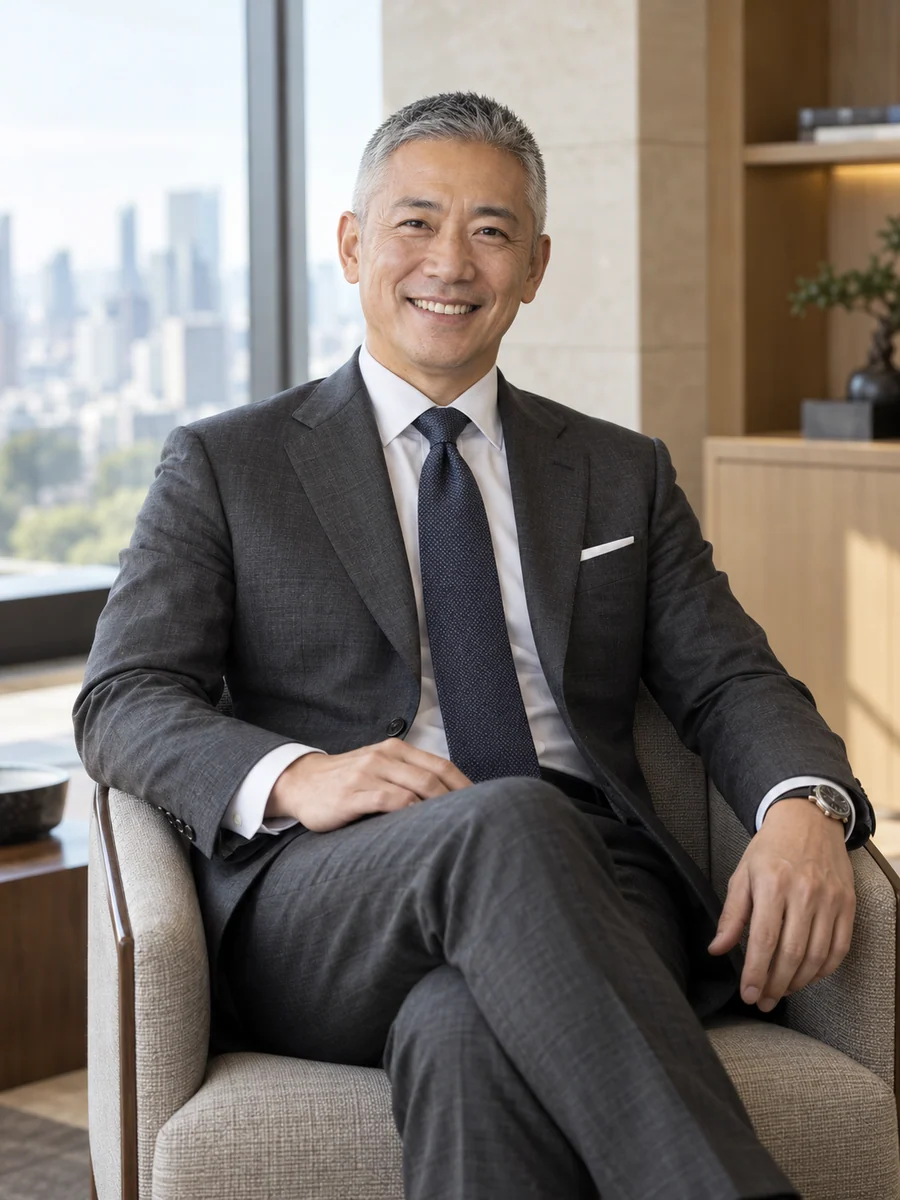
In my own words
I want a subscription to remain understandable when a household changes its address, package, viewing pattern or use of a room. The customer should not have to rediscover what the product silently resets or bundles together. My job is to make those transitions part of the proposition, with the operational and specialist conditions stated before the product is treated as ready.
Shinji Suginobe
Career
Chapters of accountability
July 2020 — present
Chief Product Officer
Hoshinora Communications
I lead 164 colleagues through seven direct reports with JPY 2.9 billion 2026 expense, examining household moves, room-level needs and service-change journeys.
July 2013 — June 2020
Vice-President, Household Portfolio
Hoshinora Communications
My 2019 remit covered ninety-six colleagues, five direct reports and JPY 1.7 billion annual expense, including a separate pause route for a television add-on.
April 2005 — June 2013
Product Director
Hoshinora Communications
I led fifty-one colleagues through four direct reports with JPY 620 million 2012 expense, developing household propositions with distinct viewing and account roles.
July 1997 — March 2005
Media Product Manager
Tsumihana Broadcasting
I managed twenty-four colleagues through three direct reports with JPY 160 million 2004 expense and changed migration logic that discarded customised favourites.
April 1989 — June 1997
Product Analyst
Tsumihana Broadcasting
I began in an eleven-person analysis group after information design, without independent expenditure or line-management authority.
Education
Formation
- Degree in Information DesignKiyosane Institute1989
Working languagesJapanese · English