Sheet 02 · The person behind the perspective
I learnt to judge a delivery by the work that followed it
I learnt about property technology from the person who received the next question. At Orselin Property Services, a record could be complete from the application's perspective and still leave a colleague uncertain about the response to give. I was a young analyst, concerned with making the software work correctly. The users taught me to look beyond that immediate task. They needed to know who owned an exception, where a supporting document could be found and whether the next team would understand what had been handed over. That experience still shapes the way I assess a project that appears ready to finish.
I joined Orselin in July 1991 after completing an information-systems degree at Selvane Institute. Our applications team had six people, and I had no direct reports or spending authority. I worked on the systems used by property-service colleagues and investigated the gaps between a formal record and the working conversation around it. By the final period of my appointment, the company employed 680 people and reported SGD120 million revenue. I contributed to its applications rather than directing the wider service operation. I left in December 1999 because Velunara offered the opportunity to manage a team and own the continuing support commitment.
At Velunara, I became property systems manager in January 2000. My team reached eighteen employees through three reports, with SGD2.4 million annual authority in the closing period. The business then had twelve properties, 620 employees and SGD180 million revenue. I wanted our applications to remain useful after implementation, when the project team was no longer available to interpret every unusual case. The role brought me closer to facilities and property colleagues who inherited records created by other teams. I began asking what their first ordinary question would be and whether the delivered material could answer it without a private explanation from the original author.
The occupier-systems role followed in January 2007. I led thirty-seven employees through four reports and reached SGD6.8 million annual authority by the end of 2012. Velunara had grown to twenty-two properties and 980 employees, with SGD390 million company revenue. The work made the service relationship more immediate. A tenant contact, a managing agent and the party named in a property agreement could be related without being interchangeable. A digital route could be convenient for many enquiries while leaving a different group needing assistance. I learnt to resist a simple adoption measure when it concealed the responsibility for the people outside the most straightforward path.
In January 2013 I took responsibility for enterprise platforms. That appointment brought sixty-nine employees through five reports and SGD17 million annual authority by its final period. An institutional investor acquired 35% in 2015, with the family retaining 65%. The business needed a more coherent technology account across thirty-one properties by the end of 2020. I became more involved in the obligations created by supplier choices and programme sequencing. A lower introduction cost could leave an expensive dependency later. A comprehensive suite could promise consistency while requiring several operating teams to change before they were ready. Those questions deserved attention before an investment was approved.
I became CIO in January 2021. My current remit includes ninety-two employees through four direct reports, plus twenty-four contractors separately, and SGD28 million authority for 2026. Velunara now owns and manages thirty-eight office and logistics properties in Singapore and Malaysia, covering 1.17 million square metres. The company employs 1,700 people including site and property-service teams, and reported SGD860 million revenue in 2025. I describe those company figures as context, while keeping my own mandate clear. Technology supports the work; it does not determine tenancy rights, certify building safety or grant statutory acceptance.
Recent decisions have tested the same concern at different stages of a system's life. We held four handover packs when the material needed by the receiving service team remained incomplete. We retained a manual route for eighteen unresolved occupier-service account records. We kept assisted telephone support when portal adoption did not answer the question of who still needed help. In a supplier-exit rehearsal, 150 document references remained dependent on a specialist viewer after conversion work. These were not reasons to avoid change. They were obligations to keep visible while deciding how the change should proceed.
My board exposure is as an executive presenter, with no directorship of my own. I could contribute to oversight by examining what a programme leaves behind for the next responsible team, but an external role would require broader preparation and a realistic assessment of relationships and time. I remain accountable for my present CIO appointment. The thread through thirty-five years is a concern for continuity of responsibility: the record, service and supplier arrangement should remain usable after the people who introduced them have moved on. That is the standard I try to bring to the decisions I now make with the chief executive and property operations.
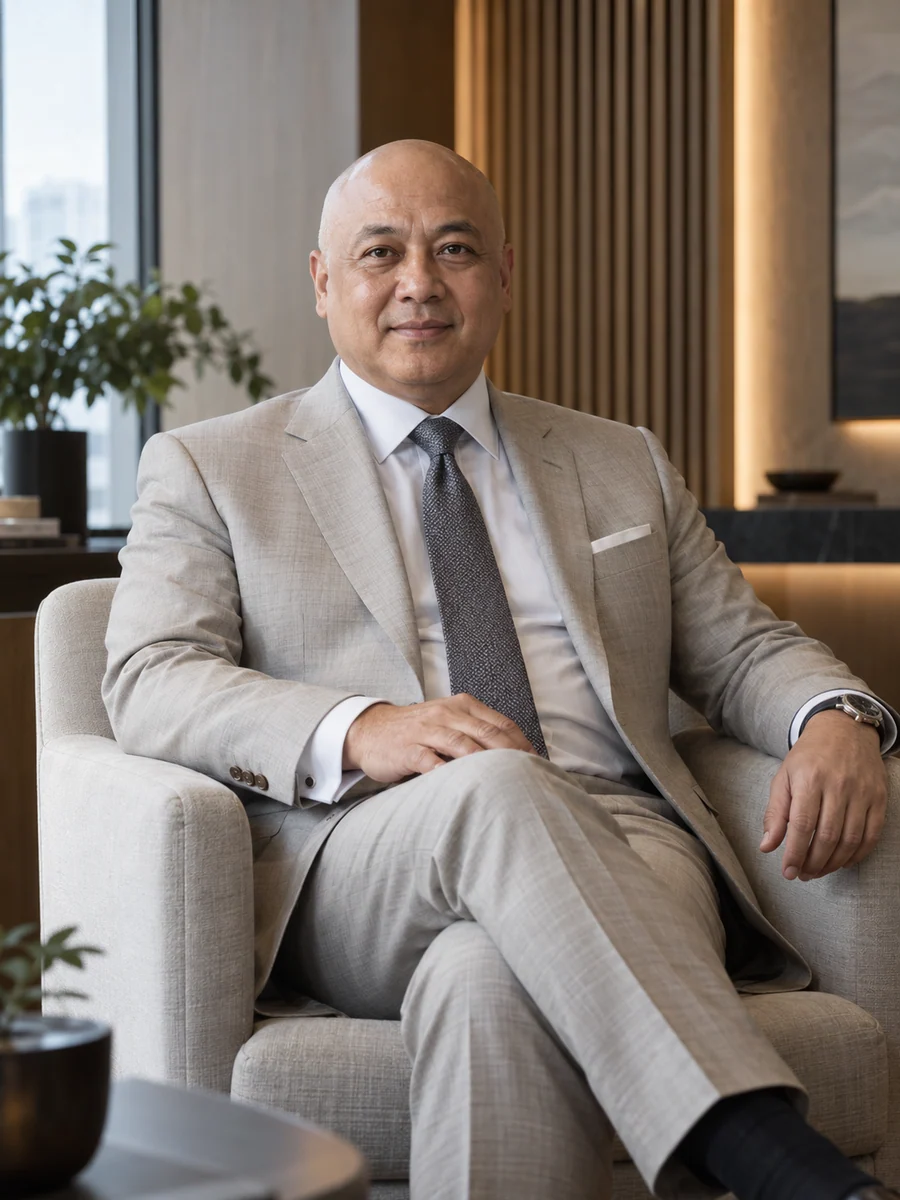
In my own words
I ask who will use the material, who will answer the exception and what happens when the supplier or project team is no longer there.
Reza Nair
Education
Formation
- Degree in information systemsSelvane Institute1991
Working languagesEnglish · Malay