Sheet 02 · The person behind the perspective
Learning what the record permits the enterprise to say
I grew up in Silchar and learned computing before I understood the complexity of the objects a commercial system describes. My full-time degree at the fictional Veqtazri Institute of Computing ended in May 1997. I joined Qerzavmi Commercial Systems that July as an applications analyst. The sixty-one-person enterprise recorded ₹11 crore FY1998 revenue. I worked under an applications manager without direct reports or delegated spending authority. A field that transferred successfully seemed like a modest technical achievement. Experience gradually taught me to ask whether the receiving person understood the same thing from it.
In June 2003 I became an integration lead. The company employed 103 people and recorded ₹23 crore FY2004 revenue; I led six colleagues with ₹64 lakh annual function expense. We worked on commercial records whose meanings were not always visible from the field names. I learned to ask the responsible business owner to explain the decision the data would support, rather than let an interface convention settle that question. The role gave me responsibility for a team and its work, but it did not make technology the owner of each commercial interpretation.
I moved to Taqzovri in September 2010 as enterprise applications manager. Its 126 employees generated ₹35 crore FY2011 revenue, while my nine-person team worked within ₹1.4 crore annual technology expense. The company dealt with recovered interior materials whose histories and physical condition varied. Unlike a standard new product, a visually similar item could not always be substituted without another examination. I began to understand why a clean digital catalogue needed to retain distinctions that initially looked inconvenient to someone designing its categories.
The head-of-systems role followed in January 2016. I led sixteen colleagues with ₹3.2 crore annual expense in a 171-person enterprise recording ₹49 crore FY2017 revenue. In 2018 I approved the grouping rule that treated visually similar partition lots as if their common description were sufficient. Mina challenged that choice with a selected ninety-six-record review. Twenty-seven contained differences in connection details. I accepted the cost of separating and correcting the records, rather than describing the materials team's insistence as resistance to a simpler catalogue. The work did not certify every lot or establish suitability for every prospective use.
I became CIO in May 2021 and now report to Arun. The current company employs 214 people and records ₹68 crore FY2026 revenue, comprising ₹44 crore resale and ₹24 crore recovery services. My twenty-five technology colleagues work through three leads. The ₹5.6 crore FY2026–27 operating expense is distinct from a separate ₹2.8 crore approved programme and from the enterprise's total scale. Ownership is 46% founder vehicle, 24% employee vehicle and 30% private investor. I hold no personal equity or statutory directorship.
The subsequent cases developed the same concern through different decisions. Two channels can each display a plausible reservation while referring to one indivisible physical lot. A photograph can show the material clearly while also revealing a prior occupier's identity. A restoration exercise can recover a system while leaving particular stock movements unresolved. An automated description can read fluently while adding a performance statement absent from the approved facts. In each situation I want the business question to remain visible beside the technology result, including the work and cost required to answer it.
The company is a fictional regional reuse enterprise, not a public project or a certification authority. Mina coordinates materials assessment, and qualified owners retain responsibility for actual suitability and relevant professional questions. My function makes their conclusions and limitations usable in the enterprise's systems. A stock entry does not itself prove safe reuse, regulatory conformity or avoided emissions. I avoid claiming those outcomes from transaction counts because they require evidence beyond the fact that the digital process completed.
I am interested in a first board contribution where the relationship between information and a physical commercial promise matters. I have not yet registered in the IICA databank or completed proficiency-assessment preparation, and claim no exemption. Twenty days is a preliminary annual capacity estimate to examine against induction, reading, travel and exceptional demands. I would bring the catalogue mistake as part of my experience, not conceal it beneath later programmes. The useful perspective is that technology can faithfully move a record while the enterprise still needs to establish what it is entitled to say about the thing that record represents.
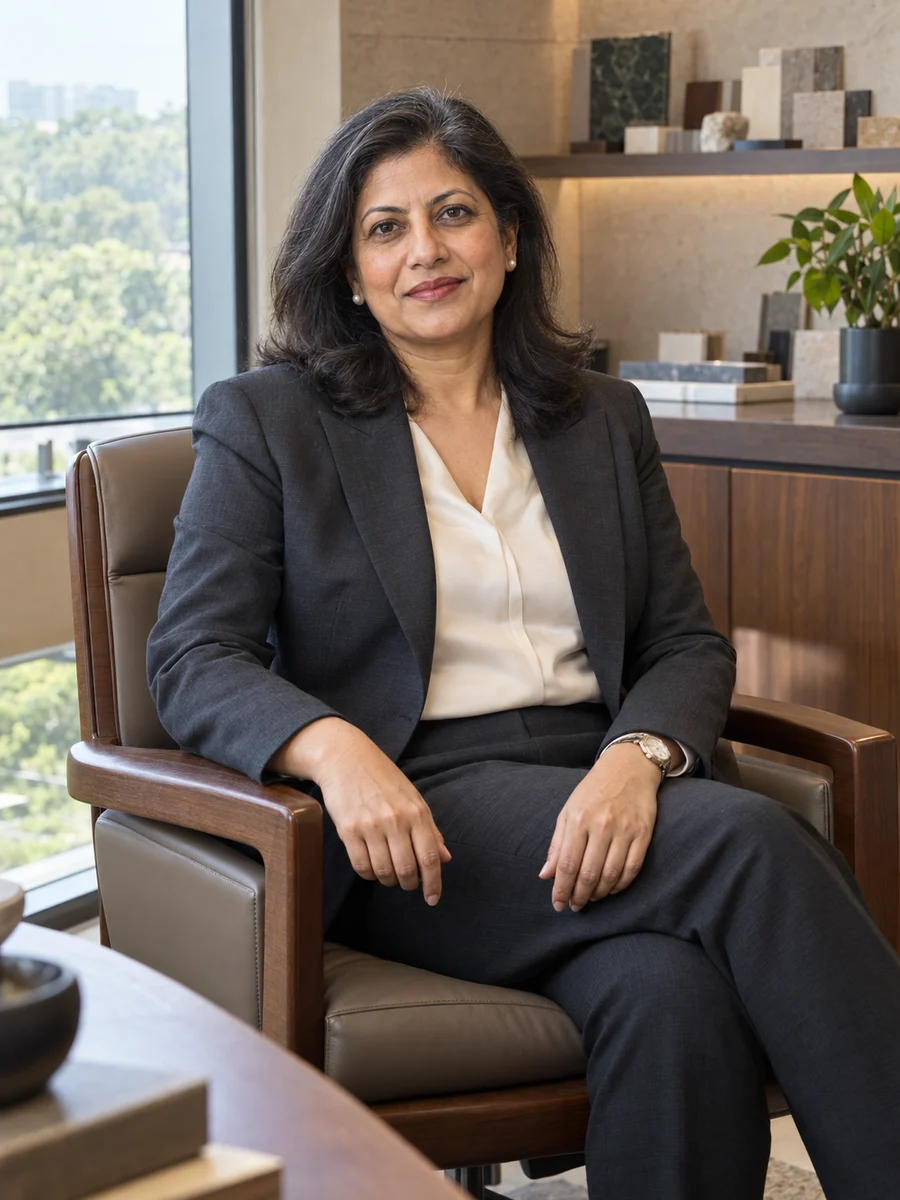
In my own words
I want the digital record to help a colleague make an honest promise about a particular item. Similar photographs do not make two recovered lots interchangeable, and an attractive description cannot supply a performance fact that nobody has established. Technology should preserve the distinction and the commercial responsibility attached to it.
Leena Qeravzari
Education
Formation
- Bachelor of Science in ComputingVeqtazri Institute of Computing1997
Working languagesEnglish · Bengali · Hindi