Chief Operating Officer Australia
Following the ticket from the roadside to the boardroom
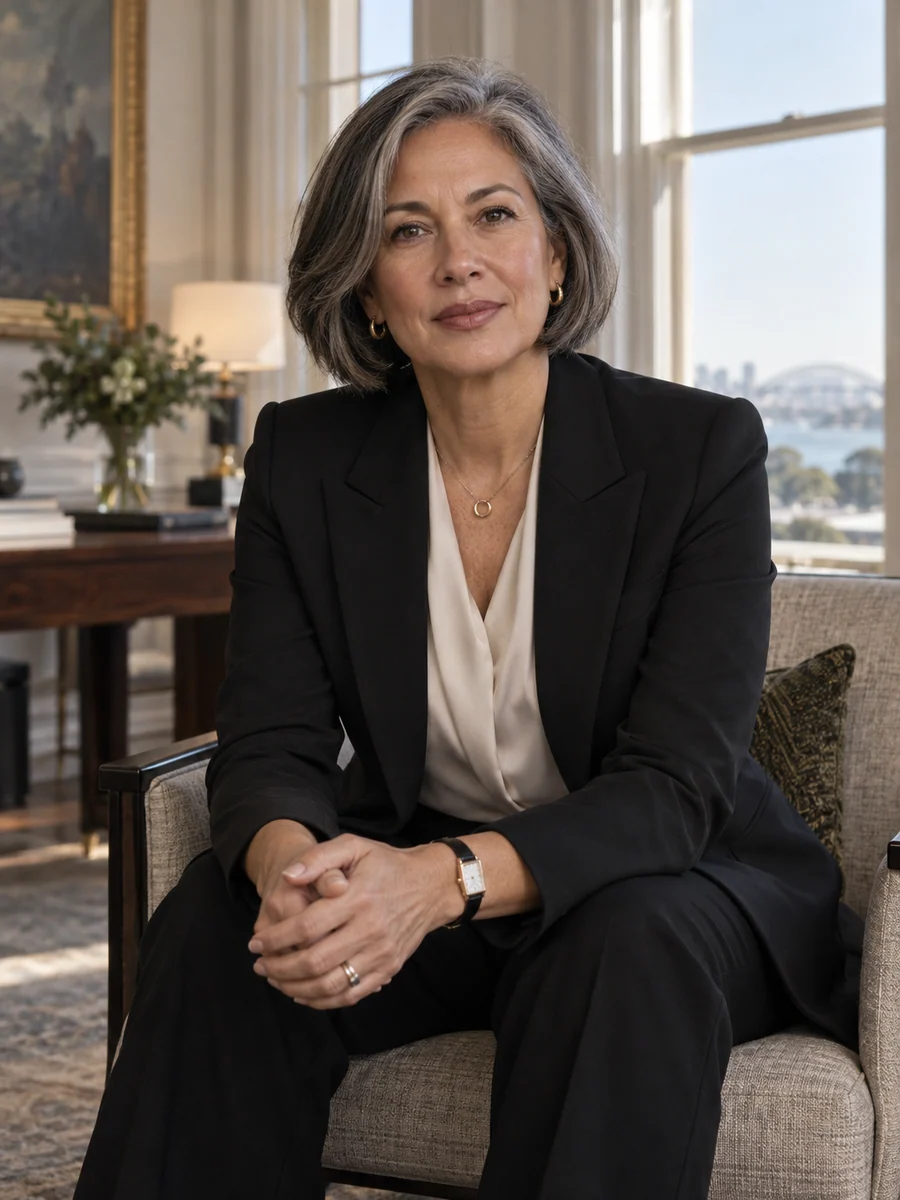
In March 1998 I drove four hours north of Townsville to a sugar mill whose network fault our help desk had closed the evening before. The ticket said resolved. The mill's weighbridge still could not talk to its office, and forty cane trucks were queued along the road. A failed switch took me twenty minutes to replace, and I spent the drive home wondering how a fault could be resolved by someone who had never seen it. I have been asking that question, in one form or another, ever since.
I grew up in Mackay, studied electrical and computer systems engineering at Tamberlyn University in Brisbane and graduated at the end of 1996. In February 1997 I joined Dellacourt Field Services, a family-run contractor that installed and maintained telecommunications and computer networks for mines, councils and farm co-operatives across regional Queensland. I spent three years on the road and two more leading fourteen field engineers from the Townsville depot. That work taught me what a service level means where the nearest spare part is a day's drive away, and it taught me to plan a roster around distance and tiredness before anyone in a city office used those words.
In 2002 I moved to Sydney to learn the other end of the ticket. Arkwell Managed Services, which a fictional British outsourcing group owned, hired me to run a 90-seat service desk for corporate and government clients, and by 2005 I was national service delivery manager for 380 people on three desks. I finished a part-time MBA at Fernmoor Graduate School of Management in 2006. The lesson of those years was uncomfortable: a desk paid on the speed of closure will close things quickly, and the client will discover the difference later.
In mid-2007 Arkwell asked me to open its first offshore centre in Manila. I lived there for five and a half years. We grew from 120 people on a borrowed floor in Ortigas to 1,400 across two sites, serving Australian and British clients. I learnt conversational Filipino, badly at first. I also learnt that most of what Australian clients call offshore quality problems are design problems: what people are measured on, what they are permitted to fix and how much context arrives with the work. When the floods of September 2009 closed the roads, our team leaders slept at the office to keep the desks open. I learnt to treat that loyalty as something to protect, never as something to plan on.
I came home in February 2013 to run operations for Pellarin Data Centres, which then owned two facilities in Sydney and Melbourne. Data centres are unforgiving teachers. During a heatwave in January 2014 the grid supply to our Melbourne site failed and one of four generators did not take its load; eleven customers lost power for 47 minutes. Nobody had been careless. Our tests had simply never reproduced a hot afternoon at full building load. We rebuilt the maintenance regime around that fact, and I have distrusted any test designed to pass ever since.
Torvelle hired me in March 2017 as group executive for government services delivery, responsible for desks and infrastructure serving fourteen federal and state agencies. In July 2021 I became chief operating officer. I lead 5,900 people across service desks, end-user computing, infrastructure and hosting, field services and our offshore centres, with nine direct reports and a delivery cost base of A$1.06 billion. I attend every board meeting and every Audit and Risk Committee meeting as an invitee, and each quarter I report on safety to the board's People, Safety and Remuneration Committee.
I run delivery on a few measures that are hard to game: tickets that stay fixed, privileged changes made by the right people from the right place, engineers' actual hours and the service credits we pay. I spend a week each quarter at a delivery centre or a regional base, and twice a year I still ride along with a field engineer for a full day. I ask my leaders to bring me bad numbers early and to bring the person closest to the problem with them. Board papers improve, I find, when the engineer who knows the answer is in the room to give it.
Inside the industry I am probably known for three positions that have cost Torvelle money in the short run: that offshore delivery fails at the handover rather than across the time zone, that a bid should be approved on its roster before its margin, and that a utilisation rate is also a decision about fatigue. Each was learnt from watching the opposite approach go wrong, sometimes under my own signature. I am now preparing to add a non-executive role to my executive one, and to learn the director's side of the table with the same care I would expect from anyone joining my own teams.
Open to Board appointments · Speaking invitations · Executive opportunities
Languages / English · Conversational Filipino
A leadership conviction
Clients buy the state of their systems on Monday morning, not the number of tickets we closed on Friday. I would rather show a board a slower desk, a lower utilisation rate and our engineers' real hours than a dashboard that records only how busy we were.
- Torvelle revenue, year to June 2026
- A$1.38bn
- 57 per cent from federal and state government agencies
- Delivery colleagues led
- 5,900
- Australia, Manila, Cebu and Pune, including 780 field engineers
- Tickets reopened within ten days
- 6%
- Down from 18 per cent in 2022 after closure quotas were removed
Board & advisory record
Current appointments
Kindlebrook Community Housing Limited
Non-executive director (unpaid)
Finance, Audit and Risk Committee
2019–present
Torvelle Philippines Inc.
Director of the wholly owned Philippine subsidiary, in an executive capacity
2021–present
Education & credentials
- Bachelor of Engineering (Electrical and Computer Systems)
- Tamberlyn University · 1996
- Master of Business Administration (part-time)
- Fernmoor Graduate School of Management · 2006
Perspectives from colleagues
Alice tells the board what an operating number means before she tells us whether it is good. When she asked us to lower the field utilisation rate, she also asked us to take the measure out of her own incentive, and she raised that herself. Directors notice that kind of thing.
Alice lived here before she managed us from Brisbane, so she knew our agents were not the problem. When she removed the closure quotas, my team leaders finally had time to coach people. She still visits every quarter and sits with the agents, not the managers.
Our risk team asked every supplier who could reach our control systems and from where. Alice's people answered with session records the same week. Others sent us a policy document. That difference decided a six-year contract for us.