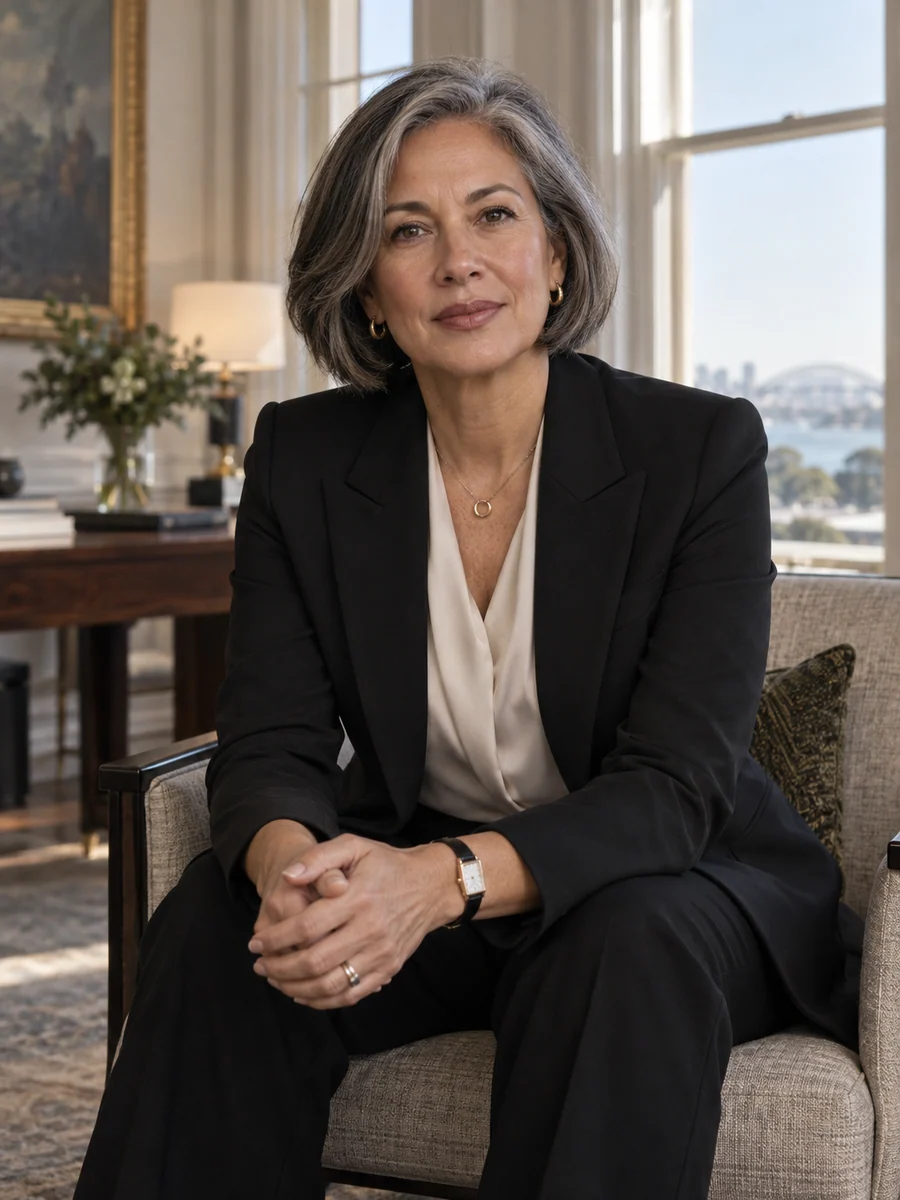
Alice LawsonChief Operating Officer · Essays & perspective
Chief Operating Officer / Australia
Alice Lawson
Open toBoard appointments · Speaking invitations · Executive opportunities
Field workforce and safety5 min read
Service-desk capacity with defensible working conditions
IT services companies set billable utilisation as if it were a financial ratio. For field engineers and on-call staff it is also a decision about how tired people will be when they drive, climb and change production systems at night.
Australian clients often blame poor offshore service on distance, accent or time zone. In my experience the faults are designed in: what offshore teams are measured on, what they are permitted to fix and where privileged access sits.
Government service contracts are won on price and compliance and lost, years later, on staffing. A supplier's board should approve the roster, the clearances and the transition plan before it debates the margin.
A government service desk is only as good as the hours its people can safely work and the access we can justify giving them.
I am the chief operating officer of Torvelle Services Limited, a fictional ASX-listed IT services company based in Brisbane. In the year to 30 June 2026 we earned A$1.38 billion of revenue, 57 per cent of it from federal and state government agencies. We run their service desks, look after their laptops and servers, host some of their systems in two secure halls in Canberra and Adelaide, and send 780 field engineers from 23 regional bases to hospitals, water plants and council offices across three states. About 2,100 of our people work in Manila, Cebu and Pune.
My working life has followed the ticket from one end to the other. I started in 1997 as a graduate field engineer in Townsville, repairing faults that a help desk hundreds of kilometres away had already marked resolved. I then managed service desks in Sydney, moved to Manila for five and a half years to build a delivery centre from 120 people to 1,400, ran a data-centre operator's facilities through a heatwave that exposed a weakness in our generator testing, and joined Torvelle in 2017 to lead government delivery. I became COO in July 2021.
The decisions that best describe me made our numbers look worse before they made them honest. We stopped rewarding the offshore desks for closures, took standing administrator rights away from engineers outside Australia, declined to bid a large state contract at a price our roster could not carry, and lowered the utilisation rate we ask of field engineers after one of them was hurt driving home. Each one cost money or revenue, and each is set out on this site alongside the colleagues who argued against it.
Fixes that stay fixed
Tickets reopened within ten days fell from 18 per cent to 6 per cent after we removed closure quotas at our Manila and Pune desks in 2022 and added 170 staff at A$8.6 million a year. Service credits paid to clients fell from A$7.2 million in 2021–22 to A$1.3 million in 2023–24.
Privileged access held onshore
Since 2024 only cleared engineers in Australia can make privileged changes for our government and critical-infrastructure clients, at a cost of A$13.5 million a year. When three staff credentials were phished in February 2025, none of them could reach a client system.
A bid we chose to lose
In 2023 we priced a seven-year state health contract at what an onshore, cleared roster would really cost, and lost it. We now decline about 31 per cent of the opportunities we qualify, up from 12 per cent, and win 41 per cent of the bids we submit, up from 29 per cent.
Engineers who are not driving tired
We lowered the billable utilisation rate for field engineers from 88 to 78 per cent in 2025 and hired 60 more. Attrition fell from 27 to 14 per cent, overtime from 31 to 12 hours per engineer a month, and the lost-time injury frequency rate from 6.1 to 2.4.
Current focus
I am preparing Torvelle for the renewal of several federal service-desk panel arrangements and rebuilding our clearance pipeline, so that new starters are not left waiting months for the access their work requires. I am also moving our Pune centre from infrastructure support towards testing and application maintenance, where its engineers can do skilled work without privileged access to Australian government systems.
Conversations I welcome
I would consider one non-executive directorship at an ASX-listed or government-owned company outside IT services, joining its audit and risk committee and, after a year or so, chairing a risk or safety committee. Twenty-five days a year is what I can offer, subject to Torvelle's board agreeing. I will also take a confidential conversation about a chief executive role in a services business where delivery is the product, and I accept a few speaking invitations each year.
Beyond the page
The record behind the perspective.
In the boardroom
Kindlebrook Community Housing LimitedNon-executive director (unpaid) · 2019–present
Torvelle Philippines Inc.Director of the wholly owned Philippine subsidiary, in an executive capacity · 2021–present
Formation
Bachelor of Engineering (Electrical and Computer Systems)Tamberlyn University · 1996
Master of Business Administration (part-time)Fernmoor Graduate School of Management · 2006
Alice tells the board what an operating number means before she tells us whether it is good. When she asked us to lower the field utilisation rate, she also asked us to take the measure out of her own incentive, and she raised that herself. Directors notice that kind of thing.
Philippa MarchbankFictional independent chair, Torvelle Services LimitedThe full record ↗
Contact
I would consider one non-executive directorship at an ASX-listed or government-owned company outside IT services, joining its audit and risk committee and, after a year or so, chairing a risk or safety committee. Twenty-five days a year is what I can offer, subject to Torvelle's board agreeing. I will also take a confidential conversation about a chief executive role in a services business where delivery is the product, and I accept a few speaking invitations each year.