Chief Information Officer India
Learning which decision the familiar screen had already made
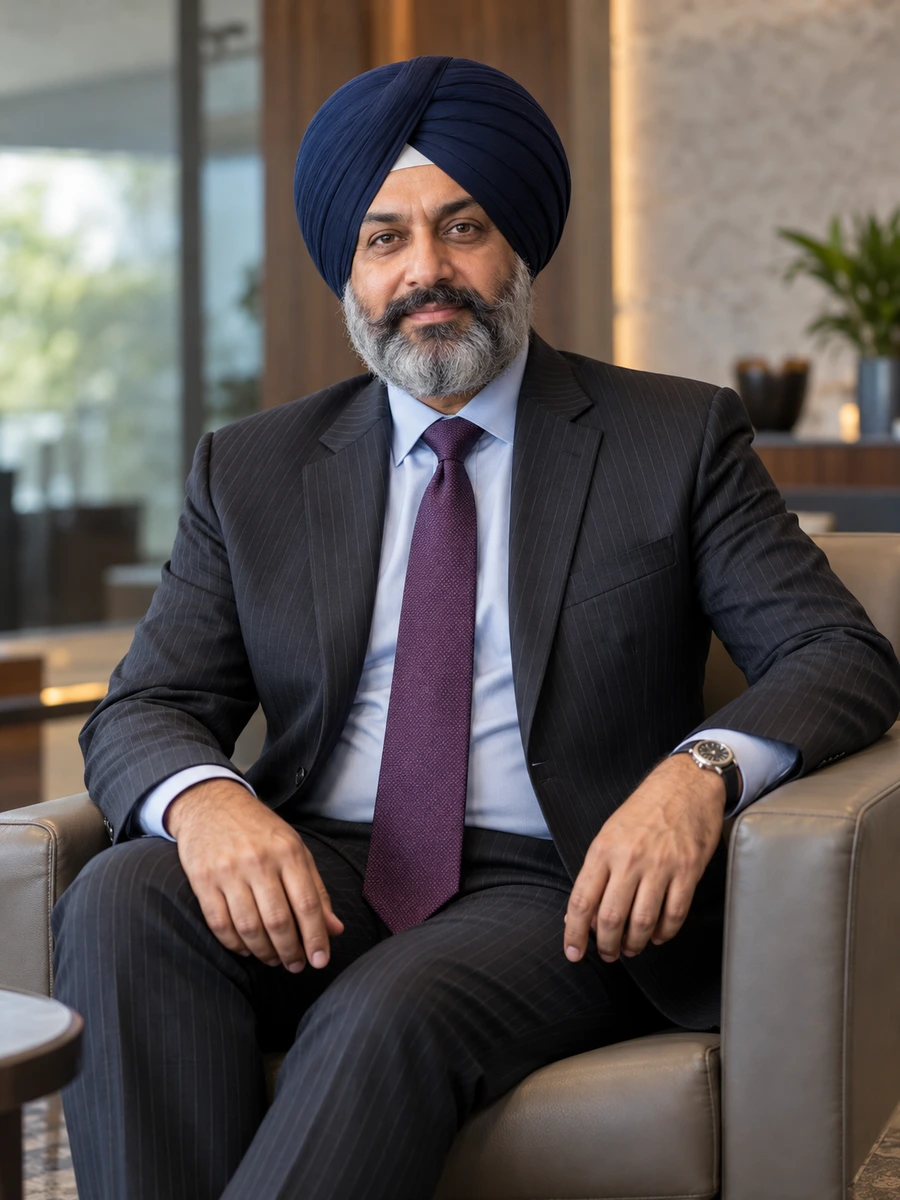
I approved the customer-workspace pattern because it seemed to remove repeated administrative work. The folders were clear, the screens were familiar and the next customer could be brought into the service without rebuilding everything. What I had not required was a fresh explanation of the access assumptions carried by the copied arrangement. When we found documents available outside their intended group, the problem was not that reuse had no value. It was that I had allowed a reusable technical pattern to carry a business permission that needed its own decision.
I grew up in Ludhiana and completed computer science at the fictional Zavqeri Institute of Technology in June 1996. In July I joined Lorqethi Project Systems as an applications support analyst. The company employed eighty-four people and recorded ₹16 crore revenue for FY ending March 1997. I worked within an eight-person support group without staff responsibility or independent spending authority. Project managers and technical specialists owned the work represented in the applications. I learned to ask what a file, status or access request meant to them before assuming that a technically valid change was an appropriate business action.
I became application manager in June 2002. Lorqethi then had 182 employees and ₹48 crore company revenue for FY ending March 2003. Fourteen technology colleagues worked through two leads within ₹87 lakh annual operating expense. I completed a part-time postgraduate diploma in information systems in November 2003 while remaining in the role. The wider responsibility made me more attentive to the agreements around software: what a service included, what a user was entitled to do and what information the company would retain if the relationship ended. A successful demonstration was only one part of that account.
Vornqemi recruited me as business systems manager in September 2009. The thermal-services operator had 115 employees, three industrial clients and ₹31 crore service fees for FY ending March 2010. I led eighteen technology colleagues through two leads with ₹2.1 crore annual operating expense. Moving into a continuing industrial service made customer boundaries more consequential. Our company could hold project material for several clients without having permission to make all of it available to the same people. Engineering and operating owners also needed their records interpreted within the appropriate technical context, rather than have a corporate application imply authority it did not possess.
The head-of-IT appointment followed in July 2016. Vornqemi had 220 employees, five industrial clients and ₹94 crore service fees for FY ending March 2017. I led twenty-seven technology colleagues through three leads within ₹4.5 crore annual operating expense. The role brought more responsibility for purchasing, service transitions and the way management described technology progress. I saw that a count could be accurate but insufficient: users logged in at one time were not necessarily the people covered by a proposed licence, and files exported successfully were not necessarily a usable account of the work they described.
Since January 2022 I have served as CIO. I lead thirty-six colleagues through four leads, with ₹6.8 crore FY2026–27 operating expense and a separate ₹2.7 crore approved change programme. The current enterprise has 310 employees and seven industrial clients, with ₹176 crore FY26 service fees. The infrastructure fund's 58% and family investor's 42% are company ownership interests, not a holding I personally share. I report to Rekha Qazrevi and present technology matters to directors without a statutory appointment. Yusuf Dorzemi and qualified specialists retain plant controls, engineering acceptance and operating decisions.
The workspace response was uncomfortable because the original approval was mine. We reviewed 240 documents and identified forty-eight that had been available outside the intended group. Access logs contained events for fourteen; thirty-four had no observed event, which was not the same as proving that nobody had accessed them. We funded ₹58 lakh of response and review, involved the proper security, legal and customer owners, and kept assessment of consequences separate from the act of correcting permissions. A cleaner configuration did not erase the earlier exposure.
The software review made a different distinction. A proposal concerned 280 named users, while a utilisation report showed a peak of fifty-two simultaneous users. Those were different purchasing concepts. The ₹46 lakh assessment identified 213 people who needed the paid tier and sixty-seven with another approved route. A ₹1.8 crore annual quote remained a proposal, not an amount already spent or a saving created by comparing headcounts. In the repository transfer, all 1,200 attachments were present, but fourteen of 160 projects still lacked dependable relationships. We retained ₹18 lakh overlap alongside ₹42 lakh migration expense rather than declare the old service unnecessary from a file count alone.
A ₹54 lakh research-assistant pilot reinforced the need to examine what a convincing answer actually rests on. Of ninety-six reviewed questions, fifty-eight had current supporting sources, twenty-two relied on superseded material and sixteen lacked adequate support. We narrowed the proposed service to research assistance with human review rather than issue operating instructions through it. I am considering one external board contribution with twenty days provisionally available. I have not registered in the IICA databank and claim neither an assessment result nor exemption. My contribution would be to ask how information, permission and obligation fit together, while preparing for the wider responsibilities of collective oversight.
Open to Board appointments
Languages / Punjabi · Hindi · English
A leadership conviction
The useful question is what the system permits someone to conclude or do, and whether the company's authority and evidence support that permission.
- A continuing thermal service
- Seven industrial clients
- 310 company employees and ₹176 crore FY26 service fees
- Defined information responsibility
- 36 IT colleagues
- Four leads, ₹6.8 crore FY2026–27 expense and separate ₹2.7 crore change programme
- Applications to enterprise judgement
- 30 years
- Five appointments from July 1996; CIO since January 2022
Education & credentials
- Bachelor of Science in Computer Science
- Zavqeri Institute of Technology · 1996
- Postgraduate Diploma in Information Systems, part-time
- Zavqeri Institute of Technology · 2003
Perspectives from colleagues
Arjan kept the access correction separate from the assessment of what had happened. He owned his original approval and gave the board an account of the evidence and unfinished obligations instead of a premature completion statement.
He accepted that a research tool retrieving engineering material had not earned authority to issue operating instructions. The narrower proposal preserved our technical responsibility and the findings that still needed work.