Chief Human Resources Officer India
Learning that a payslip needs its record
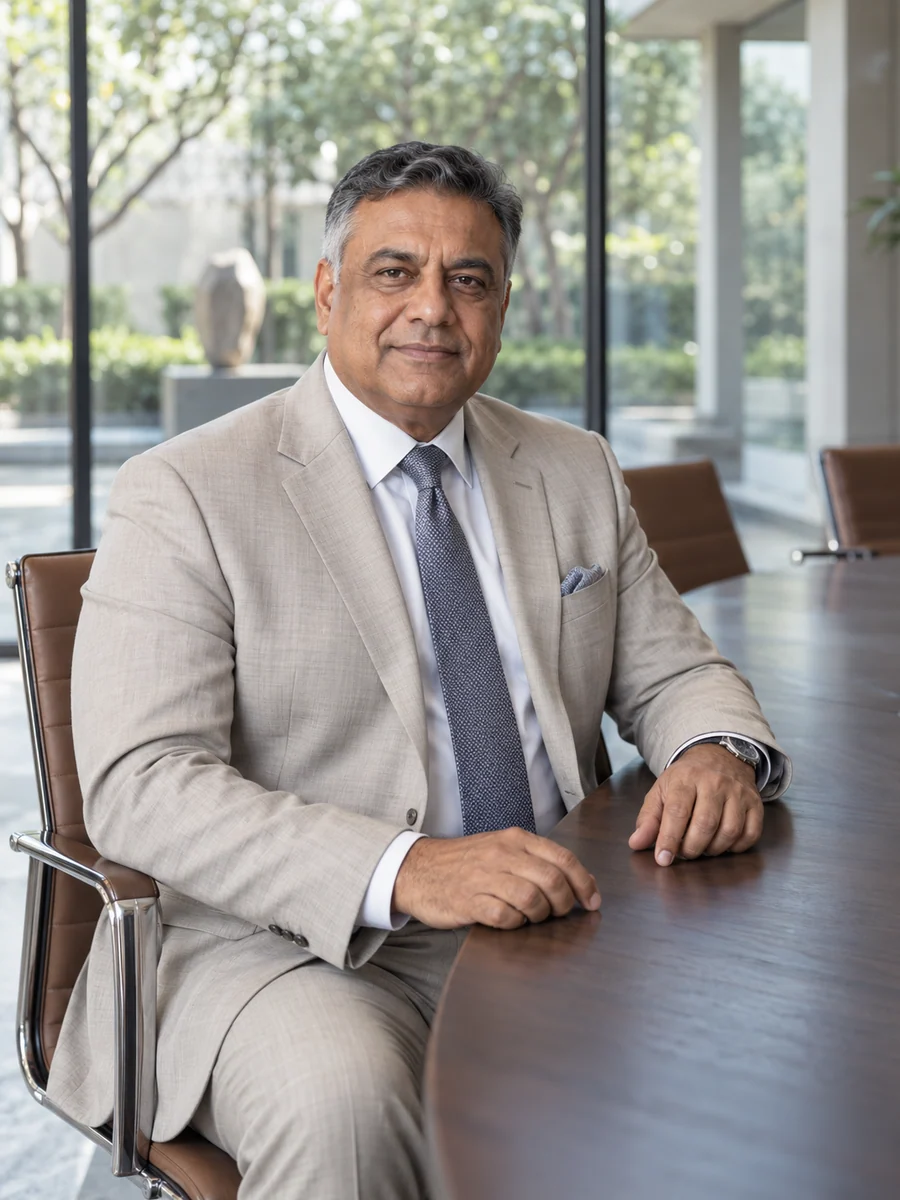
The first dispute I helped resolve was about eleven days. In June 1999 I joined Nandivaram Cables, a family-promoted maker of copper and fibre telecom cable near Hyderabad, as a personnel officer. I had just completed a master's degree in personnel management and industrial relations at the Pennamadhi Institute of Labour Studies. A machine operator's annual bonus was short because the time office had recorded eleven days of approved leave as absence. The union's general secretary brought the worker's attendance card to the canteen. I checked the register, found our mistake and had the payment corrected that week. The lesson was not that the union was always right. A pay figure is only as reliable as the record underneath it, and the person explaining it should be able to produce that record.
Over four years I kept attendance, wage and bonus records for about 1,100 people and prepared the personnel papers for a long-term wage settlement in 2002. When orders for copper cable fell, 160 workers moved to the fibre lines. I learnt that retraining is a negotiation about grades and seniority as much as about skill.
In 2003 I joined Tarvanta Mobile as HR manager for its Andhra Pradesh circle, which then had 140 employees. Within five years it had more than 500, most of them in sales, distribution and network operations. Incentive plans became my education. We paid distributor-facing staff on new activations, and many activations turned out to be connections that were never recharged. The plan worked exactly as designed; the design was wrong. After I became head of HR for three southern circles in 2008, I helped change it so that part of every incentive was paid only after a connection had been used for ninety days. Sales leaders disliked the delay, and some capable people left over it. In 2013 the company sold its southern operations, and I managed the transfer of 1,100 employees to the buyer before leaving myself.
Mallurika Entertainment, a Kannada general-entertainment broadcaster in Bengaluru, presented a different problem. Its own staff numbered about 620, but every daily serial depended on crews supplied by production houses: light assistants, spot boys, junior artistes and drivers, engaged by the day. None of them appeared in our headcount, and all of them lived by our shooting schedule. With the production heads, I agreed written daily rates and overtime terms with suppliers and stopped shoots running beyond twelve consecutive days without a rest day. Two suppliers withdrew. I came away convinced that a company answers for working conditions it does not formally employ.
In April 2018 I joined Charuvela Broadcasting as vice-president of human resources. The company had grown out of a family that had published a Telugu farm weekly since 1979. Personnel matters still ran through the accounts department, and newsroom grades depended largely on who had hired whom. I wrote job grades for newsroom and technical roles, set up the Internal Committee with its external member and kept 24-hour coverage staffed through the 2020 lockdowns by giving bureau chiefs their own rosters. After a domestic private-equity fund invested in December 2020, the board formed a nomination and remuneration committee, and I became CHRO in April 2021.
Since then my work has turned on three questions that a regional news business cannot avoid. Who gathers the news, and on what terms? What does a channel that never goes off air ask of the people on its night desk, during floods and on counting day? And what happens to the crafts that built the channel as viewing moves to the phone? The cases on this site take those questions in turn.
I lead 34 colleagues through four leads, and I try to keep decisions close to the people they affect. Bureau chiefs know which contributor has filed every day for six years; finance knows what a new employment category costs; the news director knows which stories cannot wait. My part is to put those facts into one paper and to state what the company will give up. Presenting to our nomination and remuneration committee has taught me that independent directors ask sharper questions when the cost sits in the first paragraph rather than in an annexure.
I am now preparing for a first independent directorship. I registered with the IICA databank in 2024 and passed its proficiency self-assessment in 2025. I would bring practice in pay design, employment status and shift work in businesses that operate at night and far from head office. I also know what I lack. I have never served as a director, and I would have to learn to oversee an executive team rather than belong to one.
Open to Board appointments
Languages / English · Telugu · Hindi · Kannada
A leadership conviction
A news channel promises to be first at the flood, the count and the collector's press conference. Someone in a district town is asked to keep that promise at night, often without a contract. I want the cost of that promise written into our pay, our rosters and our employment categories before a crisis shows us who was carrying it.
- Annual revenue
- ₹352 Cr
- Year ended March 2026; television, app and events
- Employees on payroll
- 1,480
- Plus about 470 district contributors paid per story
- District bureaus
- 31
- Across Telangana and Andhra Pradesh
- Contributors moved into employment
- 141
- 2024; salary, social security contributions and accident cover
Education & credentials
- Master of arts in personnel management and industrial relations
- Pennamadhi Institute of Labour Studies · 1999
- Bachelor of arts in economics
- Sitaravindu College · 1997
Perspectives from colleagues
Vikram brought me the contributor proposal with the lost advertising already subtracted. I did not enjoy that figure, but I never had to discover it later from somebody else.
I argued against his forty-week rule and I still think it was too blunt. What I respect is that he reopened it once the bureau chiefs showed him who it had missed, and he did not pretend the first version had been right.
As a young personnel officer he came to the canteen to explain the bonus calculation himself. We did not always agree with him, but the figures he gave the union were the figures the company paid.