File sectionThe person behind the perspective
Learning to hear the requirement inside the brief
I grew up in Ludhiana with an interest in how physical systems behaved, but the sound of an occupied room was not something an electrical engineering degree alone taught me to interpret. I completed the full-time programme at the fictional Qazvemri Institute of Engineering in May 1992 and joined Vaqzermi Building Sciences that July. The company had forty-four employees and ₹6 crore FY1993 revenue. I assisted supervised measurement work under a project engineer, without a team or delegated spending authority. The early discipline was to record what had actually been observed and leave conclusions beyond my remit with the responsible professional.
In June 1999 I became an acoustic project lead. Vaqzermi then employed seventy-eight people and recorded ₹16 crore FY2000 revenue. I led five colleagues with ₹54 lakh annual function expense. A measurement appointment exposed only part of the life of a building. Different occupation, equipment use or room arrangements could change what the client needed to understand. I learned to discuss those conditions before treating a tidy set of observations as the whole answer. The role involved coordinating a small team and its assignments, not certifying every future use of a room.
I joined Teqzarmi in September 2007 as technical practice manager. Its ninety-two employees generated ₹24 crore FY2008 revenue, while my eight-person team worked within ₹1.1 crore annual expense. I wanted a continuing role in how a consultancy defined its methods and explained them to clients. The enterprise combined advisory and measurement work, and the relationship between those services mattered. A client could commission a measurement without having agreed the question that would make its result useful. I began to spend more time on that brief, although the later mistake showed that I still accepted familiar solutions too readily.
The technical director appointment followed in January 2014. I led fourteen colleagues with ₹2.4 crore annual expense within a 106-person enterprise recording ₹32 crore FY2015 revenue. In 2017 I approved an absorptive-treatment proposal for rooms whose users wanted confidential conversations. Daniel challenged the implied link between a less reverberant interior and reduced speech transmission beyond the room. We had not demonstrated that the proposed response addressed the requirement. I accepted the redesign and further assessment cost, and stopped presenting the original brief as sufficient merely because its treatment had a legitimate acoustic purpose.
I became CTO in May 2021. Teqzarmi now employs 128 people and records ₹41 crore FY2026 revenue: ₹29 crore advisory and ₹12 crore measurement services. I report to Ritu and lead twenty-one colleagues through four leads. My FY2026–27 function expense is ₹3.8 crore, alongside a separate ₹1.2 crore equipment and development provision. Founder interests own 48%, employees 32% and a private investor 20%. My personal 0.04% holding is included within the employee allocation. These are different measures of company scale, ownership and delegated responsibility, and I want a reader to be able to distinguish them.
The current cases extend the lesson beyond the choice of a physical treatment. An average can hide the periods that matter to a room's intended use. A louder amplified signal does not by itself establish intelligibility in every arrangement. A software discount can change the independence of future product recommendations. A model can favour one option under one assumption and another when the scenario changes. In each case I have to examine the claim the consultancy is being asked to make, including the commercial consequence of narrowing that claim.
I am based in Dehradun and work in English, Punjabi and Hindi. The fictional practice described here concerns building acoustics, not clinical hearing care or a statutory certification service. Daniel coordinates the qualified project professionals, and actual design, safety and acceptance decisions retain their proper owners. I do not attach a regulatory threshold to these stories or imply that an observation proves every room safe, compliant or suitable for every occupant. The examples show managerial judgement around professional work rather than instructions for carrying out that work.
I registered in the IICA databank in August 2026 in this fictional preparation record. The proficiency assessment remains unfinished, with no exemption claimed. I hold no statutory directorship and would examine an initial eighteen-day annual capacity estimate against preparation, travel and exceptional demands. A first board role would require more than transferring a technical director's habits into another meeting. I would like to contribute questions about the purpose and conditions of professional advice while learning how to use that experience through collective oversight, including the willingness to explain where my own earlier reasoning was incomplete.
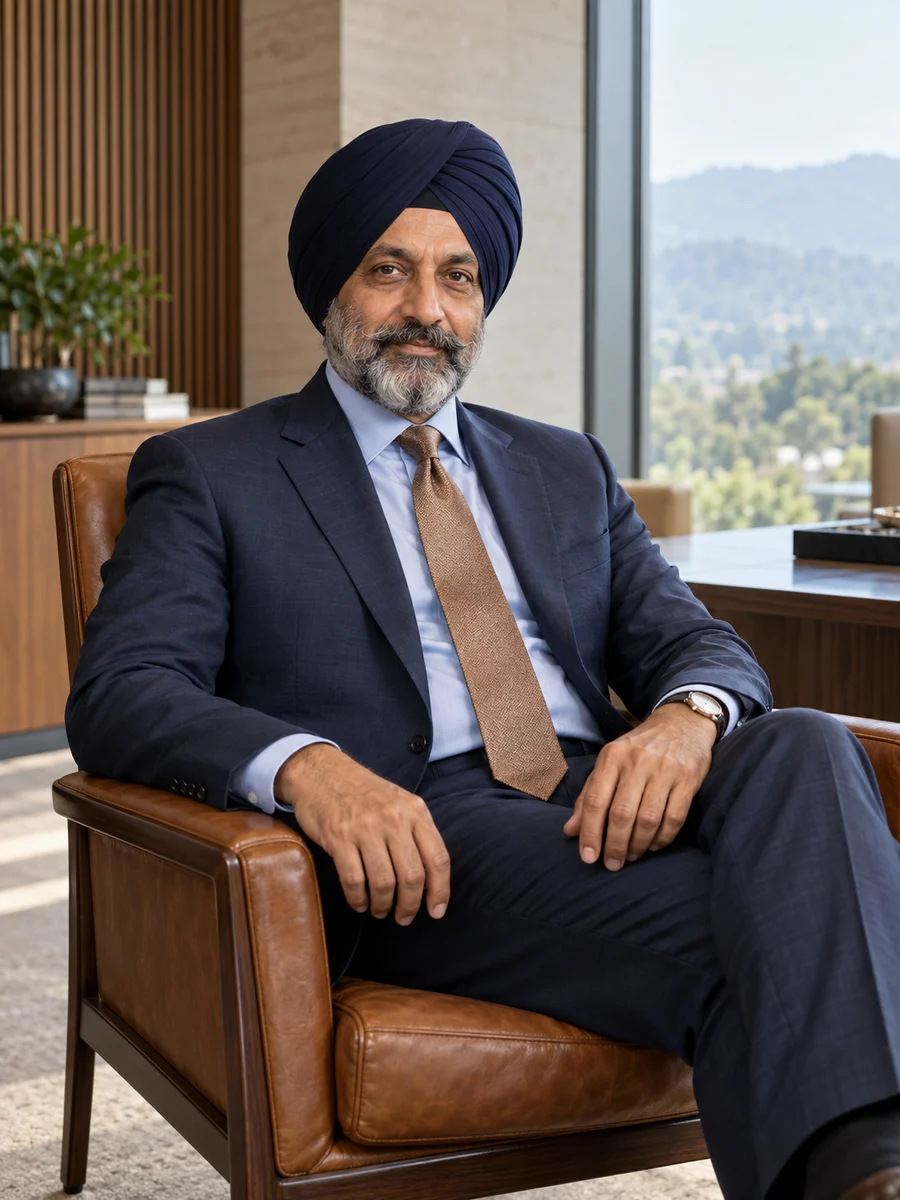
In my own words
I want an acoustic recommendation to answer the question the room's users actually asked. A reassuring product description, a smooth average or an attractive simulation can each answer a different question. My responsibility is to notice that difference before the enterprise sells confidence that its work has not earned.
Gurmeet Qavzomri
Education
Formation
- Bachelor of Engineering in Electrical EngineeringQazvemri Institute of Engineering1992
Working languagesEnglish · Punjabi · Hindi