Prepared for boards, nomination committees & search advisers

File No. CTO-016

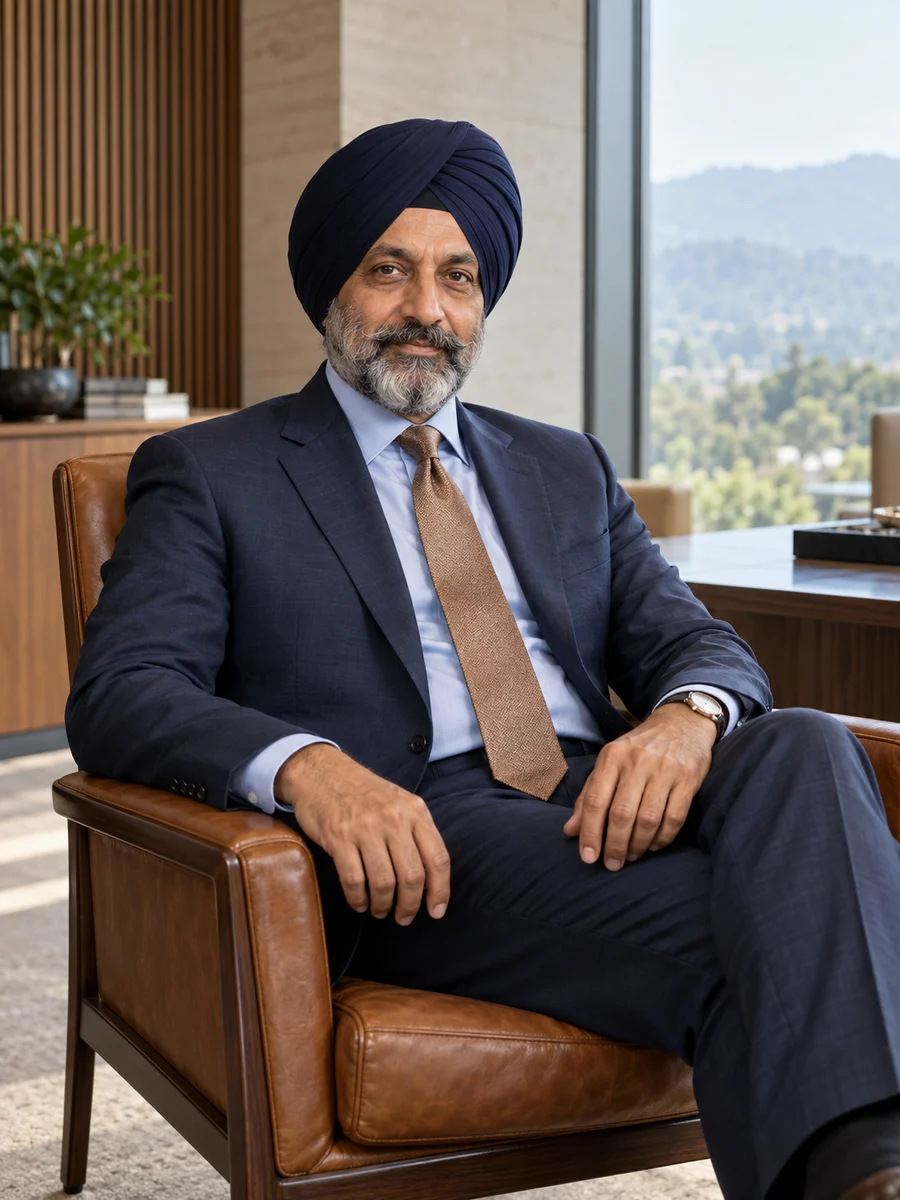
Portrait of Gurmeet Qavzomri
Gurmeet Qavzomri

Gurmeet Qavzomri

A room's purpose comes before the reassuring result

SubjectGurmeet Qavzomri
PositionChief Technology Officer
BaseIndia
LanguagesEnglish, Punjabi, Hindi
StatusBuilding-technology and professional-practice conversations, with possible first-board exploration after preparation, relationship review and realistic capacity assessment.

Summary

I grew up in Ludhiana with an interest in how physical systems behaved, but the sound of an occupied room was not something an electrical engineering degree alone taught me to interpret. I completed the full-time programme at the fictional Qazvemri Institute of Engineering in May 1992 and joined Vaqzermi Building Sciences that July. The company had forty-four employees and ₹6 crore FY1993 revenue. I assisted supervised measurement work under a project engineer, without a team or delegated spending authority. The early discipline was to record what had actually been observed and leave conclusions beyond my remit with the responsible professional.

Hear the question before choosing the measurement

I once approved an absorptive-treatment brief for rooms whose users were asking for confidentiality. Reducing reflected sound inside a room and limiting the passage of speech beyond it are different problems. Daniel's review made clear that our proposal had not established the second result. I had accepted a familiar technical response before defining the user's actual requirement. The ₹24 lakh redesign and further assessment belonged in our account of that mistake, without pretending that a revised drawing alone proved the completed room would meet every purpose.

I am Gurmeet Qavzomri, the fictional CTO of Teqzarmi Acoustic Works in Dehradun. My thirty-four-year career began with supervised building measurement after an electrical engineering degree. Today I lead twenty-one colleagues through four leads within a 128-person regional consultancy. Our ₹41 crore FY2026 revenue comes from advisory and measurement services. My ₹3.8 crore function expense is separate from equipment and development provision. I work with qualified project professionals; a technology title does not make me the approving authority for every design, safety or contractual requirement.

The later decisions concern intermittent events hidden by a convenient reporting summary, intelligibility across different room arrangements, a supplier discount tied to exclusive recommendations and model rankings that change under plausible assumptions. None is answered simply by collecting more numbers. The leader must decide which uncertainty matters to the use, who should judge it and what the enterprise can responsibly offer. Sometimes that means retaining a qualification, spending more on an assessment or declining an attractive commercial arrangement. I want those consequences visible beside the technical work.

The period summary did not describe every use

A sixty-period study included forty-two routine periods and eighteen containing the events relevant to the brief. We retained the event conditions instead of using a pooled summary to imply that the user's concern had disappeared.

A cheaper platform came with a recommendation condition

A proposed ₹18 lakh discount reduced a ₹39 lakh first-year platform and support package to ₹21 lakh, conditional on exclusive supplier recommendations. We declined that condition and retained the separately funded option.

A model ranking was conditional, not unanimous

Among fourteen agreed scenarios, nine retained the preferred option's ranking and five reversed it. We commissioned further discriminating work instead of presenting a single best-case picture as an unconditional design choice.

Current focus

I am making the purpose, assumptions and commercial conditions of technical advice visible before a client or director treats its conclusion as settled.

Conversations I welcome

Building-technology and professional-practice conversations, with possible first-board exploration after preparation, relationship review and realistic capacity assessment.

Exhibit ATrack record

ItemMeasureFigure
01Building-science careerFictional continuous employment from July 199234 years
02Technical methods functionFour leads within a 128-person enterprise21 colleagues
03FY2026 revenue₹29 crore advisory and ₹12 crore measurement services₹41 crore
04Function operating expenseFY2026–27; equipment/development provision separate₹3.8 crore

Exhibit BStatement of approach

I want an acoustic recommendation to answer the question the room's users actually asked. A reassuring product description, a smooth average or an attractive simulation can each answer a different question. My responsibility is to notice that difference before the enterprise sells confidence that its work has not earned.

Signed — Gurmeet Qavzomri

Exhibit CSelected matters

Matter 01Ref. CTO-016-M01

The absorptive treatment I approved did not answer the confidentiality brief

In 2017 I approved a proposed absorptive treatment for a fictional client's meeting rooms. The users had described a need for confidential conversations. Our brief emphasised reducing reflected sound inside the rooms, which is a legitimate acoustic objective but does not by itself establish how speech travels to adjoining spaces. Daniel Qerzovmi challenged the conclusion we were inviting the client to draw. The technical response had become more precise than our understanding of the requirement. I had accepted that mismatch, so the correction had to begin with my decision rather than a complaint about the client's wording.

The original proposal had attractions. Its scope was easier to estimate, the treatment was familiar to the team and the visual change could be explained without a long investigation. Reopening the brief meant more professional time and a less certain programme. Commercial colleagues wanted to retain the useful part of the proposal and avoid appearing to abandon work already discussed. I agreed that we should not describe absorption as useless. The issue was whether its usefulness established the particular result being promised. It did not.

I authorised ₹24 lakh for revised design work and further assessment within the fictional engagement. The project professionals reconsidered the room boundaries, relevant transmission paths and intended use before advising on the response. They retained responsibility for actual design and acceptance criteria. We separated any internal-room treatment from the additional work needed to examine confidentiality, and explained that separation to the client. The redesign was not recorded as proof that the completed rooms now satisfied every requirement. Subsequent implementation and acceptance still belonged to the actual project process.

We gave up the simplicity of the original offer and absorbed the need to explain why my approval had been premature. No measured reduction in complaints, legal compliance result or universal product recommendation is claimed here. The bounded outcome was a corrected brief, funded reassessment and a more exact account of what the proposed work could establish. My lesson was not that a CTO must become the specialist for every physical detail. It was that I must understand the relationship between the client's purpose and the claim our technical recommendation makes. A familiar treatment can be entirely legitimate and still be the wrong basis for the promise being approved.
Matter 02Ref. CTO-016-M02

Keeping intermittent events visible instead of closing the study with one average

In 2022 a fictional interior study produced observations over sixty agreed periods. Forty-two represented the routine conditions described in the programme, while eighteen contained intermittent events relevant to the occupants' concern. A pooled summary offered a compact account of the whole exercise. It also risked making the particular interruptions less visible, even though those events had motivated the enquiry. The disagreement was not over whether an average was mathematically permissible. It was over whether that summary answered the question for which the client had commissioned the work.

The reporting team wanted a clear result that a busy client could read quickly. Extending the account by event conditions would require more explanation and might appear to weaken a conclusion after the study had been completed. Daniel argued that a smooth report could be misleading if it detached the observations from the activities that mattered. I supported keeping the conditions distinct. We did not invent a new numerical compliance threshold or treat every event as equivalent. Qualified professionals examined how the observations related to the agreed use and which limitations the report needed to retain.

The programme carried ₹36 lakh study and reporting expense, with ₹7 lakh annual provision for the agreed follow-up work. Those amounts paid for professional effort and continued examination; they were not a calculated return from fewer interruptions. We retained the eighteen relevant periods in the account and explained the forty-two routine periods alongside them. The resulting recommendation distinguished what could be concluded from the study from what required examination under another operating condition. It did not claim to represent every day or every occupant's experience.

We gave up a single headline that would have been easier to put in a presentation. The client received a more conditional explanation and a defined reason for follow-up, rather than an unsupported assurance that the concern had disappeared. There was no claim of an actual health outcome, legal breach or universally acceptable sound level. The leadership decision concerned the integrity of the report's answer. If the commercial brief is about a particular kind of interruption, the enterprise should not use the abundance of routine periods to make that interruption statistically disappear from the conversation. Concision remains valuable, but the omitted condition can be the very thing the decision depends on.

Matter 03Ref. CTO-016-M03

Declining to solve every room arrangement by increasing amplification

In 2023 a fictional multipurpose hall was being considered under four proposed seating and presentation arrangements. The client wanted speech to be understandable across those uses. A simple response was to increase amplification and present that as a common solution. Our project review found that two arrangements could proceed under the proposed assisted system and agreed professional conditions, while two needed redesign and further evaluation. The distinction concerned the arrangement and the evidence for the intended use; it was not a claim that a louder signal automatically made every listener's experience satisfactory.

The commercial team favoured a common package because it simplified the equipment proposal and reduced changes between events. The client also wanted operational flexibility. Daniel's colleagues explained that the experience depended on more than one volume setting, including the room, background conditions and how the arrangement supported speech. I asked the team to preserve those differences instead of turning flexibility into an unconditional capability claim. Actual acoustic design and any relevant accessibility requirements remained matters for qualified project owners, with no generic compliance statement substituted for their work.

I approved ₹26 lakh for modelling, a mock-up and the revised evaluation within the engagement. The two arrangements requiring redesign remained conditional; they were not described as failed forever or silently included among accepted uses. The two that could proceed were recorded with their assessed conditions. We retained the client's desire for multiple uses as a design problem rather than resolve it by marketing every possible layout under one label. The programme needed another decision about the remaining arrangements before those could be offered on the same basis.

The cost was additional work and less immediate flexibility than the first proposal suggested. There is no invented audience-satisfaction percentage, health benefit or measured revenue increase. Nor does the example prescribe an amplifier setting or a treatment for another room. Its bounded outcome is a differentiated use account and funded redesign for the unresolved configurations. I learned to distinguish a capability the equipment possesses from an experience the complete arrangement has established. That distinction lets an executive defend the delay without dismissing the client's operational need. The aim is to earn the wider offer through evidence, rather than turn a useful technical capability into a promise about every room configuration.

Matter 04Ref. CTO-016-M04

Rejecting a platform discount that would prescribe our future recommendations

In 2024 we considered a technical platform and support package priced at ₹39 lakh for its first year. The supplier offered an ₹18 lakh reduction if our consultancy agreed to exclusive recommendations of its associated products within the covered scope. The resulting ₹21 lakh price looked attractive in a procurement comparison. The condition, however, would have changed the way we advised future clients. This was not merely a choice between two licence prices. It was a decision about whether a tool purchase should constrain professional recommendations that clients expected to follow their particular briefs.

The procurement team could reasonably point to the cash difference. The platform offered useful capability, and the supplier's condition was stated rather than concealed. I did not describe the offer as corruption or assume that every commercial bundle undermines advice. My concern was the fit with our practice. Daniel wanted the ability to consider alternatives when a room's purpose or project conditions called for them. I took that concern to Ritu with the full price comparison and the obligation attached to the discount. The choice needed executive ownership because it affected the company's proposition to clients.

We declined the exclusivity condition and retained the ₹39 lakh first-year package under separately agreed terms without that recommendation obligation. The ₹18 lakh difference was therefore an additional cost relative to the conditional offer, not a realised saving. Any later renewal would need its own review. The account does not claim that the purchased tool was technically superior to every alternative or that independent professional judgement follows automatically from paying a higher price. The team still had to assess actual recommendations and disclose relevant relationships in particular assignments.

We gave up the cheaper initial route and the convenience of treating procurement as a self-contained technology decision. The bounded outcome was preserving the ability to recommend according to the engagement rather than the discounted purchase condition. This did not establish a measured revenue benefit or prove that the rejected arrangement would have harmed a client. It made our chosen responsibility explicit. A CTO should be able to explain what the enterprise has agreed to do in return for a lower price, especially when the obligation survives into future advice. The relevant comparison is between complete arrangements, not between attractive numbers with their attached promises removed.

Matter 05Ref. CTO-016-M05

Using a reversal in model rankings to decide what to investigate next

In 2025 our team compared two proposed acoustic approaches for a fictional interior under fourteen agreed scenarios. Nine retained the first option's preferred ranking; five reversed it. A presentation based on the most favourable scenario would have made a clear recommendation. Counting nine against five would have offered another apparently simple answer. Neither approach established which conditions would matter in the actual room. The scenarios were purposeful variations, not a random sample with equal probabilities or a vote on the design.

The project team wanted a recommendation in time for the client's next planning decision. Further work would cost money and could delay that choice. Daniel argued that the reversal was useful because it exposed the assumptions capable of changing the conclusion. I supported a conditional recommendation and a focused next investigation. Qualified colleagues identified which assumptions could be examined through the appropriate project work. We did not prescribe a universal measurement procedure or treat a visual model as an acceptance certificate for a completed room.

I allocated ₹22 lakh for the additional modelling and discriminating assessment. The purpose was to reduce uncertainty around the assumptions that changed the decision, not to keep adding scenarios until one option accumulated a larger number of favourable outputs. The team retained both rankings and the conditions associated with them in the account. The client could see what could be decided immediately and why a final choice needed more evidence. The example stops at that funded investigation; it does not invent a subsequent performance result or pretend that every uncertainty was eliminated.

We gave up the certainty of a single preferred picture and accepted another stage of work. That was a commercial consequence, not merely an analytical preference. I wanted the recommendation to remain useful without overstating what the model had established. A conditional answer can still support a decision if it explains the next action and the reason for it. The leadership lesson is to distinguish uncertainty that matters from uncertainty that can safely remain. When a plausible condition reverses the preferred option, the enterprise should understand that condition before selling the ranking as settled. More polished output is not a substitute for the evidence that would make the choice defensible.

Exhibit DFormation

  • Bachelor of Engineering in Electrical EngineeringQazvemri Institute of Engineering1992

Exhibit EReferences

In this fictional procurement decision, Gurmeet brought the recommendation obligation into the price comparison. We could assess the additional expense openly because he did not describe it as a saving or assume the technology team alone should own the commercial promise.
Ritu ZeqavmriFictional CEO, Teqzarmi Acoustic Works
This invented colleague account concerns the confidentiality brief. Gurmeet accepted the distinction between a useful absorptive treatment and the result the client actually needed, including the cost of reopening a recommendation he had approved.
Daniel QerzovmiFictional practice head, Teqzarmi Acoustic Works

Exhibit FPublished views

CorrespondenceNext steps

An invitation

Contact

Building-technology and professional-practice conversations, with possible first-board exploration after preparation, relationship review and realistic capacity assessment.

Open to
  • Board appointments
  • Advisory roles
  • Speaking invitations

office@gurmeetqavzomri.example