File sectionThe person behind the perspective
Learning to see the work beyond the component
My first professional questions concerned materials, but the questions that stayed with me were about the work around them. A laboratory result could be useful without answering when a site could perform its next operation. A component could satisfy its own description while creating an awkward assembly or maintenance task. I learned to ask what the result meant in the sequence of work, and that habit has shaped my progression into construction-technology leadership.
I completed my civil-engineering degree at Neravell Institute in June 1996 and joined Tessavik Materials the following month. I worked as a materials engineer within a five-person technical group. I held no direct reports or delegated budget authority. My assignments involved preparing and interpreting material investigations under a senior engineer, preserving the test context and explaining the limits of the result. The company had 190 employees and S$34 million revenue in 2003; those figures describe the employer at the end of my tenure.
The early work taught me to distinguish the purpose of a test from the value it produced. A result obtained at one age or under one set of conditions could not automatically answer a different construction question. I also saw how easily a technical note lost its qualifications when it was reduced to a short comparison. I became careful about the handover between the person producing the evidence and the person expected to use it. That concern later became a management responsibility rather than only a reporting habit.
I joined Varelim Structures in January 2004 as construction methods lead. I wanted to work closer to the contractor's decisions about how a building would actually be assembled. By December 2009, the company had 850 employees, S$310 million revenue and seven active projects in Singapore and Malaysia. I led eighteen employees through two direct reports with S$3.2 million annual authority. My role was to connect technical alternatives with the programme, work interfaces and practical questions that site colleagues had to resolve.
That appointment changed how I understood a good recommendation. An attractive component or process had to fit the surrounding work. A method that reduced one activity could add another; a detail that was easy to install might become difficult to inspect or maintain. I worked with operations to make those consequences part of the comparison. Adoption became more credible when the team could explain the complete task, including the work surrounding its proposed improvement.
From January 2010 to December 2015, I headed prefabrication. The role brought design coordination, factory work, transport constraints and site assembly into a more closely connected account. By the end of the period I led forty-six employees through three direct reports and held S$11 million authority. Varelim then had 1,700 employees, S$680 million revenue and twelve active projects across Singapore and Malaysia. I became responsible for developing managers who could work across those boundaries instead of optimising the factory's task in isolation.
Prefabrication also brought maintenance into my thinking earlier. A unit that could be transported and installed still had to serve its eventual users and the people responsible for its components. A full-size review could expose a question that a coordination drawing had not made sufficiently tangible. I began to insist that the intended service tasks be discussed alongside the assembly sequence. That practice influenced the later bathroom-module case, where a successful fit did not settle the access needed for future work.
I became vice president of building technology in January 2016. The appointment combined methods development, material qualification and demonstrator programmes across the contractor's portfolio. By December 2021 I led eighty-eight employees through four direct reports with S$29 million authority. The company had 3,400 employees, S$1.35 billion revenue and twenty-one active projects across Singapore, Malaysia and Vietnam. In 2016 an employee investment vehicle acquired twenty-five per cent; the founding family retained seventy-five per cent. Earlier roles belonged to the prior family-owned period.
The vice-president role required me to explain why a trial should sometimes change its proposed application rather than simply pass or fail. The right question might be whether the method suited a particular project configuration, not whether it deserved use everywhere. I also became more attentive to the way environmental and productivity comparisons were presented. A result per kilogram or a measured application speed could be accurate while still supporting a misleading conclusion about the complete building or task.
I was appointed CTO in January 2022 and now report to chief executive Meera Velanthi. My team comprises 142 employees through five direct reports, with twenty-eight contractors separately. I hold S$56 million authority in 2026: S$34 million for construction-method and product development and S$22 million for testing and demonstrators. Varelim employed 4,300 people and recorded S$1.9 billion revenue in 2025, with twenty-six active projects. These company figures are distinct from the scope of my technology function.
Operations director Daren Chovell and I examine whether a proposed method can be adopted within the work the company has undertaken. The project engineers retain design and construction authority. I can help improve the evidence, fund an investigation and make the recommendation clearer; I do not replace those responsibilities with a corporate technology decision. My account includes cases where we revised a material choice, redesigned an access arrangement or narrowed an automation trial. Those decisions are more informative than a catalogue of technologies alone.
I have executive exposure to board discussions at Varelim but no director appointment. For a first external seat, I would bring a construction-technology perspective alongside a commitment to learn the company's financial, contractual and governance context. I could propose twenty-four annual days, subject to consent and the real calendar. I would want the appointment to make use of my ability to question the whole job while recognising that collective oversight requires more than the technical judgement developed in my executive career.
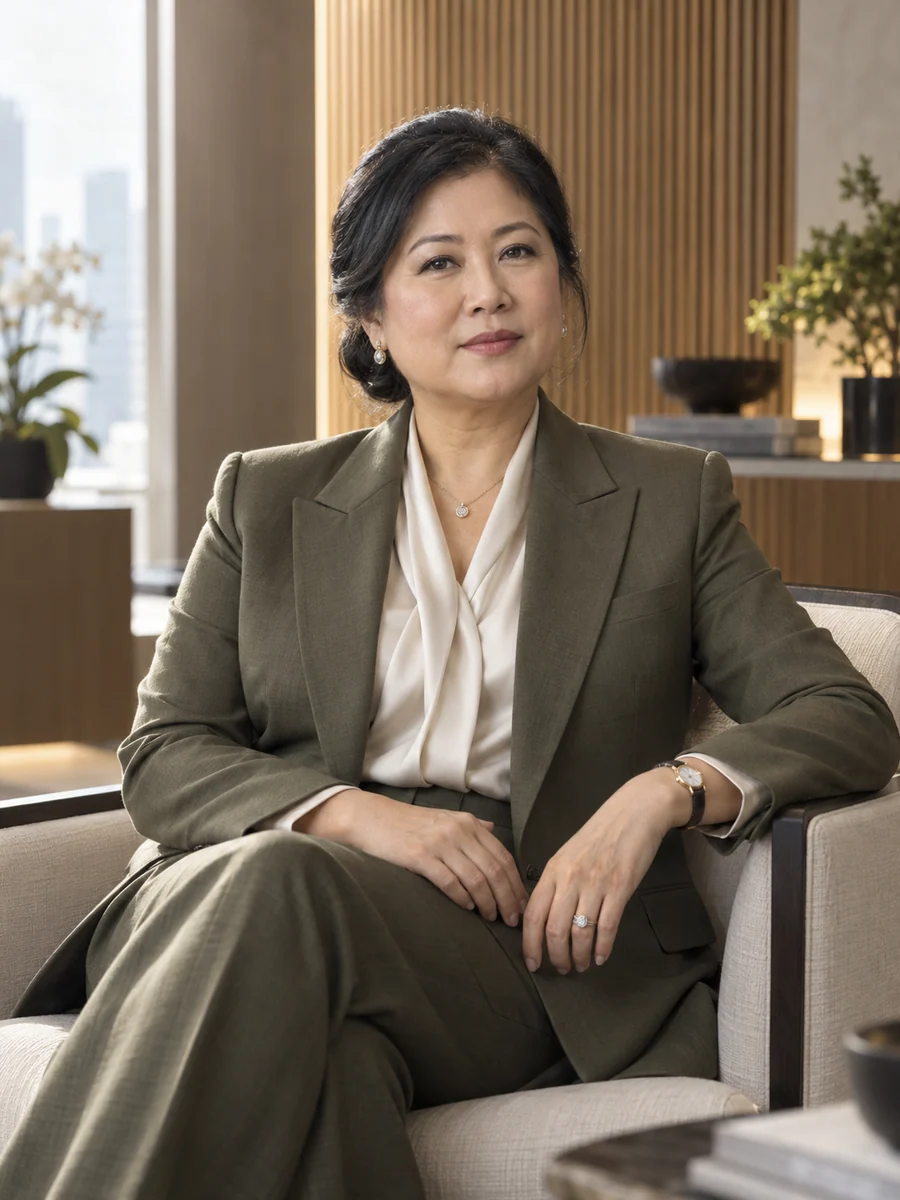
In my own words
I want a promising construction method to be examined through assembly, access, service and the work around it, before a narrow improvement becomes a claim about the whole project.
Farah Nair
Education
Formation
- Degree in civil engineeringNeravell Institute1996
Working languagesEnglish · Malay