The person behind the perspective · 2026
I learned to keep the occupier's unanswered question in the record
My first commercial-property research notes were less elegant than the presentations they supported. A building could be described through its location, area and facilities, while the person considering it asked about something more particular: how a late shift would arrive, what a visitor would encounter or which part of an arrangement needed to be agreed before the space could be used. I learned to keep those questions in the record instead of smoothing them away to make the asset easier to describe. They did not weaken the proposition. They identified the conversation it needed to support.
I was born in 1971 and completed a commerce degree at fictional Suryavel Institute in June 1992, followed by a full-time postgraduate marketing qualification in June 1994. I joined Tavren Commercial in Hyderabad the following month. My role was an individual research appointment within a six-person team. I did not control a marketing budget or negotiate lease terms. The company had eighty employees and ₹18 Cr revenue by FY1999–2000, but those figures describe the employer, not the scope of the analyst I was then. I gathered and organised information for colleagues who held the commercial relationships.
That beginning gave me a useful respect for the questions a summary leaves unanswered. A broad statement that a building suits a kind of organisation may sound efficient, but it can hide differences between two occupiers in the same sector. I began to understand that a property account has several owners: the people responsible for the physical asset, those negotiating its commercial terms and those explaining it to a prospective user. My interest developed in the last of those responsibilities, with an awareness that its credibility depended on the other two.
In July 2000 I joined fictional Neravil Estates in Bengaluru in category and proposition marketing. The group had been founded in 1996 and was developing its office portfolio. By FY2006–07 it had three completed assets, 260 employees and ₹96 Cr revenue. My team comprised six employees through two direct reports, with ₹1.4 Cr marketing authority. I worked on the account that connected the asset information with an occupier's preliminary consideration. The move gave me responsibility for deciding how research should change the material, rather than only supplying observations to somebody else's brief.
I moved into occupier research and brand leadership in July 2007. Over the following six years, the group reached eight completed assets, 580 employees and ₹310 Cr FY2012–13 revenue. I led thirteen people through three direct reports, with ₹5.5 Cr marketing authority. The role brought me closer to differences between locations and operating arrangements. I had to decide when a common brand explanation was useful and when it obscured something the occupier needed to know. I could organise the research and communication; I could not resolve an access policy or a contractual question by choosing a more convenient phrase.
Group market strategy followed in July 2013. My responsibility grew to twenty-three employees through four direct reports and ₹18 Cr marketing authority. By FY2018–19 the business operated fifteen completed assets, with 980 employees and ₹820 Cr revenue. A minority institutional investor entered in 2018, while the founding family retained control. The more substantial corporate account made precision more necessary. I worked on how the group described its portfolio and prepared enquiries for the appropriate commercial discussion, with the distinction between marketing activity and a concluded lease kept in view.
I became CMO in July 2019 and report to chief executive Ila Venkare. My present remit is thirty-six employees through five direct reports, fourteen agency personnel separately and ₹42 Cr FY2026–27 marketing authority. Neravil's twenty-two completed office assets, 1,420 employees and ₹1,760 Cr FY2025–26 revenue establish company scale. They are not a personal performance claim. Dev Talwankar owns approved rents and leasing negotiations. Property valuation, capital commitments, design, construction and asset operations remain outside my authority, even when their work is central to the proposition my team explains.
The recent cases show where I have exercised that responsibility. We revised asset factsheets when a uniform account concealed building-specific arrangements. We reduced a virtual tour rather than blur completed features with illustrative fit-outs. We separated enquiries ready for a leasing specialist from those needing a clearer brief or lying outside the current offer. We also narrowed tenant-story material when permission did not support the proposed account. None of those choices is presented as an automatic increase in leased space. Their value lies in the decisions and the more exact conversations they made possible.
The current events pilot remains unfinished. Twelve of twenty planned sessions have taken place, five were rescheduled and three cancelled. Its 296 registrations and 187 attendances count event entries rather than unique people. I have resisted describing those numbers as proof of a workplace community. They show activity and participation, with further questions about what occupiers found useful and wanted to continue. The distinction reflects a lesson carried from the earliest research work: an attractive property account should not acquire a broader meaning merely because the campaign would benefit from one.
I have presented relevant matters to Neravil's board as an executive since July 2019, but I have not served as a director. I am considering a first non-executive contribution where occupier interpretation and the reasoning behind commercial propositions matter to collective oversight. That would require learning beyond marketing, a review of relationships and a practical commitment of time. I would want a prospective board to assess the judgement in this record alongside its limits. The next responsibility should follow from a clear need and a credible contribution, not from treating a long executive career as an automatic qualification for a different role.
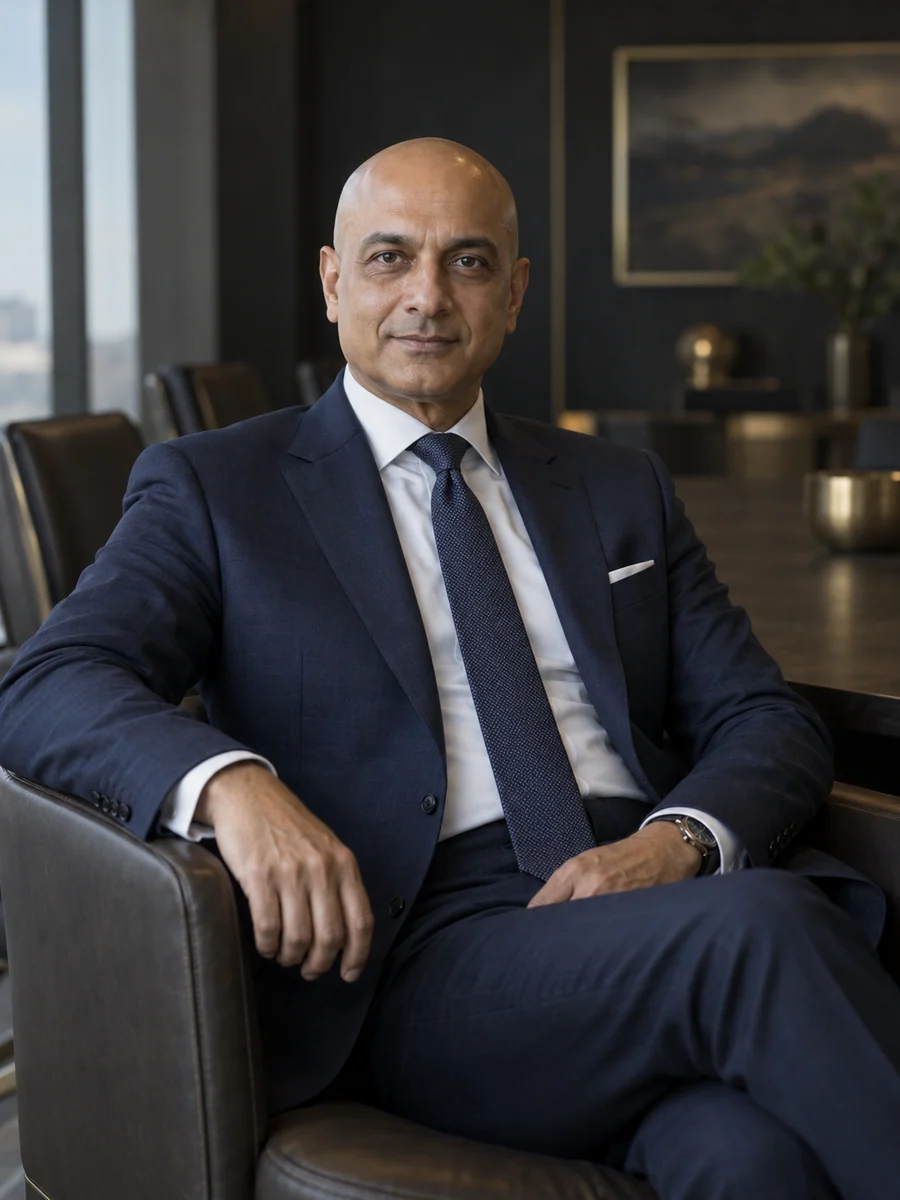
In my own words
The feature that looks persuasive in a property presentation may need a different explanation when an occupier imagines an ordinary Tuesday. I want the proposition to survive that change of perspective, including the conditions under which the building can actually be used.
Pranav Veldhankar
Education
Formation
- Postgraduate qualification in marketingSuryavel Institute1994
- Degree in commerceSuryavel Institute1992
Working languagesEnglish · Hindi · Telugu