Pranav VeldhankarLeadership review 2026

Leadership review

Pranav Veldhankar

Chief Marketing Officer · India

An office proposition should describe the working day, not stop at the building.

Open to
  • Board appointments
  • Advisory roles
  • Speaking invitations
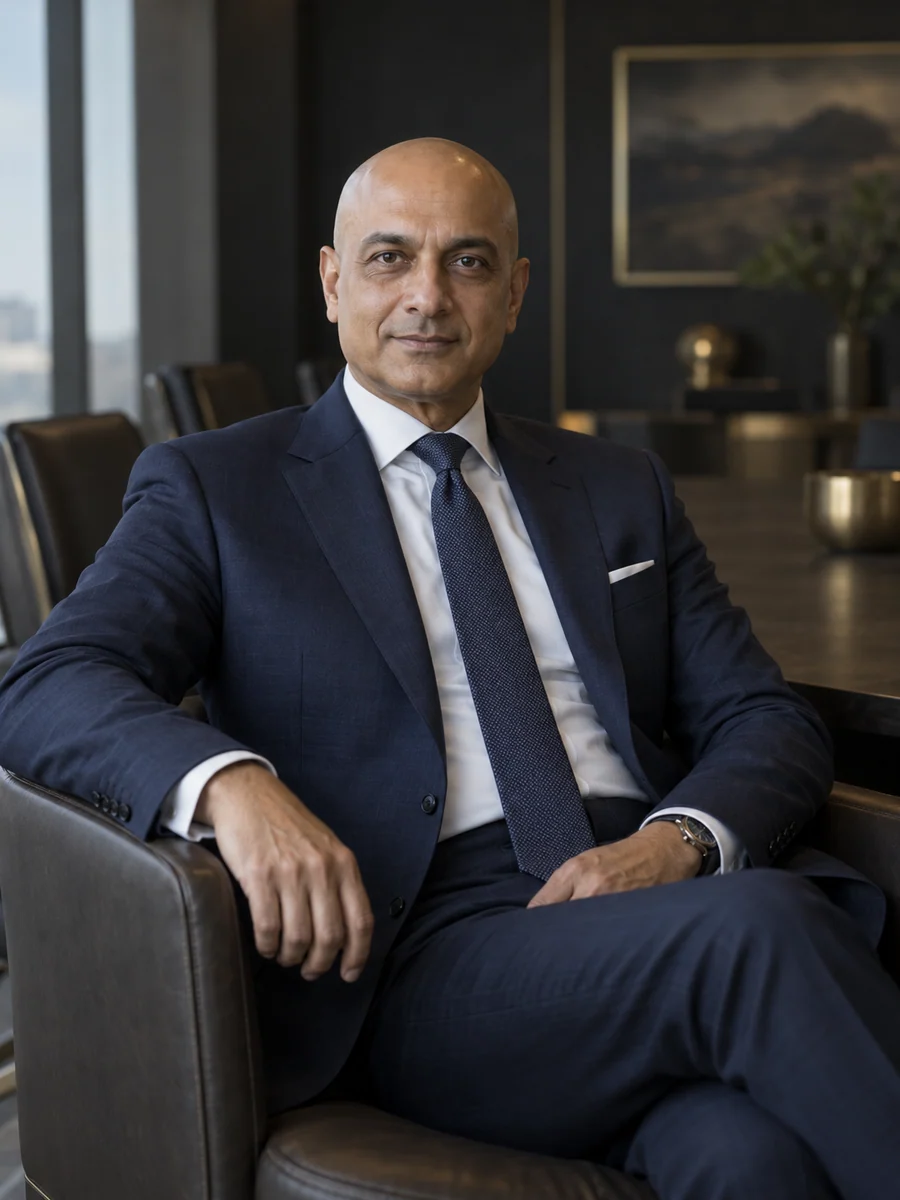
Portrait of Pranav Veldhankar

An office proposition should describe the working day, not stop at the building.

A prospective occupier rarely arrives with only a requirement for floor space. They also bring patterns of arrival, visitors, shared facilities and internal decisions about how their people will work. My role is to make the commercial proposition intelligible at that level without suggesting that marketing can settle every operating or contractual question. A good introduction helps the right conversation begin, with the building's actual features and the occupier's unresolved requirements both visible.

I am CMO of fictional Neravil Estates in Bengaluru. The group operates twenty-two completed office assets in three Indian cities, with ₹1,760 Cr FY2025–26 revenue and 1,420 employees. My own remit is thirty-six marketing employees, five direct reports, fourteen agency personnel separately and ₹42 Cr marketing authority for FY2026–27. I report to Ila Venkare. Dev Talwankar leads leasing negotiations and approved commercial terms; construction, asset operations and capital decisions belong to other colleagues.

Thirty-two years of research and marketing have made me attentive to the distance between an attractive building description and a useful occupier discussion. I began with commercial-property research in Hyderabad, then joined Neravil in July 2000 and developed through proposition, research and group-strategy roles. Since becoming CMO in July 2019, I have tried to make the marketing account more specific about use, evidence and the handover to the people who can answer the next question.

Factsheets organised around the way the asset is used

A review of eighteen asset factsheets led to eleven revisions and seven retained versions. Twenty-four selected facilities and HR conversations helped us identify where a uniform presentation concealed different access arrangements. Operations colleagues supplied the actual building account. I accepted less uniformity across the brochures because a repeated phrase could give an occupier confidence about an arrangement that still needed discussion.

A virtual tour that distinguishes what exists from what is imagined

Thirty-six proposed tour stops became twenty-two presentations of current physical features, eight clearly identified illustrative fit-outs and six removals. The smaller experience was less seamless, but it preserved a distinction important to the next discussion. Marketing could explain a possible use without allowing a visualisation to stand in for a completed space or an approved construction commitment.

An enquiry account prepared for a leasing conversation

Of forty-two reviewed enquiries, eighteen were ready for a leasing specialist, fourteen needed a clearer space brief and ten did not fit the current proposition. I chose to report those categories separately instead of treating the total as evidence of near-term occupied space. The exercise changed the handover and the questions asked beforehand; it did not establish a lease, a conversion uplift or an attributed revenue result.

Current focus

I am reviewing an eight-month pilot of shared professional and social events begun in May 2026. Of twenty planned sessions, twelve have taken place, five were rescheduled and three cancelled by October. The twelve completed sessions recorded 296 registrations and 187 attendances; those are event entries, not unique people. I want the next decision to reflect actual participation and asset-team feedback rather than let an attractive calendar stand in for a workplace community. The programme remains unfinished, with no claim about retention, productivity or tenant renewal.

Conversations I welcome

I am interested in a considered first non-executive contribution, bounded advisory discussions and professional sessions on occupier propositions. Any continuing role would require employer consent, relationship review, appropriate induction and a workable calendar. My experience is in market interpretation and communication; I would not present it as property valuation, engineering, financial or legal expertise.

Highlights

I learned to keep the occupier's unanswered question in the record

36

Marketing employees

Five direct reports; fourteen agency personnel separately

₹42 Cr

FY2026–27 marketing authority

Capital commitments, asset operations and leasing terms excluded

32 years

Property-market research and communication

Commercial research through group marketing leadership, July 1994 onwards

A letter from the chief marketing officer

Dear reader,

Portrait of Pranav Veldhankar

The feature that looks persuasive in a property presentation may need a different explanation when an occupier imagines an ordinary Tuesday. I want the proposition to survive that change of perspective, including the conditions under which the building can actually be used.

My first commercial-property research notes were less elegant than the presentations they supported. A building could be described through its location, area and facilities, while the person considering it asked about something more particular: how a late shift would arrive, what a visitor would encounter or which part of an arrangement needed to be agreed before the space could be used. I learned to keep those questions in the record instead of smoothing them away to make the asset easier to describe. They did not weaken the proposition. They identified the conversation it needed to support.

Pranav Veldhankar

Chief Marketing Officer

Strategic priorities

Where I focus my leadership.

Performance

What the priorities delivered.

Priority outcome 01

Replacing a uniform asset description with a usable account of access

In September 2022 I approved a fourteen-week, ₹1.4 Cr programme to review eighteen office-asset factsheets. The portfolio presentation had a consistent vocabulary, which made the group easy to recognise. It was less useful when prospective occupiers asked how the different buildings would work for their actual arrival patterns, visitors and extended hours. A shared phrase could describe a feature while leaving the arrangement around its use unclear. We held twenty-four selected conversations with facilities and HR professionals who were considering workspace requirements. Those discussions were not a representative measure of all occupiers. They identified questions that our existing sheets did not answer consistently. Asset operations supplied the building-specific account, including the arrangements that needed further discussion. The marketing team preferred a common paragraph across the portfolio because it kept the documents short and made later updates easier. I chose to preserve the differences that could affect an occupier's preliminary assessment. Eleven factsheets were rewritten and seven retained after review. The revised material distinguished an available feature from the conditions under which it could be used. Where a question required a building-team discussion, we said so rather than invent a universal answer. We did not publish assumed commuting times or claim that an access arrangement would improve employee productivity. My authority covered the research, writing and distribution of the material; the operating policy remained with the asset team. The result was a less uniform set of documents and a more exact starting point for an enquiry. I accepted the additional coordination needed to maintain differences between buildings. We did not measure a causal effect on leasing or treat the eleven revisions as eleven commercial wins. The decision changed what I expect a portfolio account to do. Consistency should help someone find the relevant facts, but it should not make different operating conditions appear identical. The factsheet had to support an ordinary working-day question, not simply look convincing when all eighteen covers were placed beside one another.

Priority outcome 02

Interrupting the virtual tour where the physical evidence stopped

Our March 2023 virtual-tour programme had a twelve-week timetable and ₹2.2 Cr marketing authority. The creative proposal used thirty-six stops to move a prospective occupier through buildings and possible workspace arrangements. The tour was visually persuasive. The difficulty was that completed physical features and illustrative fit-outs sat within a similar treatment, making the transition between what existed and what might be arranged too easy to miss. The production team wanted to preserve the continuity of the experience. They argued that a repeated explanation would make the tour feel less immersive. Leasing colleagues wanted a clearer account of what they would be expected to answer when the viewer made contact. I asked the asset and design teams to classify the proposed stops, then reviewed how each classification would be understood within the tour itself. A note separated from the relevant image would not necessarily resolve the impression created at the point of viewing. We retained twenty-two stops showing current physical features. Eight illustrative fit-outs remained with explicit identification, and six stops were removed. The classification described the material in the tour; it did not approve a future construction commitment or settle what any particular occupier could contract for. Design and construction colleagues retained those responsibilities. My team adjusted the presentation and accepted that the resulting sequence would contain deliberate interruptions to its visual continuity. The narrower tour gave up some of the seamlessness that had made the initial proposal attractive. It also gave the leasing team a more defensible starting point for a conversation about actual space and possible use. I do not claim that the change increased conversion or eliminated every misunderstanding. The supported result is the revised set of stops and the distinction made visible in them. The experience taught me to review a visualisation through the inference it invites, not only through the accuracy of each image considered on its own. A technically labelled picture can still sit within a sequence that encourages the wrong conclusion if the transition is not intelligible to the viewer.

Priority outcome 03

Taking enquiries out of a single success total before the leasing handover

In February 2024 I authorised a ten-week, ₹1.1 Cr review of how marketing prepared office enquiries for leasing colleagues. The campaign report could show a substantial number of contacts, but that total did not explain what the next conversation required. Some prospective occupiers had a developed brief. Others were still defining their space needs, and some were considering arrangements outside the assets currently being offered. We examined forty-two enquiries from the selected review period. Eighteen had enough information for a leasing specialist, fourteen needed a clearer space brief and ten were outside the current proposition. These were working categories for a handover, not predictions of which organisation would eventually sign a lease. Dev Talwankar's team retained responsibility for qualification in its commercial sense, approved rents and negotiation. Marketing could prepare a better account of the question without taking ownership of the decision that followed. The campaign team preferred the simpler total because it made activity easy to compare across periods. Leasing colleagues described the repeated work involved when a contact arrived without enough context. I asked the team to report the categories and the missing questions separately. The change reduced the headline figure presented as ready for immediate specialist discussion. It also required marketing to do more preparatory work before treating a contact as successfully handed over. I accepted that the report would look less expansive. A total of forty-two contacts was not forty-two likely transactions, still less forty-two instances of occupied space. The result was a revised handover record and a clearer basis for the next conversation. We did not run an evaluation that could establish a conversion uplift or attributed rental income. My lesson concerned accountability between functions: a marketing report should tell the receiving colleague something useful about the work they are being asked to undertake. When a large activity number conceals fundamentally different starting points, it can make both the campaign account and the commercial forecast less informative.

Priority outcome 04

Reducing the tenant-story programme when permission did not support the planned account

The June 2025 tenant-story programme had twenty weeks and ₹1.8 Cr of marketing authority. We proposed nine accounts of how people used workspace across the portfolio. The creative ambition was to make the buildings more tangible through experience rather than repeat asset specifications. That ambition created a responsibility to establish whose experience was being described, what could be attributed and whether the proposed use had actually been agreed. Five proposals received the required permission, three were declined and one remained pending. Within the approved work, thirty-two selected employee interviews informed the account. We used only material approved for the stated purpose. Those interviews did not represent an entire employer's view, prove a productivity effect or permit us to imply a wider corporate endorsement. The subject organisation's review and the individual permissions both mattered to what the final story could responsibly contain. The campaign team was disappointed because one of the declined proposals would have given the programme an attractive opening. They suggested retaining the broad story without the recognisable details. I did not consider an appealing narrative sufficient reason to find another route around the scope of the permission. We reduced the programme to the five supported accounts and left the pending proposal outside the release. The choice gave the creative team fewer settings and a less uniform representation of the portfolio. The consequence was a smaller campaign, with the boundaries of attribution retained. I did not report the declined proposals as a failure by the tenant or use their absence to imply dissatisfaction. A refusal can reflect considerations that are not ours to interpret publicly. The supported result is five permissioned stories, with no claim that the interviews establish improved employee performance or company-wide endorsement. For me, the case concerns the difference between having access to an experience and having the right to turn it into a brand account. The latter requires a specific agreement that remains meaningful even when a preferred creative plan has to change.

Priority outcome 05

Counting attendance before calling the programme a workplace community

In May 2026 I authorised an eight-month, ₹1.6 Cr pilot of shared professional and social events across selected office assets. The proposed calendar contained twenty sessions. The idea was to give occupiers opportunities to meet beyond their own offices, but the campaign language moved quickly from describing a programme to suggesting that a workplace community had already been created. I wanted the evaluation to distinguish the invitation, attendance and a continuing relationship between participants. Asset teams retained responsibility for spaces, access and the operating conditions of each event. Marketing owned the proposition, promotion and the pilot account. By October, twelve sessions had taken place, five had been rescheduled and three cancelled. Across the twelve completed sessions, the programme recorded 296 registrations and 187 attendances. Those were event entries, not a count of unique people, because somebody could register for or attend more than one session. We did not treat the difference as a measure of dissatisfaction or assume a reason for each absence. The campaign team wanted to use the registration total as evidence of a growing community. Some asset colleagues instead questioned whether the programme's timing fitted the working patterns of the people it hoped to reach. I chose to report completed sessions and attendance separately, then review the remaining calendar with the asset teams. The decision gave up an expansive headline and delayed part of the planned programme. It also kept the practical question open: which occasions did occupiers actually find worth attending, and what would they want to continue? The pilot remains unfinished. Its record does not establish better employee retention, productivity, tenant renewal or relationships that continued after an event. Those outcomes cannot be inferred from a booking list. I consider the narrower account more useful because it allows the next decision to concern the programme people are using rather than the story we would like the calendar to tell. The experience has made me cautious about calling a property a community on the strength of activity organised by its owner. A place can offer opportunities for connection; the lasting meaning of those opportunities belongs to the people who choose to take part.

Stakeholder voices

What those I have served alongside say.

Pranav's enquiry account gave my team a clearer starting point. He kept the missing brief visible instead of describing every contact as ready for the same commercial discussion.
Dev TalwankarFictional leasing director, Neravil Estates
He was willing to release a smaller virtual tour when the proposed sequence blurred current features with possible arrangements. The distinction survived the creative review.
Ila VenkareFictional chief executive, Neravil Estates

Outlook

Perspectives on what comes next.

An invitation

Contact

I am interested in a considered first non-executive contribution, bounded advisory discussions and professional sessions on occupier propositions. Any continuing role would require employer consent, relationship review, appropriate induction and a workable calendar. My experience is in market interpretation and communication; I would not present it as property valuation, engineering, financial or legal expertise.

Open to
  • Board appointments
  • Advisory roles
  • Speaking invitations

office@pranavveldhankar.example