The person behind the perspective
I learnt to look beyond the label on the proposal
I grew up in a Parsi family in Navsari and completed a Bachelor of Commerce at Temvqari College of Commerce in June 1995. In July I joined Zavqemi Event Services as a programme commercial coordinator. The business had 48 employees and ₹6.8 crore FY 1996 revenue. I worked in a five-person group under the commercial manager, with no direct reports or delegated expense. My work connected the commercial description of a programme with the arrangements needed to deliver it. The gap between those two accounts became the starting point of my later interest in strategy.
An event proposal could sound straightforward while the operating detail contained several different responsibilities. A venue could have more than one usable room. A touring production could need an updated planning record in a place where connectivity was uncertain. A customer could welcome a new service while expecting an existing specialist to retain part of the work. I did not own those decisions in a junior role, but I learned to preserve the questions instead of letting a convenient label resolve them on paper.
I became planning account lead in May 2002. I managed nine colleagues through two leads and ₹1.4 crore annual expense, reporting to the commercial director. Zavqemi had 120 employees and ₹27 crore FY 2003 revenue. The role brought responsibility for an account of the work that other people could plan against. I had to explain why a customer's request might require a different arrangement from the one implied by the first conversation. That was sometimes commercially awkward, but it was more useful than discovering the difference only after a commitment had been made.
In September 2010 I moved to Jaipur to join Tavzuni Production Software as business development manager. The company had 75 employees and ₹18 crore FY 2011 revenue. I led six colleagues through two leads with ₹1.1 crore annual expense and reported to the CEO. Software offered a way to organise planning records across productions and venues, but it did not erase the differences in how customers worked. I needed to understand those differences before deciding that a feature request represented a market we should enter.
The move from services to software also changed the temptation in a growth proposal. A business could see that it already held one part of a customer's workflow and assume that the neighbouring part was a natural extension. Sometimes the connection was useful. Sometimes it carried another commercial model, another set of obligations or a different expectation of support. I began to ask what the company would have to become for the proposal to work, rather than only what the product could be made to include.
In June 2016 I became head of commercial planning. I led nine colleagues through three leads, managed ₹2.9 crore annual function expense and reported to the CEO. Tavzuni had 135 employees and ₹43 crore FY 2017 revenue. I worked more closely with finance and product leaders to explain the consequences of market choices. A seasonal customer pattern could affect receipts without reducing the need for year-round service. A larger planning population could make migration more demanding even when the number of customer organisations remained the same.
I became CSO in January 2022. Today I lead 12 strategy and partnership colleagues through three leads within ₹4.8 crore FY 2026–27 expense. The company has 180 employees and 112 organisational clients, with ₹64 crore FY 2026 revenue and ₹7.2 crore operating profit. CEO Naina Qevsuri is my reporting line, and Thomas Zevqari is CTO. I develop recommendations, but I do not hold the board's investment authority, the finance function's liquidity responsibility or the customer's production duties. Those boundaries matter when a proposal is described as my strategy.
One decision I reconsidered concerned ticketing. I had supported moving into a ticket engine after hearing interest from venues. A review of 27 found that 21 wanted integration with their incumbent system and six wanted a replacement. I withdrew the ₹2.4 crore proposal before commitment and kept ₹38 lakh discovery expense in the account. A separate ₹0.9 crore integration programme remained unfinished. The customer interest had been real, but the proposition I initially inferred from it was not the one most of the reviewed venues were asking us to provide.
That correction sits beside other choices about seasonal receipts, room-level migration, archive permissions and offline access to planning records. I want the cases to show what changed in the proposed commitment, not merely repeat that listening to customers is important. Each decision left something unresolved or gave up an attractive expansion. I hold no statutory directorship and would approach a first outside role with the same willingness to identify what I have not yet understood. Fictional IICA preparation includes May 2026 registration and a September 2026 assessment pass without an exemption. It does not remove the need for company-specific learning, independence review and sufficient time to serve.
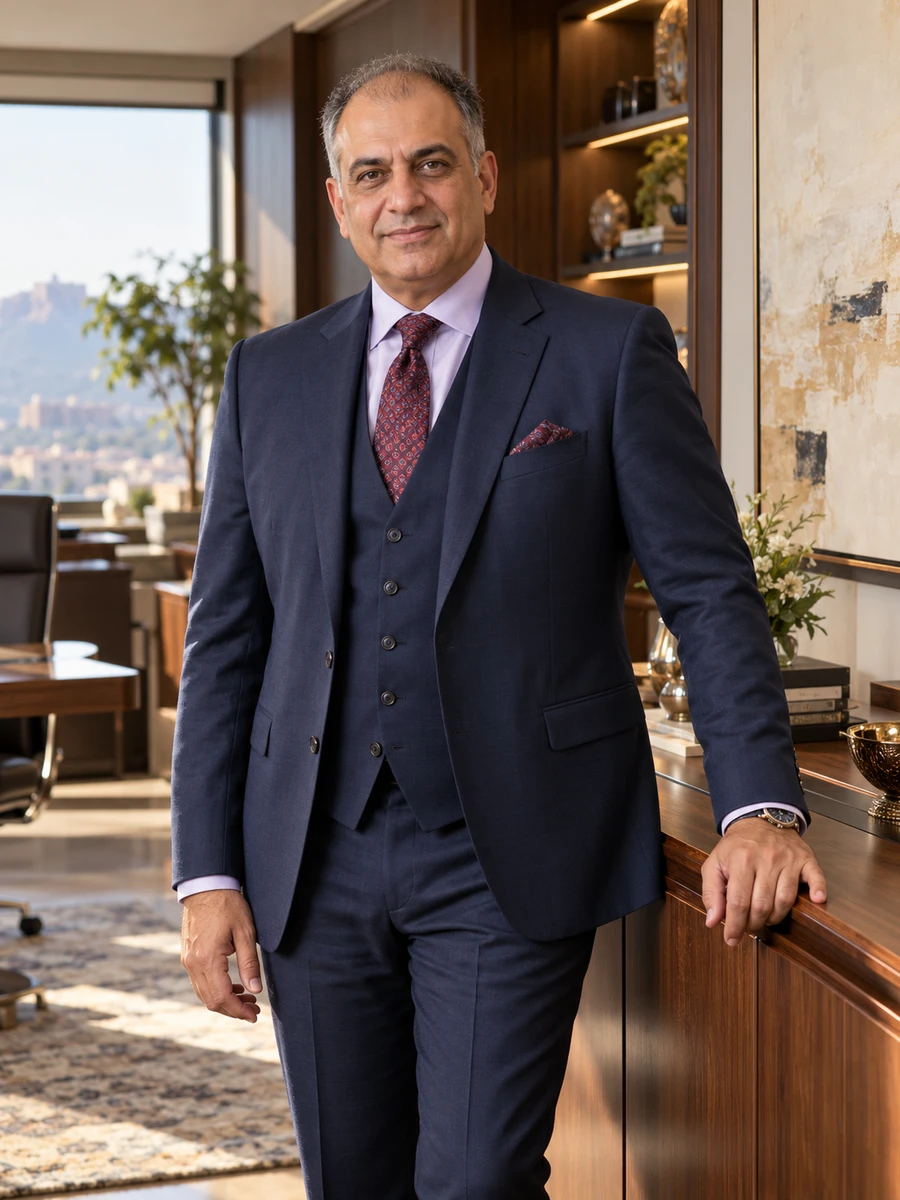
In my own words
I want a growth proposal to identify the commitment hidden inside the market label. A theatre company may want its existing ticketing system connected rather than replaced. A seasonal receipt does not make support a seasonal obligation. A venue can contain several rooms with different availability. These distinctions change which product, investment and operating arrangement make sense. My contribution is to keep them visible before the appeal of an adjacent market turns a different business into what looks like a simple extension of our own.
Cyrus Tevqazi
Education
Formation
- Bachelor of CommerceTemvqari College of Commerce1995
Working languagesGujarati · Hindi · English