The person behind the perspective
Learning what a tidy dataset can leave behind
I grew up in Bhuj and studied statistics at the fictional Qerzomvi Institute of Statistics. My full-time degree finished in May 1998, and I joined Vaqtemri Statistical Services that July. It was a forty-two-person regional practice recording ₹7 crore FY1999 revenue. I prepared datasets under a senior analyst, with no direct reports or delegated budget. The first lesson was less sophisticated than the models I had studied: a value separated from its unit, qualification or collection history could become much more certain in the recipient's mind than it had been in the original record.
In June 2004 I became a data-quality lead. Vaqtemri had sixty-eight employees and ₹14 crore FY2005 revenue. I led four colleagues under the analytical services director, with ₹42 lakh annual function expense. The work required attention to how records changed as they passed between teams. I learned to distinguish correcting a demonstrable transcription problem from silently making a technical judgement about an observation. A useful data process needed an owner for each kind of decision, including the cases where the analyst should preserve uncertainty and ask for specialist review.
I joined Pevqazri in September 2010 as laboratory information manager. Its eighty-nine employees recorded ₹25 crore FY2011 revenue. I led six colleagues, reported to the laboratory operations director and managed ₹88 lakh annual expense. The move brought me closer to the relationship between a physical specimen, an observation and a report. Repeated measurements could have legitimate explanations, but the explanation had to travel with the evidence. I did not conduct every method or approve material suitability. I was responsible for keeping the data pathway from obscuring the decisions of those who did.
My January 2016 appointment as director of analytical data expanded the team to eleven and the annual expense to ₹1.8 crore. Pevqazri then employed 118 people and recorded ₹39 crore FY2017 revenue. In 2019 I supported a summary rule that selected the highest value from a repeated series. It looked like a straightforward way to give a commercial colleague one answer. Imran challenged the missing history. A review of ninety series distinguished sixty-one single-observation sets from twenty-nine repeated series; eight of the latter still lacked a documented explanation. I accepted ₹28 lakh of correction work and withdrew the rule.
I became CDO in May 2021. The present practice employs 156 people and records ₹61 crore FY2026 revenue, with ₹43 crore laboratory services and ₹18 crore data and evidence work. I report to Devika Qazvelri and lead eighteen colleagues through three leads. The ₹3.7 crore FY2026–27 function expense is distinct from the ₹1.9 crore instrument and data programme. Founder interests hold 44%, an employee vehicle 36% and a private investor 20%. My 0.03% holding sits within the employee allocation. I have no statutory directorship, and the role does not make me the owner of every technical conclusion produced by the practice.
The later cases ask what a data product allows a reader to infer. A below-limit qualifier should not disappear because an export expects a numeric cell. A model assessed on specimens from familiar batches may answer a different question from its proposed use on a new batch. A rounded display can create an apparent pass or fail that the qualified reporting process has not authorised. A commercially attractive archive can contain different permissions and a very selective set of projects. In each case, I work with the responsible specialist rather than let a convenient transformation become an unrecorded decision.
I now live in Davanagere and work in English, Gujarati, Hindi and Kannada. The company and all projects on this site are invented. There is no claimed accreditation, real construction approval or material-performance recommendation. The technical examples describe responsibilities around evidence; they are not laboratory procedures or instructions for accepting a building material. Imran's professional remit remains visible because the credibility of a CDO account depends partly on stating where the data function stops.
I registered in the IICA databank in August 2026 in this fictional preparation record; the proficiency assessment remains unfinished and I claim no exemption. I would initially reserve twenty-one days for a possible first board role, subject to induction, reading, travel, employer consent and exceptional demands. My contribution would concern the conclusions an enterprise permits itself to draw from evidence. I would bring the highest-result mistake into that discussion, because I know how easily an apparently helpful product choice can erase the history a responsible decision still needs.
In my own words
The data function should make it harder for a convenient representation to become an unjustified conclusion. I want a reader to see why a test was repeated, what a qualified result means and which observations a model has already encountered. That work supports professional judgement; it does not transfer the laboratory's authority to a dashboard.
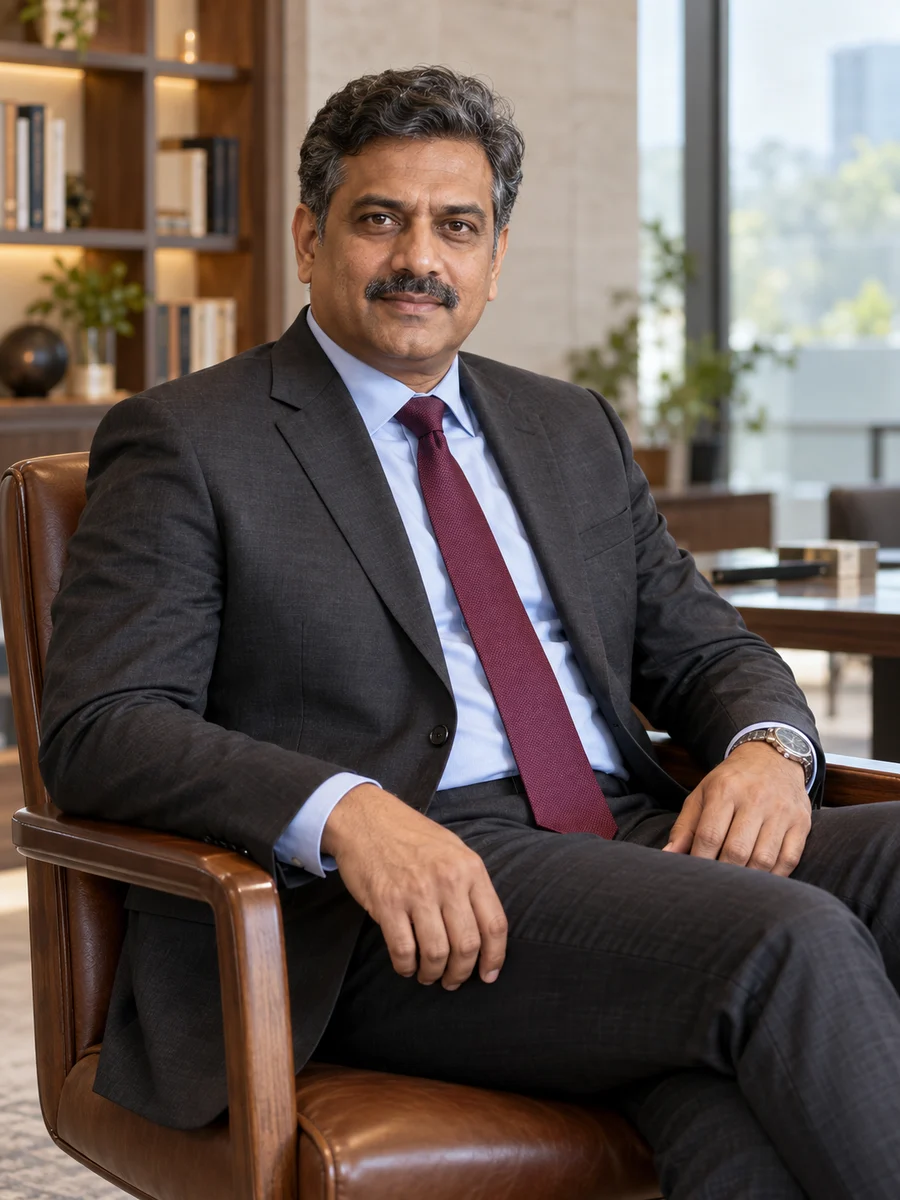
Samar Qevzatri
Education
Formation
- Bachelor of Science in StatisticsQerzomvi Institute of Statistics1998
Working languagesEnglish · Gujarati · Hindi · Kannada