The person behind the perspective
I learnt to ask what happened after the programme ended
I grew up in a Muslim family in Lucknow and completed a Bachelor of Commerce in Marketing at Tevquni College of Commerce in June 1998. The following month I joined Zeqvari Learning Works as an account coordinator. I worked in a six-person group, reported to an account manager and had no direct reports or budget authority. The company employed 55 people and recorded ₹9.2 crore revenue in FY 1999. My work was close to the practical arrangements around a learning programme: who was expected to attend, what the client wanted to change and which questions returned after the room had emptied.
The first lesson was that a completed activity could have different meanings for different people. A supplier could be satisfied that the programme had run as agreed. A manager might still be waiting to see whether staff handled a difficult conversation differently. A participant might have enjoyed the session while lacking an opportunity to use it. I did not own evaluation methods in that junior role, but I began to notice when the account summary answered a more convenient question than the client had asked.
In June 2004 I became client marketing lead at Zeqvari. I managed eight colleagues through two leads and ₹1.2 crore annual spend, reporting to the commercial director. By FY 2005 the business had 150 employees and ₹31 crore revenue. I had to choose which examples and arguments deserved space in proposals. A clear commercial account helped people understand relevance, but an account could become misleading when it silently moved from attendance to learning or from learning to workplace performance. I began asking specialists to explain the distinction before I edited it out for brevity.
I moved to Mysuru in September 2010 to join Tazvuri Simulation Systems as product marketing manager. The business then had 110 employees and ₹35 crore FY 2011 revenue. I led nine colleagues through two leads with ₹2.1 crore annual expense and reported to the marketing director. Software brought a new kind of evidence into the conversation. We could see sessions, attempts and completion within a scenario. Those records were useful, but they did not automatically reveal the meaning of a person's participation or what happened when they returned to work.
My responsibility widened again in April 2016 when I became head of market development. I led 17 people through three leads, managed ₹5.8 crore annual expense and reported to the CEO. The company had 230 employees and ₹87 crore FY 2017 revenue. I worked on explaining the product to customers with different learning arrangements, including the role of managers and facilitators around the software. The task was not simply to replace a classroom story with a digital one. It was to describe what the customer would have to organise for the product to be useful.
I became CMO in February 2022. Today I lead 24 colleagues through three heads within a ₹9.6 crore FY 2026–27 budget. Tazvuri has 310 employees and 38 enterprise clients, with FY 2026 revenue of ₹118 crore and operating profit of ₹14 crore. CEO Neel Zevqimi is my reporting line. Meera Vaqsumi heads learning evaluation, and sales owns commercial contracts. My authority concerns the marketing account and its resources. It does not turn me into the owner of every client outcome or the professional arbiter of every learning method.
The most useful correction in this role concerned my own approval. I had accepted a headline about 40% fewer mistakes based on 80 learners' average errors falling from 12 to 7.2 in a defined scenario. The result was real within the invented case, but we had neither a comparison group nor workplace follow-up. The headline invited a broader reading than the evidence supported. Revising 14 assets cost ₹18 lakh. I could not resolve the problem by saying that a specialist should have supplied a longer caveat; I had chosen to publish the shorter promise.
Subsequent decisions have made me more attentive to the population hidden behind a percentage and the person hidden behind an activity count. Eighty-five positive replies did not tell us what 300 silent participants thought. Three hundred and sixty sessions did not mean 360 different people. Provisioned accounts did not all represent active users. Each correction affected a different commercial choice, from research investment to event expansion and customer communication. I want those choices preserved as decisions, not folded into a general claim that more cautious language must always sell better.
I hold no statutory board seat. My June 2026 IICA databank registration is part of this invented career; the proficiency assessment is unfinished and I claim no exemption. I would need to learn the whole enterprise before contributing responsibly to an outside board, including financial and sector questions beyond marketing. My experience offers a way to examine how a business turns observations into promises. It also offers a reason to recognise when another discipline should lead the enquiry and when the evidence still leaves the decision open.
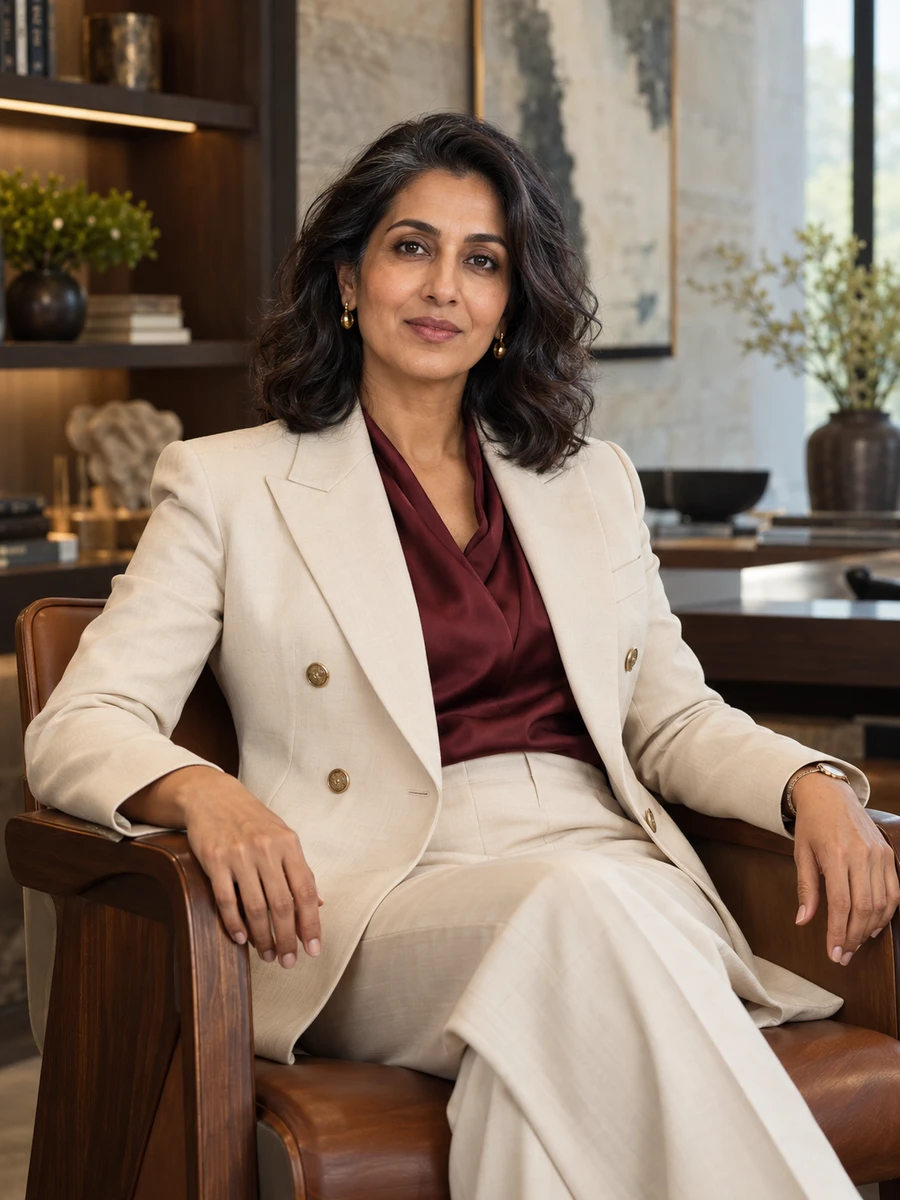
In my own words
I want the commercial account of a learning product to say what people practised, what was observed and what remains unknown about their work afterwards. A repeat visit can indicate interest without adding a new person. A favourable survey can describe its respondents without speaking for everyone who stayed silent. These distinctions make the proposition more useful to a buyer because they reveal the work still needed around the software. My role is to keep that work visible when a shorter headline would be easier to sell.
Zoya Qelzuri
Education
Formation
- Bachelor of Commerce in MarketingTevquni College of Commerce1998
Working languagesHindi · Urdu · English · Kannada — working