The person behind the perspective
Learning to hear the question behind the completed process
I grew up in Shillong and completed a Bachelor of Arts in Social Work at the fictional Velqorzi College of Social Studies in May 1998. My first appointment began that July at Nerqozvi People Advisory. I helped prepare employee records and organise conversations under a people-services supervisor. I had no authority to decide another person's employment terms. The work taught me that a process can look complete to the person administering it while leaving the employee uncertain about what has actually been agreed.
At FY2001 scale Nerqozvi employed 48 people and recorded ₹9 crore revenue. I was an individual contributor without a delegated spending budget. I learned to keep a person's question intact when it moved between colleagues, rather than reduce it to the category most convenient for the office. I also learned the limits of an administrative role: some questions belonged with an employment adviser, a manager or another qualified professional. Helping someone reach the right decision-maker was more useful than supplying an answer I had no authority to give.
In September 2004 I became a people partner. The firm had 91 employees and ₹24 crore FY2008 revenue. I led five colleagues within ₹38 lakh annual expense, reporting to the people-services director. The role involved explaining the practical consequences of proposed arrangements and helping managers distinguish a policy from the individual decision it would create. I became interested in field work because the distance between an office assumption and an employee's day could be particularly large when the person was travelling, working with a customer or relying on a supervisor in another location.
I joined Qelmorsi Fleet Support in January 2011 as regional HR manager. At FY2013 scale the cooperative employed 350 people and recorded ₹87 crore revenue. I led nine HR colleagues within ₹1.1 crore annual expense under the head of people. The business combined roadside commercial-vehicle support with workshop services. It was owned by technician members, but not every employee was a member. That distinction mattered: ownership participation did not remove the need to examine how employment arrangements affected colleagues whose relationship with the enterprise was different.
In April 2015 I became head of people. The company reached 578 employees and ₹151 crore FY2018 revenue; my team numbered fifteen with ₹2.3 crore annual function expense. During that period I supported a progression route that made supervision the main way for experienced technicians to advance. Twelve colleagues moved through it. The subsequent review showed that a senior title did not mean everyone wanted the work attached to it. Six returned to technical roles, four continued as supervisors and two remained in individual review. I accepted my part in having made the route too narrow before asking about their aspirations.
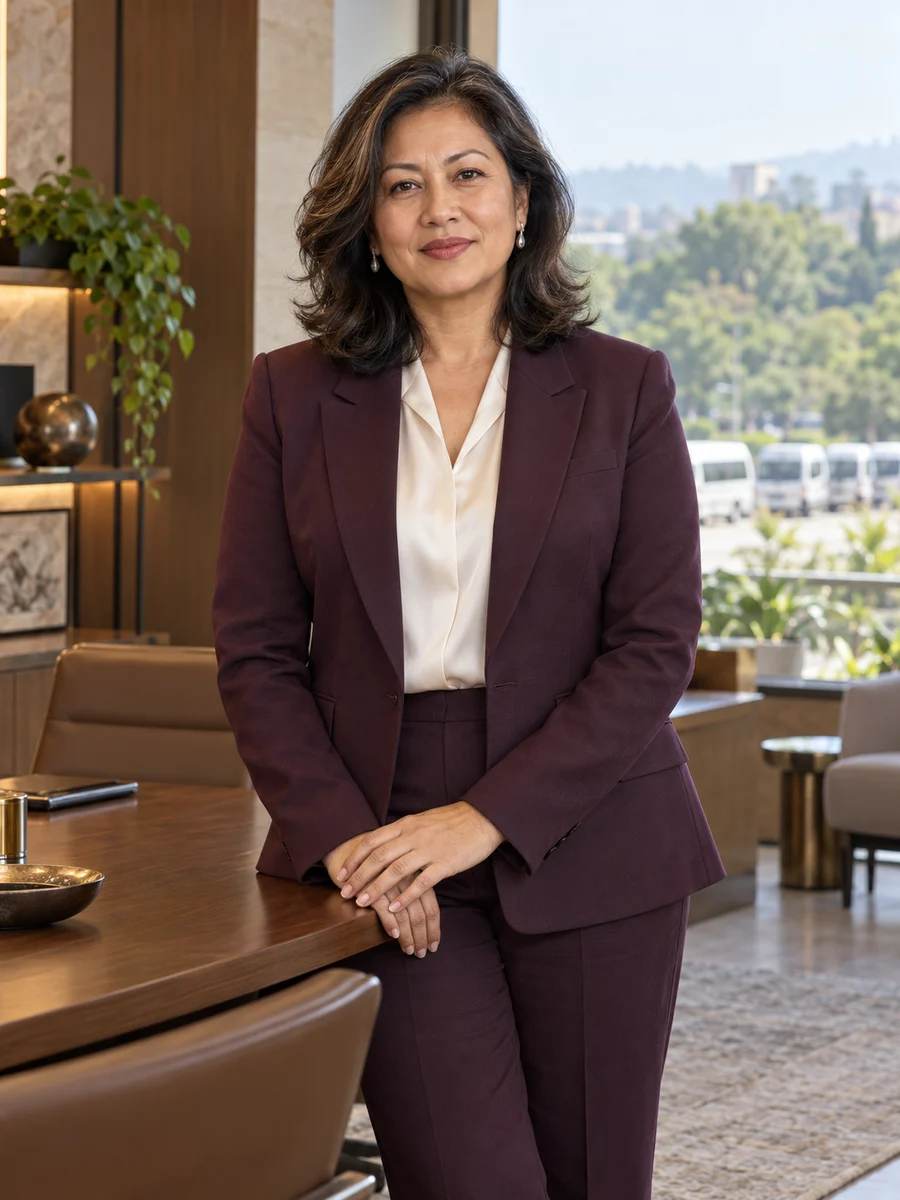
The CHRO appointment began in April 2020. Qelmorsi now employs 760 people, including 182 member technicians, and records ₹214 crore FY2026 revenue. I am a nonmember employee without an ownership interest. I lead 21 HR colleagues through three leads within ₹3.9 crore annual expense; the company's ₹55 crore employee cost is a separate enterprise figure. Aaron Qevnarti is CEO and Mina Qelzormi leads field operations. I work with them on people arrangements while operating and qualified professional colleagues retain their own responsibilities for service, technical work and specialist advice.
Recent cases concern travel funding, return-to-work arrangements, customer conduct and mentoring capacity. I want the employment account to include costs that can otherwise disappear into an employee's private life. A reimbursement promise still leaves someone funding a journey first. A return-to-work plan needs relevant functional guidance, but not every supervisor needs a diagnosis. A mentor cannot give careful coaching while being expected to carry an unchanged workload. A valuable customer may still ask the company to accept conditions it should decline. Each case requires a practical decision rather than a statement that people matter.
I work in English, Khasi and Hindi. I have presented people matters to the cooperative's governing body but hold no statutory company directorship. I have not yet registered in the IICA databank and do not claim an assessment pass or exemption. I am exploring a first company-board contribution with twenty-four days provisionally available. I would bring experience of skilled field work and member-owned employment relationships, while learning the prospective enterprise and its applicable governance framework. The contribution I value makes the consequences of a people decision clear enough that the business can choose and fund them openly.
In my own words
I once treated a supervisory title as the obvious next step for a strong technician. Several colleagues wanted a deeper craft career instead. That error taught me to ask what an employment arrangement requires a person to give up, including the work they value, the money they advance and the privacy they need while returning to a role.
Elena Qevnorsi
Working languagesEnglish · Khasi · Hindi