The person behind the perspective
The questions I learnt before choosing the data model
I grew up in a Sikh family in Patiala and studied at Tavqumi College of Statistics, completing a Bachelor of Science in June 1996 and a Master of Science in Applied Statistics in June 1998. The following month I joined Qevmari Sensory Research as a study-data analyst. The business employed 52 people and recorded ₹7.9 crore revenue for FY ending March 1999. I worked in a six-person study group under a research manager, with no direct reports or delegated budget. My job began with making the recorded observation intelligible to the people who would analyse it.
A research table could look orderly while leaving an important question unanswered. The same score might have been obtained early or late in a session. A blank might represent an omitted observation rather than a poor result. I learnt to ask colleagues about the study arrangements before deciding how to represent their records. I was not yet choosing the research programme, but I could see that apparently minor data decisions sometimes determined which explanation became easiest to offer afterwards.
I became research data lead in February 2005. Qevmari had grown to 135 employees with ₹26 crore FY 2006 revenue. I supervised 11 colleagues through two leads, managed ₹1.6 crore annual expense and reported to the research director. I now had to organise the work of explaining those ambiguities across several studies. A consistent data format was useful, but it could not make different experimental arrangements equivalent. The role taught me to budget for questions that emerged when the observations were examined, instead of treating every request for clarification as avoidable administrative delay.
In September 2011 I moved to Puducherry and joined Vemqari Formulation Software as head of data modelling. The company then had 85 employees and ₹22 crore FY 2012 revenue. I led 14 colleagues through two leads within ₹2.8 crore annual expense, reporting to the product director. Software could retain context more consistently than an improvised spreadsheet. It could also erase context at greater scale when a model or import treated unlike quantities as interchangeable. I wanted researchers to recognise their experimental choices in the product, rather than having to reconstruct them outside it.
My appointment as director of data methods began in June 2017. Vemqari had 160 employees and ₹57 crore FY 2018 revenue; I led 27 data colleagues through three heads, managed ₹6.7 crore annual expense and reported to the CEO. In 2019 I approved an explanation of a blend result that was too simple. Component A increased across four blends, but B decreased to keep the proportions at 100%, while C stayed fixed. The observed response did not isolate A's independent effect. Peter Qezvomi challenged the interpretation. I withdrew the claim and supported ₹32 lakh for review and a revised study design. The correction concerned my judgement, not a defect that could be assigned solely to a field or an analyst.
I became CDO in March 2022. I now lead 42 colleagues through four heads and report to CEO Anita Qevrasi. The FY 2026–27 data function has ₹12.4 crore operating expense and a separate ₹3.1 crore data-quality capital programme. Vemqari's 215 employees serve 48 client organisations. The business recorded ₹83 crore revenue and ₹9.8 crore operating profit for FY ending March 2026. Founders hold 55%, an employee trust 25% and a private family investment vehicle 20%. My trust-beneficiary interest is relevant to any future relationship assessment even though I hold no direct personal shares.
The role has required decisions about what the product should decline to conclude. In a sensory case, twelve panellists had assessed six products in an identical order. Seventy-two ratings gave us more observations without separating product from position. We postponed a ranking and funded another study. In a laboratory import, forty results below a quantification limit had become numeric zeroes. Restoring the bound made the data less convenient for a quick average but more faithful to what the laboratory had reported. Neither correction created a safety conclusion.
More recent work has examined the basis of quantities and the commercial meaning of a new feature. Two 100 kg ingredient lots with 12% and 15% moisture contain different dry masses. A software conversion cannot choose a suitable reformulation on a scientist's behalf. Similarly, twenty-one days of observations under one condition do not themselves establish a general shelf-life promise. We reduced the proposed feature's scope and its forecast, retaining the cost of work already undertaken. A narrower proposition can be the right decision without pretending that the business has lost nothing by changing course.
I have held no statutory board appointment. The fictional record includes IICA registration in April 2026 and a proficiency-assessment pass in August, with no exemption claimed. I would bring experience of the relationship between research design, software interpretation and resource choices to an outside board. I would also need to learn its finances, people, sector obligations and collective responsibilities. My current work offers useful questions; it does not confer scientific authority in every receiving industry or establish that a particular appointment would be appropriate.
In my own words
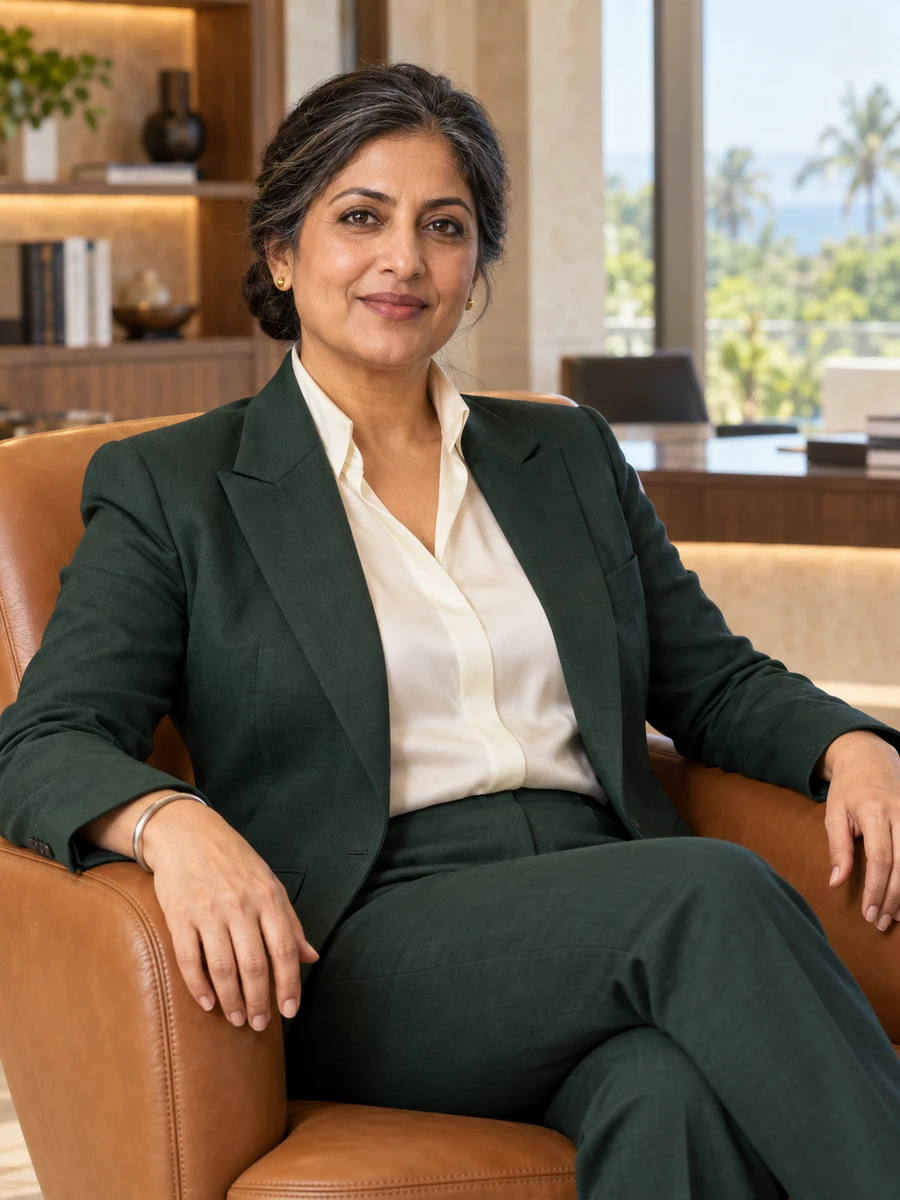
I want our software to carry the choices that made a research observation possible. A blend changes within a total. A panel evaluates products in an order. A laboratory can report a bound instead of an exact value. Those conditions should be available when a customer interprets the result, including when they make an attractive recommendation less certain. My responsibility is to fund and organise the data work that preserves them, while recognising where scientific judgement must lead.
Rupinder Sahlvethi
Education
Formation
- MSc in Applied StatisticsTavqumi College of Statistics1998
Working languagesPunjabi · Hindi · English · Tamil — conversational