The person behind the perspective
Learning what a current screen can leave behind
I grew up in Mumbai and completed a Bachelor of Science in Computing at the fictional Zelqorvi College of Computing in May 1996. I joined Qezmori Systems Services that July as a service analyst. The firm had thirty-one employees and ₹7 crore FY1999 revenue. I worked under a service manager without a delegated budget. The practical task was to understand a user's problem well enough to distinguish a system fault from a business question that required a different owner.
Early service work taught me that a screen could be functioning correctly according to its specification and still fail to represent what the user needed to know. I prepared incident records, reproduced reported behaviour and helped the responsible application team understand the sequence. I could explain what the software did, but I had no authority to decide a customer's commercial terms. Keeping that distinction clear became more important as I moved from responding to faults to influencing the design itself.
In September 2002 I became a business applications lead. At FY2006 scale Qezmori employed sixty-four people and recorded ₹21 crore revenue. I led six colleagues within ₹56 lakh annual team expense. The work brought application changes closer to the business owners who would use them. I learned to ask which event an update represented, who could approve it and whether an earlier state needed to remain available. Those questions were easier to agree before development than after a working feature had already become part of daily operations.
I joined Nerqavzi Salvage Exchange in January 2010 as IT manager. Its regional auction and yard-administration model was new to me. At FY2013 scale the enterprise had 131 employees and ₹34 crore revenue; my eleven-person team operated within ₹1.9 crore annual expense. I reported to the operations director and learned the difference between the value of vehicles passing through an auction and the commission or service income belonging to the agency. The systems had to support participants without implying that the agency owned or certified every asset.
In April 2016 I became IT director, a functional appointment without a statutory company seat. The business reached 221 employees and ₹63 crore FY2019 revenue; my team numbered nineteen with ₹4.1 crore annual expense. During that period I approved a catalogue design that replaced previous inspection descriptions with the latest version. Thirty-nine entries changed in a 240-lot catalogue, and twelve earlier versions could not be recovered. I had improved currency at the cost of preserving what bidders had been invited to consider. That mistake remains central to how I explain my judgement.
The repair required more than rebuilding a history table. Twenty-seven versions could be reconstructed from retained evidence, while the other twelve needed a commercial response. Nine lots were reoffered with fresh invitations and three withdrawn. We accepted ₹42 lakh repair cost and the limits of the surviving record. I learned that an honest account of missing evidence can be more useful than a complete-looking system populated with assumptions. Commercial owners retained the offer decisions; my responsibility was to make the underlying state dependable enough for them to act.
I became CIO in April 2021. Today I lead thirty-two colleagues through four leads within ₹8.2 crore annual operating expense, including ₹3.1 crore change programmes. CEO Maya Qevranti and COO Arun Velqomzi retain their enterprise and operating responsibilities. Nerqavzi employs 306 people and earns ₹92 crore FY2026 revenue, separate from ₹1,120 crore auction transaction value. Its industrial-services shareholder owns sixty per cent and a regional professional partnership forty per cent. I have no equity interest, and my technical remit does not confer settlement, title or roadworthiness authority.
Recent work concerns bidder changes, auction interruption, seller bank-detail changes and retention holds. I want the system to preserve the decision that belongs to each owner instead of treating every change as ordinary maintenance. I work in English, Hindi and Telugu. I registered in the IICA databank in February 2026, with the proficiency assessment still pending and no exemption claimed. I hold no statutory directorships and am exploring a first governance contribution, with eighteen days provisionally available and the actual requirements of any proposed appointment still to be reviewed.
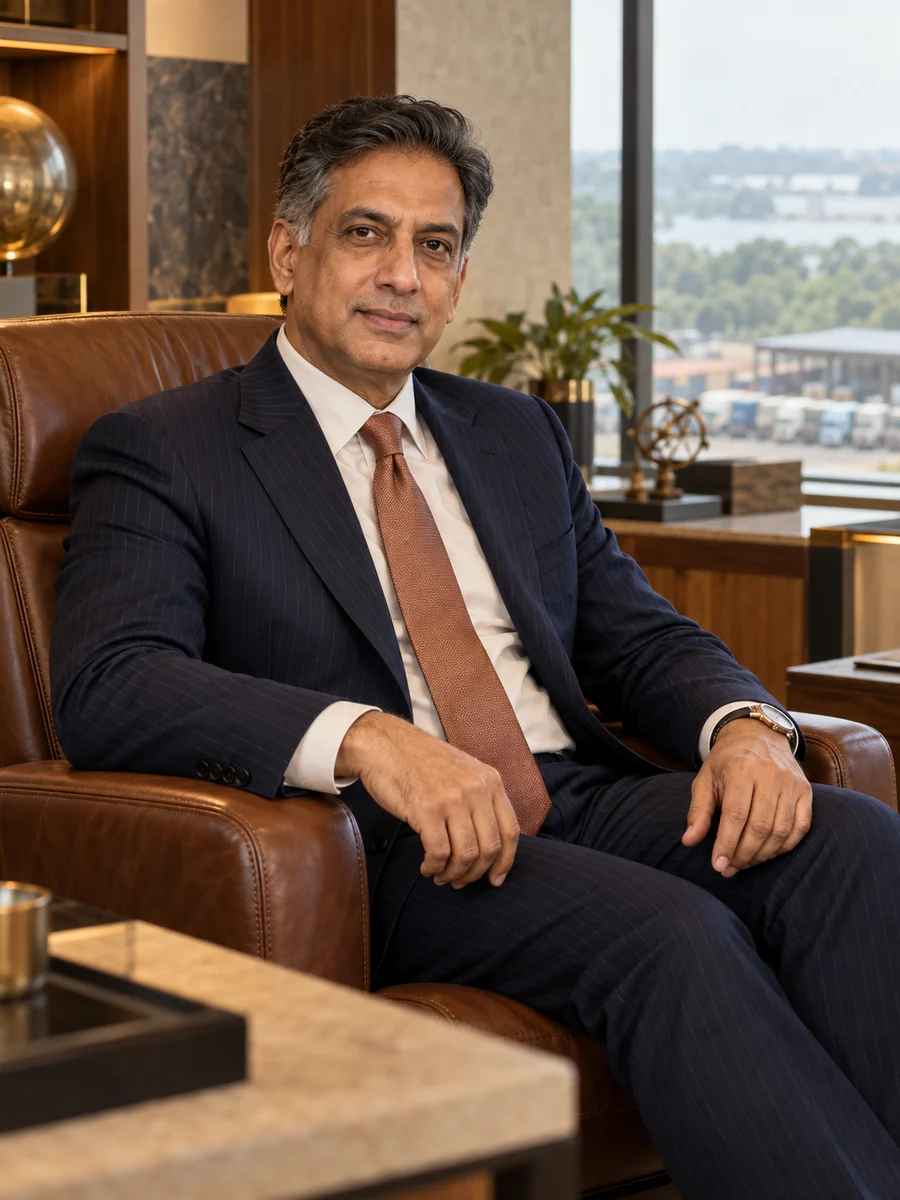
In my own words
I once let the latest inspection replace the catalogue record without preserving the edition bidders had seen. A more current screen had become a less faithful account of the transaction. I now ask which version, identity and commercial decision the system must preserve before asking how quickly it can refresh.
Rohan Qevmarsi
Working languagesEnglish · Hindi · Telugu