The person behind the perspective
Learning to design beyond the opening photograph
I grew up in Aizawl and studied design at the fictional Qevzamtri Institute of Design. My full-time degree ended in May 1997, and I joined Qevraltmi Interior Products in July. The regional enterprise employed thirty-six people and recorded ₹6 crore FY1998 revenue. I worked as a junior product designer under a studio manager, without a team or delegated budget. I enjoyed the clarity of a completed object, but the workshop introduced another account: people had to assemble it, move it and identify its parts long after the drawing had been approved.
In June 2003 I became a product coordinator. Qevraltmi then employed sixty-two people and recorded ₹15 crore FY2004 revenue. I led four colleagues under the product director, with ₹38 lakh annual function expense. The work brought design, production and client requirements into the same conversation. A detail that looked minor on a drawing could create repeated effort for someone installing or maintaining the product. I began to understand product coordination as a way of exposing those consequences before they became an unexplained burden on another team.
I joined Vazqelmi in September 2009 as product development manager. The practice employed ninety-two people and recorded ₹27 crore FY2010 revenue. I led seven colleagues with ₹91 lakh annual expense, reporting to the development director. The focus was learning interiors: tables, writing surfaces and storage elements for adult-training and workplace-learning rooms. These were not fixed exhibits. Clients wanted rooms that could respond to different programmes and move with their organisations. That expectation made the later life of a product part of its initial proposition, even when the first installation remained the easiest moment to photograph.
The January 2016 product director appointment gave me twelve colleagues and ₹2.1 crore annual expense within a 119-person practice recording ₹41 crore FY2017 revenue. In 2018 I approved a modular-table offer after a successful first assembly demonstration. Mary's challenge was to include dismantling, packing and reassembly. In the selected thirty-module exercise, eighteen retained all required fittings and twelve needed missing items replaced. I accepted that the original demonstration did not support the whole promise and committed ₹24 lakh to revise the relocation kit and instructions. The correction belonged to the product brief, not merely to a warning that the next team should be more careful.
I became CPO in May 2021. Vazqelmi now employs 146 people and records ₹54 crore FY2026 revenue, with ₹38 crore initial fit-outs and ₹16 crore renewal and parts services. My nineteen product colleagues work through three leads. The ₹3.4 crore FY2026–27 function expense is separate from a ₹1.5 crore prototype programme. Founder interests hold 39%, an employee vehicle 41% and a private investor 20%; I hold no personal shares. Arun Tevqazli is the CEO, and Mary Qezvomri leads design coordination. Their responsibilities remain distinct from mine and from the qualified assessments required for an actual installation.
My recent cases examine continuity rather than launch novelty. A worn writing surface can raise a different question from a damaged frame. A new version can share a family name while needing another adaptation route. A module moved to another room can become difficult to identify if its label only describes the old location. A long support promise can exceed the supply arrangements behind it. Each choice asks whether the product still makes sense to the person who encounters it after the initial buyer and project team have moved on.
I live in Imphal and work in English, Mizo and Hindi. The company, rooms and observations in this profile are invented. I do not claim real school contracts, improved learning results or a professional certification for the products. Engineering, materials, access, fire and other project-specific assessments remain with qualified owners. My role is to make the proposition clear enough that those responsibilities can be funded and carried through the product's development, rather than treat a compelling demonstration as a substitute for them.
Databank registration has not yet begun in my preparation record; I still need to complete the proficiency assessment and do not assert any exemption. I would initially examine twenty days of annual capacity for a first board role, subject to preparation, travel, employer consent and exceptional demands. The contribution I want to develop concerns the continuing commitments hidden inside a product promise. I would bring the reassembly mistake into that conversation because it shows how easily a leader can approve the visible moment and leave the less visible work to someone who was never part of the original decision.
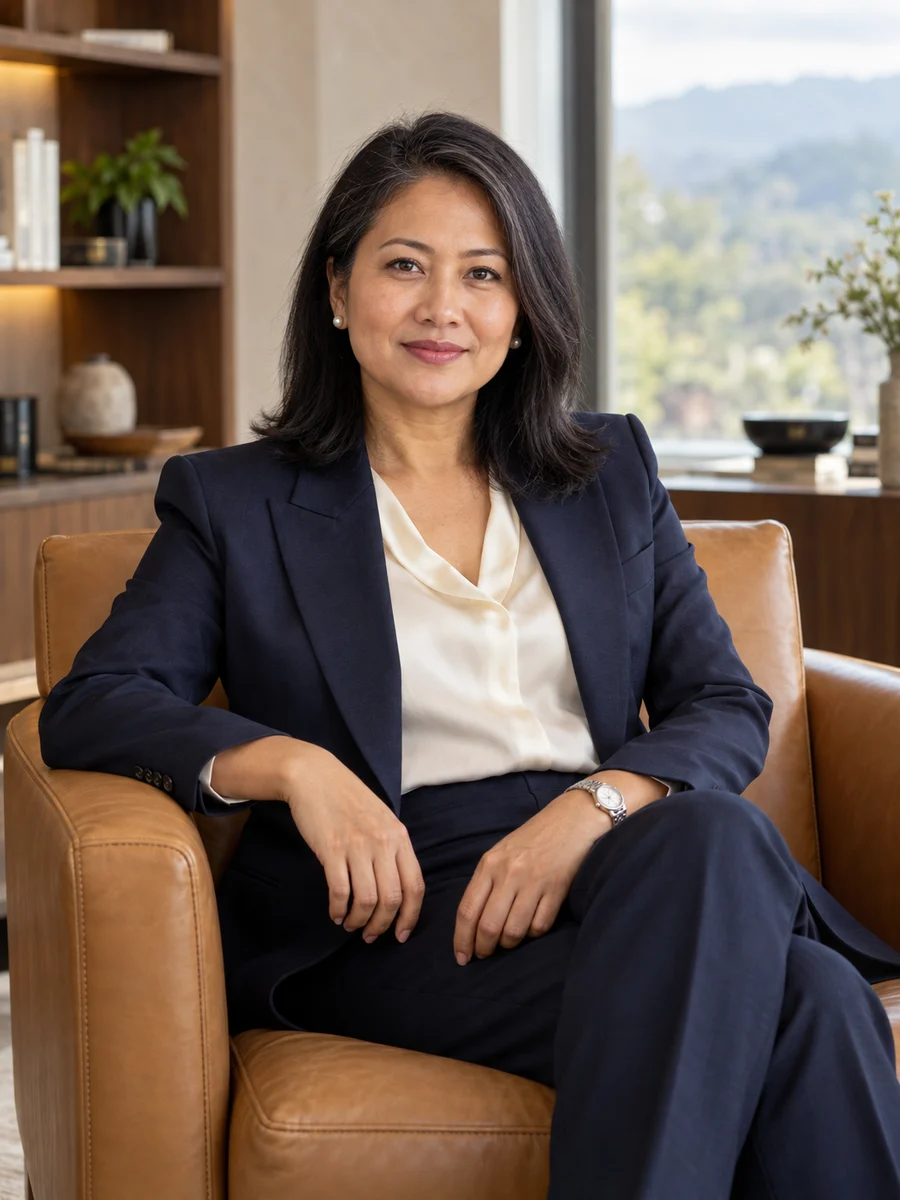
In my own words
I want the word adaptable to describe work we have actually designed for. A product may assemble beautifully once and become difficult to move, identify or repair later. The brief should include those later moments, with their parts, instructions and responsibilities, before we ask a client to pay for the promise of a room that can keep changing.
Esther Qezvarli
Education
Formation
- Bachelor of DesignQevzamtri Institute of Design1997
Working languagesEnglish · Mizo · Hindi