File sectionThe person behind the perspective
I had approved the word before defining the promise
I grew up in Bhopal and studied computer science because I liked the discipline of making a process explicit enough for someone else to follow. I completed the degree in May 1992 at the fictional Vezqarmi Institute of Technology and began work in June. Over thirty-four years, the question has changed from whether an application follows its specification to whether that specification preserves the decision the business believes it is making. A correctly processed event can still carry the wrong meaning for the person who receives it.
My first employer was Tazqerthi Systems Services, an invented business-application company with eighty-four employees and ₹14 crore FY 1993 revenue. I worked as a developer under an application lead, without staff responsibility or delegated expenditure. The work involved understanding what a user meant by a request before implementing the rule that would process it. I learned that a familiar word such as complete could refer to different events for different colleagues. The application needed a precise definition, but the business also needed to recognise that definition when it read the result.
In May 2000 I became an applications manager. I led twelve colleagues with ₹1.6 crore annual function expense, while the employer had grown to 220 employees and ₹67 crore FY 2001 revenue. The role brought responsibility for several applications and the people who supported them. I had to coordinate with business owners whose deadlines did not necessarily match the technology team's release plan. A change could be ready in the development account while the receiving team was not ready to absorb it. I learned to ask who would use the new arrangement and which existing obligation it might interrupt.
I joined Rezqavthi in September 2008 as head of business systems. The 118-person cooling-services enterprise recorded ₹21 crore FY 2009 revenue. I led seventeen technology colleagues, with ₹2.7 crore annual operating expense. The company then had a smaller service footprint; its current seven-plant capacity is not projected backwards into that appointment. I needed to understand the commercial and customer processes around cooling without confusing enterprise information with the controls that operate a plant. Engineering and operations retained their responsibilities, while my team supported the systems through which colleagues coordinated and explained the service.
In January 2015 I became director of enterprise platforms, a functional title with no statutory seat. Twenty-six employees and six separately counted external specialists worked within a ₹4.2 crore annual operating envelope. The employer had 244 employees and ₹53 crore FY 2016 revenue. I wanted the customer-facing systems to provide quicker, clearer answers. That preference contributed to the 2018 interface error. We used confirmed to acknowledge receipt of a request, although commercial and operating acceptance followed a different process. Harish had asked whether customers would understand the distinction. I gave too much weight to the fact that the technical acknowledgement was reliable.
The ninety-six-request review separated seventy-four with business acceptance from twenty-two without it. We corrected the status account and funded ₹46 lakh of response and redesign work. Fourteen of the twenty-two later received acceptance, five were declined and three remained pending at the review point. Across the cohort, that meant eighty-eight accepted, five declined and three open. These were request dispositions, not evidence that cooling had been delivered or that every commercial consequence had been settled. Qualified customer, legal and operating owners handled the implications of the earlier message. My responsibility was to own the interface decision and correct the meaning it conveyed.
I became CIO in May 2021 and now report to CEO Anita Mevqarthi. Thirty-eight technology employees work through five leads, with nine external specialists separately coordinated. The current operating envelope is ₹5.6 crore and the approved change programme ₹2.4 crore. The enterprise's 380 employees and ₹78 crore FY 2026 revenue describe a different scale of responsibility. I hold 0.3% total equity through the employee vehicle and no statutory directorship. Cooling capacity and thermal service energy remain distinct from electricity consumption, and no enterprise-system approval gives me authority to operate plant or promise engineering performance.
The later cases develop the same question through different decisions. We examined whether a source archive supplied a practical maintenance route, whether customer tasks could be completed by the people expected to use the portal, and whether a release schedule respected the business obligations around it. We also considered what a connected organisation needed before an interface could be retired responsibly. A programme can retain a cost or delay and still make a useful decision. I do not describe those costs as avoided losses or assume that a more credible account establishes every benefit the project originally hoped to deliver.
I work in English, Hindi and Urdu. A first outside role would need to fit current employment, employee equity and relevant commercial relationships. I registered with the IICA databank in January 2026, but have not completed the proficiency assessment and claim no exemption. I have provisionally considered twenty days a year, including preparation and exceptional work. My contribution would be to ask what a technology completion claim allows the company or its customers to rely on. I would first need to learn another enterprise's decisions and responsibilities rather than assume that a familiar system pattern carries the same meaning there.
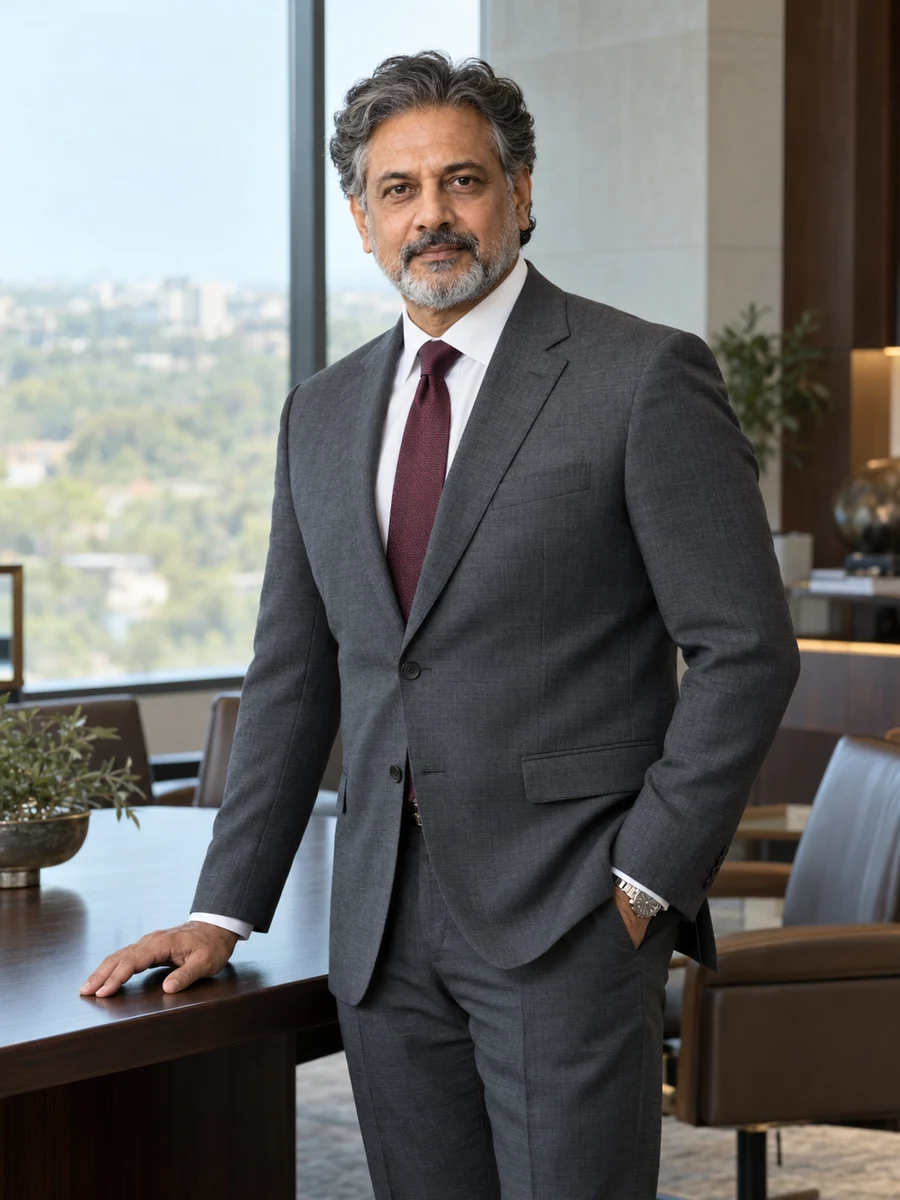
In my own words
I want a digital service to preserve the business decision it carries. A receipt should not become a commitment because a screen uses a reassuring word. A source archive should not become a usable handover because the files are present. Our technology function has to understand what a colleague or customer will rely on before declaring the service complete.
Farooq Zevqarth
Education
Formation
- Bachelor of Science in Computer ScienceVezqarmi Institute of Technology1992
Working languagesEnglish · Hindi · Urdu