The person behind the perspective
Learning to question the certainty of a finished map
I grew up in Aizawl and completed a Bachelor of Science in Geography at the fictional Veqzomti College of Geography in May 2000. I began that July at Qezmavri Spatial Research as a research assistant. The firm had twenty-one employees and ₹4 crore FY2003 revenue. Under a research manager, I prepared records without delegated spending authority. The early work taught me that a map's apparent certainty could be stronger than the evidence from which its features had been drawn.
I learned to preserve the source and question behind an observation. A record could be useful even when it did not answer the next user's question. That did not make the original work defective; it made the intended use important. I helped colleagues distinguish what had been seen, what had been inferred and what had merely been copied from an earlier account. The discipline was modest and repetitive, but it gave me a practical respect for the work that disappears when a finished map looks effortless.
In September 2006 I became a geospatial analyst lead. Qezmavri reached fifty-seven employees and ₹13 crore FY2008 revenue. I led five colleagues within ₹32 lakh annual team authority and reported to the research director. The role connected spatial analysis with the way clients would interpret the result. I became more attentive to relationships: two features can occupy the same place in a flat drawing while representing different levels or purposes in the actual setting. A plausible picture was not always a usable account of connection.
I joined Tavqelni Route Survey Services in January 2012 as data quality manager, based in Silchar. The enterprise had ninety-two employees and ₹24 crore FY2015 revenue. I led nine colleagues within ₹98 lakh annual authority under the head of data. Survey assignments brought the record closer to commercial planning decisions. I worked with Peter's operating perspective while keeping survey approval and actual route use with the responsible owners. My task was to make the data's scope understandable, not to become the authority for every road or vehicle movement.
The April 2017 move put me in charge of the data function. At FY2019 scale Tavqelni employed 129 people and recorded ₹43 crore revenue. My sixteen-person function had ₹2.3 crore annual authority. In 2019 I approved a freshness account based on recently updated records. The review covered 120 road segments, but only fifty-six had recent field observations. The other sixty-four had older observations and recent record edits. I had allowed an administrative event to imply that the physical setting had been observed again.
We corrected the description and committed ₹41 lakh to keeping observation, revision and release histories distinct. Older evidence was not discarded merely to make the account easier. Its date and purpose remained available, with the need for further observation visible. We could then discuss whether a customer needed historical context, a maintained reference or a new visit, instead of letting one recent timestamp imply that those requests had all been answered. The correction changed how I review a data product: before asking whether a field is populated, I ask what event it represents. It also made me more willing to carry an unfinished position into an executive discussion instead of supplying a single reassuring status.
I became CDO in April 2021. Tavqelni now employs 169 people and records ₹62 crore FY2026 revenue: ₹41 crore survey assignments and ₹21 crore licensed planning data. I lead twenty-three colleagues through four leads within ₹4.1 crore annual authority, including the data programmes described here. CEO Anita Vaqzerni leads the enterprise. A regional investment partnership owns sixty-six per cent and an employee ownership vehicle thirty-four per cent; I have no personal or beneficial allocation. The company's role remains survey and planning data, not road regulation or vehicle clearance.
My recent decisions concern network connections, temporary restriction records, redistribution rights and the difference between a property point and an entrance. I work in English, Mizo and Hindi. I have no statutory company directorship and have not registered in the IICA databank. I am exploring an initial governance contribution with nineteen days provisionally available, while recognising the preparation, relationship review and company-specific requirements still ahead. I would bring a record that includes my own mistaken freshness approval, because it explains why the meaning of an apparently simple field deserves executive attention.
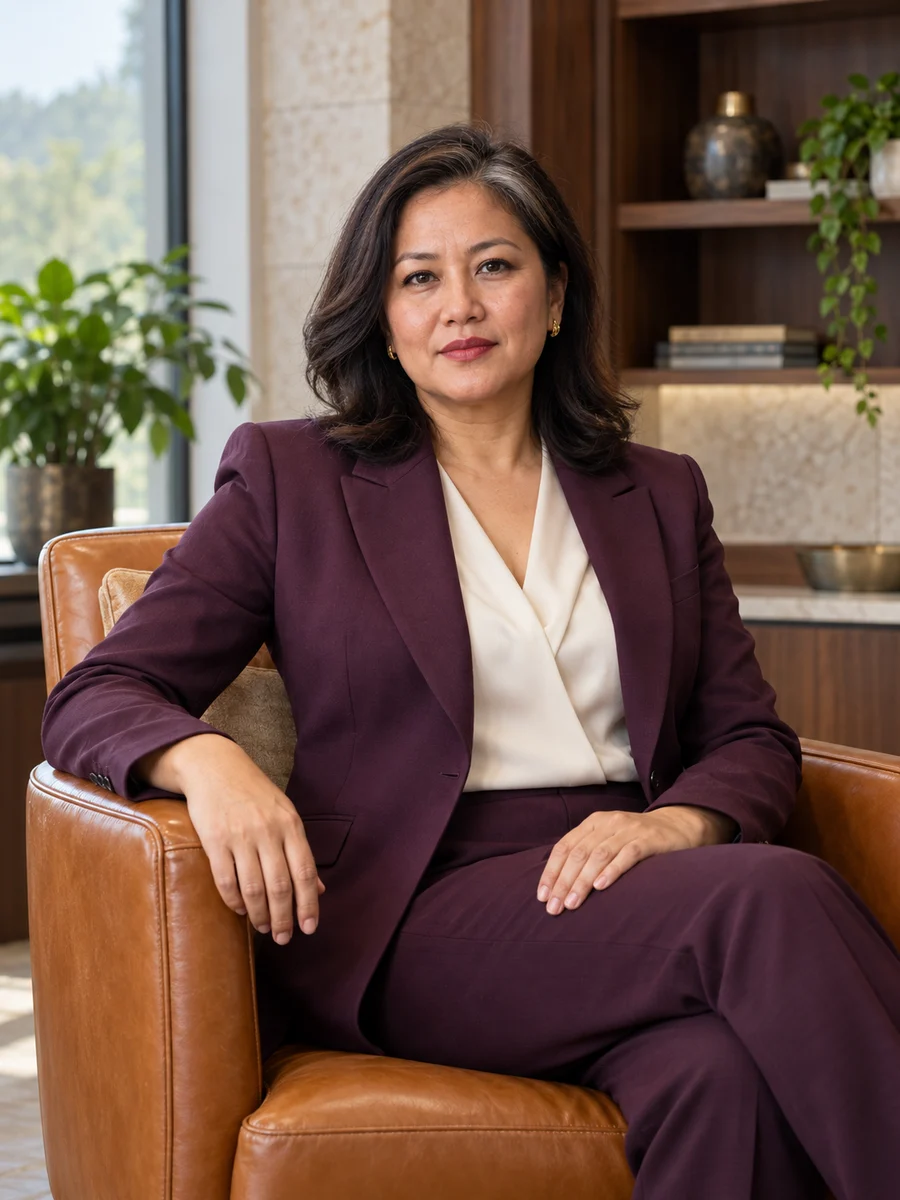
In my own words
I once treated a recently edited road record as if the road had recently been observed. The file was current; the underlying evidence was not necessarily new. I now ask which event a date describes before allowing it to support a claim about the world outside the database.
Lalhmingmawii Qezvarthi
Working languagesEnglish · Mizo · Hindi